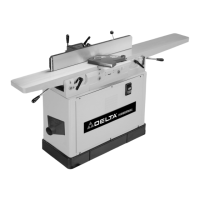
The Delta Hollow Chisel Mortiser (Model 14-650) is a woodworking machine designed for creating mortises, which are rectangular holes in wood, typically for joinery. This tool is essential for precise and clean mortise and tenon joints in various woodworking projects.
Function Description
The mortiser operates by combining the cutting action of a rotating drill bit with the squaring action of a hollow chisel. The drill bit removes the bulk of the material, while the chisel, which surrounds the drill bit, squares off the corners of the hole, creating a clean, rectangular mortise. The machine features a head that can be raised and lowered using a lever, allowing the operator to control the depth of the mortise. A fence and holddown mechanism secure the workpiece, ensuring accuracy and preventing movement during operation. The column of the mortiser can be rotated 180 degrees, offering versatility for working with larger or unusually shaped workpieces that might not fit on the table.
Important Technical Specifications
- Model Number: 14-650
- Power Connection: Requires a separate electrical circuit, preferably #12 wire, protected with a 20 Amp time lag fuse. It is designed for 120V operation.
- Grounding: The tool must be grounded to protect the operator from electric shock. It is equipped with a 3-prong grounding type plug and should be plugged into a matching 3-hole electrical receptacle. Temporary adapters may be used for 2-pole receptacles, but the adapter lug must be connected to a known ground (not applicable in Canada).
- Chisel and Bit Clearance: A crucial adjustment involves setting the chisel 1/16" to 3/16" away from the bottom of the drill bit. This clearance is vital for proper chip evacuation and efficient cutting, varying slightly depending on the type of wood.
- Extension Cords: The manual provides a detailed table for minimum gauge extension cords based on ampere rating, voltage, and total length. For example, for 0-6 Ampere rating at 120V, an 18 AWG cord is recommended for lengths up to 25 feet, while a 14 AWG cord is needed for 100-150 feet. For 12-16 Ampere rating at 120V, a 14 AWG cord is needed for up to 25 feet, and a 12 AWG cord for 25-50 feet. Lengths greater than 50 feet for 12-16 Ampere rating are not recommended.
Usage Features
- Raising and Lowering Handle: The machine head is raised and lowered using a spring-loaded lever. This lever can be repositioned on the pinion shaft for maximum leverage during mortising operations.
- Depth Stop Rod: An adjustable depth stop rod allows the operator to limit the depth of the chisel, preventing drilling into the table and ensuring consistent mortise depths.
- Adjustable Fence: The fence can be moved in or out to accommodate different workpiece sizes and mortise locations. It is secured with a spring-loaded lever that can be repositioned.
- Adjustable Holddown: The holddown mechanism prevents the workpiece from lifting as the chisel is raised out of the hole. It should be adjusted to just touch the workpiece and allow it to slide left or right. For thicker workpieces, the holddown can be turned upside down.
- Chisel Parallel Adjustment: The chisel can be adjusted to be parallel to the workpiece by loosening a screw and rotating the chisel until its back surface touches the workpiece, then retightening the screw. This ensures square and accurate mortises.
- Sliding Fit Adjustment: A dovetail gib on the rear of the head allows for adjustment of the sliding fit between the head and the column. This ensures smooth movement and accuracy, preventing excessive side play.
- Auxiliary Wood Fence: For mortising extra high workpieces, an auxiliary wood fence can be fastened to the machine's fence, providing additional support. The holddown can also be inverted to accommodate the increased height.
- Rotating Column: The column can be rotated 180 degrees to allow for mortising workpieces that are too large or awkwardly shaped to fit on the table. This involves removing three screws, rotating the column, and replacing the screws.
- Using Bits with Extra Long Shanks: The machine's extension can be removed to accommodate drill bits with extra long shanks. This involves inserting a screwdriver into the motor end cap, unscrewing and removing the chuck and extension, then reattaching the chuck directly to the motor shaft.
Maintenance Features
- Cleanliness: Keeping the work area clean and free of clutter is emphasized to prevent accidents. The table should be cleaned after use, and scrap pieces removed.
- Tool Condition: Maintaining tools in top condition, including keeping chisels and bits sharp and clean, is crucial for best and safest performance.
- Lubrication and Accessory Changes: The manual advises following instructions for lubricating and changing accessories.
- Pre-Operation Checks: Before each use, operators should check for damaged parts, ensuring guards are in place and working, and that the cutting tool is properly secured.
- Disconnecting Power: The machine should always be disconnected from the power source before servicing, changing accessories (like blades, bits, or cutters), or when mounting/connecting the motor.
- Dust Management: The manual warns about dust generated by woodworking activities and recommends operating in well-ventilated areas with proper dust removal systems and using dust masks.
- Switch Lock-Out: The switch features a lock-out toggle that can be removed to prevent unauthorized use when the tool is not in operation.

 Need help?
 General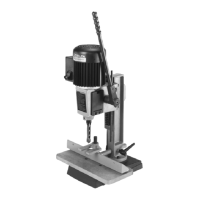

 To Next Page