EasyManua.ls Logo

Delta 37-195 - User Manual

Delta 37-195
24 pages
Print Icon
To Next Page IconTo Next Page
Loading...
INSTRUCTION MANUAL
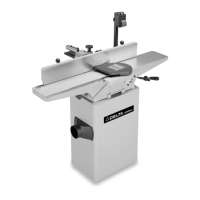
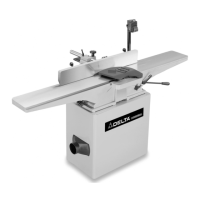
6" Professional Jointer
(Model 37-195)
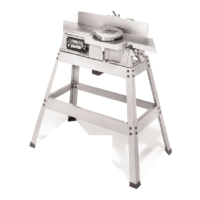
(Model 37-275X)
PART NO. 909995 - 01-22-03
Copyright © 2003 Delta Machinery
To learn more about DELTA MACHINERY
visit our website at: www.deltamachinery.com.
For Parts, Service, Warranty or other Assistance,
please call
1-800-223-7278 (In Canada call 1-800-463-3582).
Question and Answer IconNeed help?

Do you have a question about the Delta 37-195 and is the answer not in the manual?

Summary

Safety Guidelines and Definitions

Understanding Safety Symbols

Explains safety alert symbols like DANGER, WARNING, and CAUTION.

General Safety Rules for Woodworking

Provides essential safety practices and precautions for operating woodworking machinery safely.

Additional Safety Rules for Jointers

Jointer-Specific Safety Precautions

Outlines critical safety procedures and warnings specific to jointer operation and maintenance.

Power Connections

Electrical Circuit Requirements

Details electrical circuit requirements, including wire gauge, fuses, and extension cord specifications.

Grounding Procedures and Safety

Explains the importance of grounding, connection methods, and safety precautions for electrical safety.

Extension Cords

Selecting the Correct Extension Cord

Provides guidelines for selecting appropriate extension cords based on ampere rating, voltage, and length.

Operating Instructions

Foreword and Initial Setup

Introduces the jointer model, its features, and initial unpacking and cleaning procedures.

Jointer Parts Identification

Component Diagram and Labels

Identifies and labels the various parts of the jointer assembly with a detailed diagram.

Assembly Process

Stand and Electrical Assembly

Details the initial assembly steps for the jointer stand, including pre-wired motor and switch.

Jointer to Stand Assembly

Mounting the Jointer Base to the Stand

Guides on how to securely attach the jointer base to the stand using screws and washers.

Motor Pulley Installation

Attaching the Motor Pulley to the Shaft

Instructions for installing the motor pulley onto the motor shaft, ensuring proper key insertion.

Belt and Pulley Assembly

Belt Installation and Pulley Alignment

Details how to install the drive belt and ensure proper alignment between the cutterhead and motor pulleys.

Adjusting Belt Tension

Explains how to achieve and check correct belt tension for optimal machine performance.

Cutterhead Guard Bracket Assembly

Mounting the Guard Mounting Bracket

Instructions for assembling the cutterhead pulley guard and carriage mounting bracket to the jointer base.

Fence Carriage Assembly

Attaching the Fence Carriage Assembly

Guides on securely fastening the fence carriage assembly to the mounting bracket.

Fence Assembly

Mounting the Fence and Handles

Instructions for attaching the fence to the carriage assembly and installing fence handles.

Cutterhead Guard Installation

Installing the Cutterhead Guard Assembly

Details the process of installing the cutterhead guard, including spring tension adjustment.

Switch Mounting Assembly

Mounting the Power Switch and Bracket

Instructions for attaching the power switch and its mounting bracket to the jointer.

Dust Chute Assembly

Connecting the Dust Collector

Explains how to attach the dust collector connector to the stand for dust collection.

Operating Controls

Starting and Stopping the Jointer

Provides instructions on how to safely start and stop the jointer using the on/off switch.

Switch Locking Mechanism

Securing the Power Switch in OFF Position

Describes how to lock the power switch in the "OFF" position to prevent unauthorized use.

Infeed Table Adjustments

Raising and Lowering the Infeed Table

Explains how to adjust the infeed table height, including depth stop functionality and maximum cut depth.

Infeed Table Stops

Setting Positive Stops for Depth Control

Details how to adjust positive stops to limit infeed table height and depth of cut.

Outfeed Table Adjustments

Leveling the Outfeed Table

Instructions on how to ensure the outfeed table is perfectly level with the cutterhead knives.

Knife Adjustments

Aligning Cutterhead Knives with Outfeed Table

Guides on checking and adjusting jointer knives to be level with the outfeed table.

Knife Height Adjustment

Fine-Tuning Knife Height Settings

Details the procedure for precisely adjusting knife height for optimal cut quality and surface finish.

Table Gib Adjustments

Reducing Table Play with Gibs

Explains how to adjust table gibs to eliminate play between mating surfaces for smooth operation.

Fence Operation

Moving and Tilting the Fence

Instructions on how to move the fence across the table and tilt it for various cutting angles.

Fence Positive Stop Adjustment

Setting Fence Tilt Angle Stops

Guides on setting positive stops for precise 90 and 45-degree fence tilt angles.

Cutterhead Knife Management

Knife Removal, Replacement, and Resetting

Detailed steps for safely removing, cleaning, and installing jointer knives into the cutterhead.

Knife Setting and Final Alignment

Procedures for setting and aligning the jointer knives precisely for accurate cuts.

Jointer Operation Basics

General Operating Procedures

General advice for beginners on how to operate the jointer, including checking settings and practicing.

Hand Placement Safety

Safe Hand Positioning During Feeding

Crucial safety instructions on proper hand positioning when feeding material through the jointer.

Edge Jointing Technique

Squaring a Workpiece Edge

Explains the common operation of squaring a workpiece edge using the jointer.

Workpiece Surface Operations

Surfacing Flat Workpiece Surfaces

Details how to use the jointer to create a flat surface on a workpiece.

Bevel Cutting

Cutting Angled Bevels on Workpieces

Instructions on how to cut bevels on workpieces by tilting the fence.

Taper Cutting

Creating Tapered Edges on Workpieces

Explains the method for cutting tapered edges on furniture legs or similar workpieces.

Rabbet Cutting

Making Rabbet Cuts with the Jointer

Guides on how to adjust the fence and infeed table to cut rabbets.

Special Surfacing Techniques

Flattening Warped Wood Surfaces

Advice on surfacing dished or warped wood, emphasizing light cuts and avoiding excessive pressure.

Short or Thin Workpiece Surfacing

Safe Surfacing of Small Workpieces

Safety precautions and guidelines for surfacing short or thin workpieces, stressing push block use.

Grain Direction for Finishing

Feeding Wood With the Grain

Explains the importance of feeding wood with the grain for a smooth finish, contrasting correct and incorrect methods.

Maintenance and Repairs

Sharpening Jointer Knives

Instructions on how to sharpen the jointer knives using a carborundum stone.

Push Stick Construction

Building a Safety Push Stick

Provides a pattern and instructions for constructing a push stick for safe handling of narrow workpieces.

Accessories Information

Recommended Jointer Accessories

Information on available accessories and a warning about using unapproved items.

Product Support and Assistance

Obtaining Parts, Service, and Warranty

Contact information and details for obtaining parts, service, and warranty assistance for the jointer.

Warranty Details

Two Year Limited Warranty Terms

Outlines the terms and conditions of the two-year limited warranty provided by Delta.

Service Center Directory

US Porter-Cable Delta Service Locations

Lists US locations for Porter-Cable Delta service centers and repair.

Canadian Porter-Cable Delta Service Locations

Lists Canadian locations for Porter-Cable Delta service centers and repair.

Brand Trademarks

List of Delta and Porter-Cable Trademarks

Lists various trademarks associated with Porter-Cable Delta products.

Summary

Safety Guidelines and Definitions

Understanding Safety Symbols

Explains safety alert symbols like DANGER, WARNING, and CAUTION.

General Safety Rules for Woodworking

Provides essential safety practices and precautions for operating woodworking machinery safely.

Additional Safety Rules for Jointers

Jointer-Specific Safety Precautions

Outlines critical safety procedures and warnings specific to jointer operation and maintenance.

Power Connections

Electrical Circuit Requirements

Details electrical circuit requirements, including wire gauge, fuses, and extension cord specifications.

Grounding Procedures and Safety

Explains the importance of grounding, connection methods, and safety precautions for electrical safety.

Extension Cords

Selecting the Correct Extension Cord

Provides guidelines for selecting appropriate extension cords based on ampere rating, voltage, and length.

Operating Instructions

Foreword and Initial Setup

Introduces the jointer model, its features, and initial unpacking and cleaning procedures.

Jointer Parts Identification

Component Diagram and Labels

Identifies and labels the various parts of the jointer assembly with a detailed diagram.

Assembly Process

Stand and Electrical Assembly

Details the initial assembly steps for the jointer stand, including pre-wired motor and switch.

Jointer to Stand Assembly

Mounting the Jointer Base to the Stand

Guides on how to securely attach the jointer base to the stand using screws and washers.

Motor Pulley Installation

Attaching the Motor Pulley to the Shaft

Instructions for installing the motor pulley onto the motor shaft, ensuring proper key insertion.

Belt and Pulley Assembly

Belt Installation and Pulley Alignment

Details how to install the drive belt and ensure proper alignment between the cutterhead and motor pulleys.

Adjusting Belt Tension

Explains how to achieve and check correct belt tension for optimal machine performance.

Cutterhead Guard Bracket Assembly

Mounting the Guard Mounting Bracket

Instructions for assembling the cutterhead pulley guard and carriage mounting bracket to the jointer base.

Fence Carriage Assembly

Attaching the Fence Carriage Assembly

Guides on securely fastening the fence carriage assembly to the mounting bracket.

Fence Assembly

Mounting the Fence and Handles

Instructions for attaching the fence to the carriage assembly and installing fence handles.

Cutterhead Guard Installation

Installing the Cutterhead Guard Assembly

Details the process of installing the cutterhead guard, including spring tension adjustment.

Switch Mounting Assembly

Mounting the Power Switch and Bracket

Instructions for attaching the power switch and its mounting bracket to the jointer.

Dust Chute Assembly

Connecting the Dust Collector

Explains how to attach the dust collector connector to the stand for dust collection.

Operating Controls

Starting and Stopping the Jointer

Provides instructions on how to safely start and stop the jointer using the on/off switch.

Switch Locking Mechanism

Securing the Power Switch in OFF Position

Describes how to lock the power switch in the "OFF" position to prevent unauthorized use.

Infeed Table Adjustments

Raising and Lowering the Infeed Table

Explains how to adjust the infeed table height, including depth stop functionality and maximum cut depth.

Infeed Table Stops

Setting Positive Stops for Depth Control

Details how to adjust positive stops to limit infeed table height and depth of cut.

Outfeed Table Adjustments

Leveling the Outfeed Table

Instructions on how to ensure the outfeed table is perfectly level with the cutterhead knives.

Knife Adjustments

Aligning Cutterhead Knives with Outfeed Table

Guides on checking and adjusting jointer knives to be level with the outfeed table.

Knife Height Adjustment

Fine-Tuning Knife Height Settings

Details the procedure for precisely adjusting knife height for optimal cut quality and surface finish.

Table Gib Adjustments

Reducing Table Play with Gibs

Explains how to adjust table gibs to eliminate play between mating surfaces for smooth operation.

Fence Operation

Moving and Tilting the Fence

Instructions on how to move the fence across the table and tilt it for various cutting angles.

Fence Positive Stop Adjustment

Setting Fence Tilt Angle Stops

Guides on setting positive stops for precise 90 and 45-degree fence tilt angles.

Cutterhead Knife Management

Knife Removal, Replacement, and Resetting

Detailed steps for safely removing, cleaning, and installing jointer knives into the cutterhead.

Knife Setting and Final Alignment

Procedures for setting and aligning the jointer knives precisely for accurate cuts.

Jointer Operation Basics

General Operating Procedures

General advice for beginners on how to operate the jointer, including checking settings and practicing.

Hand Placement Safety

Safe Hand Positioning During Feeding

Crucial safety instructions on proper hand positioning when feeding material through the jointer.

Edge Jointing Technique

Squaring a Workpiece Edge

Explains the common operation of squaring a workpiece edge using the jointer.

Workpiece Surface Operations

Surfacing Flat Workpiece Surfaces

Details how to use the jointer to create a flat surface on a workpiece.

Bevel Cutting

Cutting Angled Bevels on Workpieces

Instructions on how to cut bevels on workpieces by tilting the fence.

Taper Cutting

Creating Tapered Edges on Workpieces

Explains the method for cutting tapered edges on furniture legs or similar workpieces.

Rabbet Cutting

Making Rabbet Cuts with the Jointer

Guides on how to adjust the fence and infeed table to cut rabbets.

Special Surfacing Techniques

Flattening Warped Wood Surfaces

Advice on surfacing dished or warped wood, emphasizing light cuts and avoiding excessive pressure.

Short or Thin Workpiece Surfacing

Safe Surfacing of Small Workpieces

Safety precautions and guidelines for surfacing short or thin workpieces, stressing push block use.

Grain Direction for Finishing

Feeding Wood With the Grain

Explains the importance of feeding wood with the grain for a smooth finish, contrasting correct and incorrect methods.

Maintenance and Repairs

Sharpening Jointer Knives

Instructions on how to sharpen the jointer knives using a carborundum stone.

Push Stick Construction

Building a Safety Push Stick

Provides a pattern and instructions for constructing a push stick for safe handling of narrow workpieces.

Accessories Information

Recommended Jointer Accessories

Information on available accessories and a warning about using unapproved items.

Product Support and Assistance

Obtaining Parts, Service, and Warranty

Contact information and details for obtaining parts, service, and warranty assistance for the jointer.

Warranty Details

Two Year Limited Warranty Terms

Outlines the terms and conditions of the two-year limited warranty provided by Delta.

Service Center Directory

US Porter-Cable Delta Service Locations

Lists US locations for Porter-Cable Delta service centers and repair.

Canadian Porter-Cable Delta Service Locations

Lists Canadian locations for Porter-Cable Delta service centers and repair.

Brand Trademarks

List of Delta and Porter-Cable Trademarks

Lists various trademarks associated with Porter-Cable Delta products.

Overview

This document describes the 6" Professional Jointer, Models 37-195 and 37-275X, manufactured by Delta Machinery. It serves as an instruction manual covering safety guidelines, assembly, operation, and maintenance.

Function Description:

The Delta Model 37-195 is a 6" Professional Jointer designed for woodworking operations, specifically for jointing and surfacing wood. Its primary function is to create flat and square edges or surfaces on workpieces, which is crucial for subsequent woodworking processes like gluing panels or preparing stock for other machines. The jointer achieves this by passing the workpiece over a rotating cutterhead equipped with sharp knives, removing a thin layer of material to achieve the desired flatness and squareness. It can also perform beveling and rabbeting cuts.

Important Technical Specifications:

  • Cutting Capacity: 6-1/8" (156mm) width.
  • Maximum Depth of Cut: 1/8" (3mm).
  • Rabbeting Capacity: 1/2" (13mm).
  • Motor: Heavy-duty 1 hp induction motor.
  • Voltage: 120/240 volt (alternating current, 60 HZ).
  • Cutterhead: Three-knife cutterhead.
  • Electrical Circuit Recommendation: A separate electrical circuit, not less than #12 wire, protected with a 20 Amp time lag fuse.
  • Grounding: The machine must be grounded while in use to protect the operator from electric shock. It is equipped with a 3-prong grounding type plug and requires a matching receptacle.
  • Extension Cords: Use 3-wire extension cords with 3-prong grounding type plugs and matching receptacles. The gauge of the extension cord should be appropriate for the ampere rating and cord length to prevent loss of power and overheating. For 120V, 0-6 Amp, up to 25 ft: 18 AWG; 25-50 ft: 16 AWG; 50-100 ft: 16 AWG; 100-150 ft: 14 AWG. For 120V, 6-10 Amp, up to 25 ft: 18 AWG; 25-50 ft: 16 AWG; 50-100 ft: 14 AWG; 100-150 ft: 12 AWG. For 120V, 10-12 Amp, up to 25 ft: 16 AWG; 25-50 ft: 16 AWG; 50-100 ft: 14 AWG; 100-150 ft: 12 AWG. For 120V, 12-16 Amp, up to 25 ft: 14 AWG; 25-50 ft: 12 AWG; greater than 50 ft not recommended. Similar recommendations are provided for 240V operation.
  • Dust Collection: Features a built-in dust chute and a supplied 4" dust collector connector for attachment to a dust collection system.

Usage Features:

  • Safety First: Emphasizes reading the instruction manual, wearing eye protection (ANSI Z87.1 compliant safety glasses), keeping guards in place, and using push blocks for narrow or thin material.
  • Work Area: Keep the work area clean, well-lighted, and free of children and visitors. Avoid damp or wet environments.
  • Material Handling: Always hold the workpiece firmly against the tables and fence. Never perform "free-hand" operations. Avoid awkward operations and hand positions that could lead to contact with the cutterhead.
  • Minimum Material Dimensions for Jointing: Not recommended for material shorter than 10 inches, narrower than 3/4 inch, or less than 1/2 inch thick.
  • Minimum Material Dimensions for Surfacing: Not recommended for material shorter than 10 inches, narrower than 3/4 inch, wider than 6 inches, or less than 1/2 inch thick.
  • Depth of Cut: Never make jointing or surfacing cuts deeper than 1/8 inch. For cuts wider than 1-1/2 inches, adjust depth of cut to 1/16 inch or less to prevent overloading and kick-back.
  • Infeed Table Adjustments: The infeed table depth-of-cut can be adjusted, with a maximum depth of 1/2". Positive stops are provided for rapid setting of 90° and 45° angles.
  • Outfeed Table Adjustments: The outfeed table height is adjustable to ensure it is exactly level with the knives at their highest point of revolution.
  • Fence Operation: The fence can be moved across the table and tilted 45 degrees right or left. It includes positive stops for quickly setting 90° and 45° angles. When tilting the fence for bevels, it is suggested to tilt it toward the table (V-shape) for better work holding, especially at angles approaching 45 degrees.
  • Starting and Stopping: The on/off switch is located underneath a switch shield. The switch can be locked in the "OFF" position with a padlock to prevent unauthorized use.
  • Feeding Direction: Always feed work into the blade or cutter against the direction of rotation. Feed with the grain to avoid chipped or splintered edges.
  • Even Wear: To promote even wear of the knives, feed wood through different spots on the table when possible.
  • Push Blocks: Essential for surfacing operations and when working with narrow or thin pieces. A pattern for constructing a push stick is provided.
  • Beveling: Achieved by locking the fence at the desired angle and running the work across the knives. Multiple passes may be needed.
  • Rabbeting: Requires removing the cutterhead guard. The fence is adjusted to the desired rabbet width, and the infeed table is lowered to the desired depth (potentially in multiple passes). The guard must be replaced after the cut.
  • Taper Cuts: Involves lowering the forward end of the work onto the outfeed table and carefully pushing it forward. Practice on waste material is recommended.
  • Surfacing Warped Pieces: Take light cuts and avoid forcing the material down to prevent it from springing back and remaining curved.

Maintenance Features:

  • Tool Condition: Maintain tools in top condition; keep them sharp and clean. Follow instructions for lubricating and changing accessories.
  • Disconnection: Disconnect tools from power before servicing, adjusting, or changing accessories.
  • Knife Adjustment: Knives must be exactly level with the outfeed table and project equally from the cutterhead for accurate work. Detailed instructions are provided for checking and adjusting knife height using a straight edge and feeler gauge.
  • Knife Removal/Replacement: Detailed steps are provided for safely removing, replacing, and resetting the cutterhead knives. Extreme caution is advised due to the sharpness of the knives.
  • Knife Whettering: Instructions for sharpening dull knives using a fine carborundum stone, covering part of the stone with paper to avoid marking the table.
  • Gib Adjustment: "Gibs" are provided to take up play between the table ways and the base. Instructions for adjusting the gibs on both infeed and outfeed tables are included to ensure a secure fit and smooth table movement.
  • Belt Tension: Instructions for adjusting the V-belt tension by raising or lowering the motor, ensuring proper alignment of the pulleys.
  • Cleaning: Remove protective coating from unpainted surfaces with kerosene and cover with a good quality household floor paste wax. Clean the machine before leaving it.
  • Damaged Parts: Check for damaged parts before use. Any damaged guard or part should be properly repaired or replaced.
  • Dust Removal: Operate machinery in well-ventilated areas and use wood dust collection systems whenever possible to manage dust generated by operations.

Delta 37-195 Specifications

General IconGeneral
BrandDelta
Model37-195
CategoryPower Tool
LanguageEnglish

Related product manuals