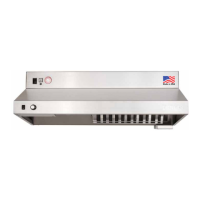
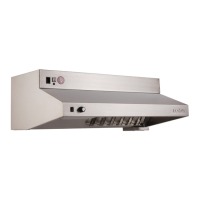
D1000 Installation and Service Manual 1
Home LAB-110073 Rev. 3
WARNING CAUTION
READ AND SAVE THESE INSTRUCTIONS
TO REDUCE THE RISK OF FIRE, ELECTRIC SHOCK, OR
INJURY TO PERSONS OBSERVE THE FOLLOWING:
1. Use this unit only in the manner intended by the
manufacturer. If you have any questions, contact the
manufacturer at the address or telephone number listed
on the front cover of this manual.
2. Before servicing or cleaning unit, put the unit into
Maintenance mode and disconnect power which will
prevent the unit from being powered ON accidentally.
When the Maintenance disconnect cannot be locked,
securely fasten a prominent warning device, such as a
tag, to the Maintenance panel.
3. Installation work and electrical wiring must be done by a
qualified person(s) in accordance with applicable codes
and standards, including fire-rated construction codes
and standards.
4. Sufficient air is needed for proper combustion and
exhausting of gases through the flue (chimney) of fuel
burning equipment to prevent back drafting. Follow the
HVAC equipment manufacturer’s guidelines and safety
standards such as those published by the National Fire
Protection Association (NFPA) and the American
Society of Heating, Refrigeration and Air Conditioning
Engineers (ASHRAE), and the local code authorities.
5. When cutting or drilling into wall or ceilings do not
damage electrical wiring and other hidden utilities.
6. To reduce the risk of fire or electric shock, do not use
this range hood with an additional speed control device,
unless provided by Denlar Fire Protection.
7. Ducted fans must always be vented outdoors.
8. To reduce the risk of fire, use only metal ductwork, or
follow local code.
9. Use with approved wiring only.
10. This unit must be grounded.
TO REDUCE THE RISK OF A RANGE TOP GREASE FIRE:
1. Never leave surface units unattended at high settings.
Boil-overs cause smoking and greasy spillovers that
may ignite. Heat oils slowly on low or medium settings.
2. Always turn fan ON when cooking at high heat or when
cooking flaming foods.
3. Clean ventilating fans and filters frequently. Grease
should not be allowed to accumulate on fan or filter.
4. Use proper pan size. Always use cookware appropriate
for the size of the surface element.
TO REDUCE THE RISK OF INJURY TO PERSONS
IN THE EVENT OF RANGE TOP GREASE FIRE
OBSERVE THE FOLLOWING: *
1. SMOTHER FLAMES with a close-fitting lid,
cookie sheet, or metal tray; then turn off the
burner. BE CAREFUL TO PREVENT BURNS. If
the flames do not go out immediately,
EVACUATE AND CALL THE FIRE
DEPARTMENT.
2. NEVER PICK UP A FLAMING PAN – You may
be burned.
3. DO NOT USE WATER, including wet dishcloths
or towels – violent steam explosion will result.
4. Use an extinguisher ONLY if:
A. You know you have a Class K extinguisher
and you already know how to operate it.
B. The fire is small and contained in the area
where it started.
C. The fire department is being called.
D. You can fight the fire with your back to an
exit.
*Based on “Kitchen Fire Safety Tips published by
NFPA
To Reduce General Risk
1. For general ventilating use only. Do not exhaust
hazardous or explosive materials and vapors.
2.
To avoid motor bearing damage and noisy and/or
unbalanced impellers, keep drywall debris,
construction dust, etc. way from hood.
3. For best capture of cooking impurities and
performance of fire extinguisher, your range hood
should be mounted so t
hat the bottom of the hood
is 24-36” above the cooking surface, depending
on model.
4. Please read Datasheets provided by Denlar Fire
Protection for further information and
requirements.
DISCLAIMER
:
DENLAR Fire Protection shall not be liable for errors contained in this Manual or for incidental,
consequential damages in connection with the furnishing, performance or use of this information. DENLAR Fire
Protection makes no warranty of any kind with regard to this information, including, but not limited to the implied
warranties of merchantability and fitness for a particular purpose.


 To Next Page
 Loading...