Need help?
Do you have a question about the Denso CRS and is the answer not in the manual?
Discusses global warming, exhaust emissions, and regulatory demands on diesel vehicles.
Highlights requirements for diesel engines like higher pressure, precision, and optimized rates.
Illustrates the arrangement of key components like supply pump, rail, and injectors.
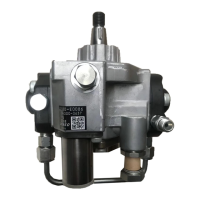
Details the construction and characteristics of different supply pump models.
Explains the rail's role in distributing pressurized fuel to injectors and its components.
Describes the injector's function in delivering fuel to the combustion chamber.
Details the construction and features of different injector types.
Provides a reference diagram for the engine control system components.
Explains the function and role of the Engine ECU in system control.
Details the EDU's function in enabling high-speed injector actuation.
Describes the function of various sensors used in the engine control system.
Explains how fuel injection is controlled for optimal engine operation.
Describes the E-EGR system for reducing NOx emissions via exhaust gas recirculation.
Provides information on Particulate Matter (PM) and its health effects.
Details the development history and major manufacturers of common rail systems.
Discusses higher injection pressure and optimized injection rates for performance.
Explains diesel knock, white smoke, and black smoke as indicators of combustion issues.
Outlines the systematic procedure for diagnosing vehicle malfunctions.
Instructions for using the DST-2 to read and erase DTCs for Toyota vehicles.
Guides troubleshooting for intake and fuel system diagnostics.
Steps for diagnosing issues when the check engine warning light is illuminated.
Troubleshooting for hard starting, stalling at idle, and slow return to idle.
Explains the format and assignment of diagnostic trouble codes.
Lists DTCs related to common rail systems, compatible with DST-2.
 General
| Brand | Denso |
|---|---|
| Model | CRS |
| Category | Water Pump |
| Language | English |

 To Next Page