Repair Section
2
–
91
1. DIESEL ENGINE MALFUNCTIONS AND DIAGNOSTIC METH-
ODS (BASIC KNOWLEDGE)
1.1 Combustion State and Malfunction Cause
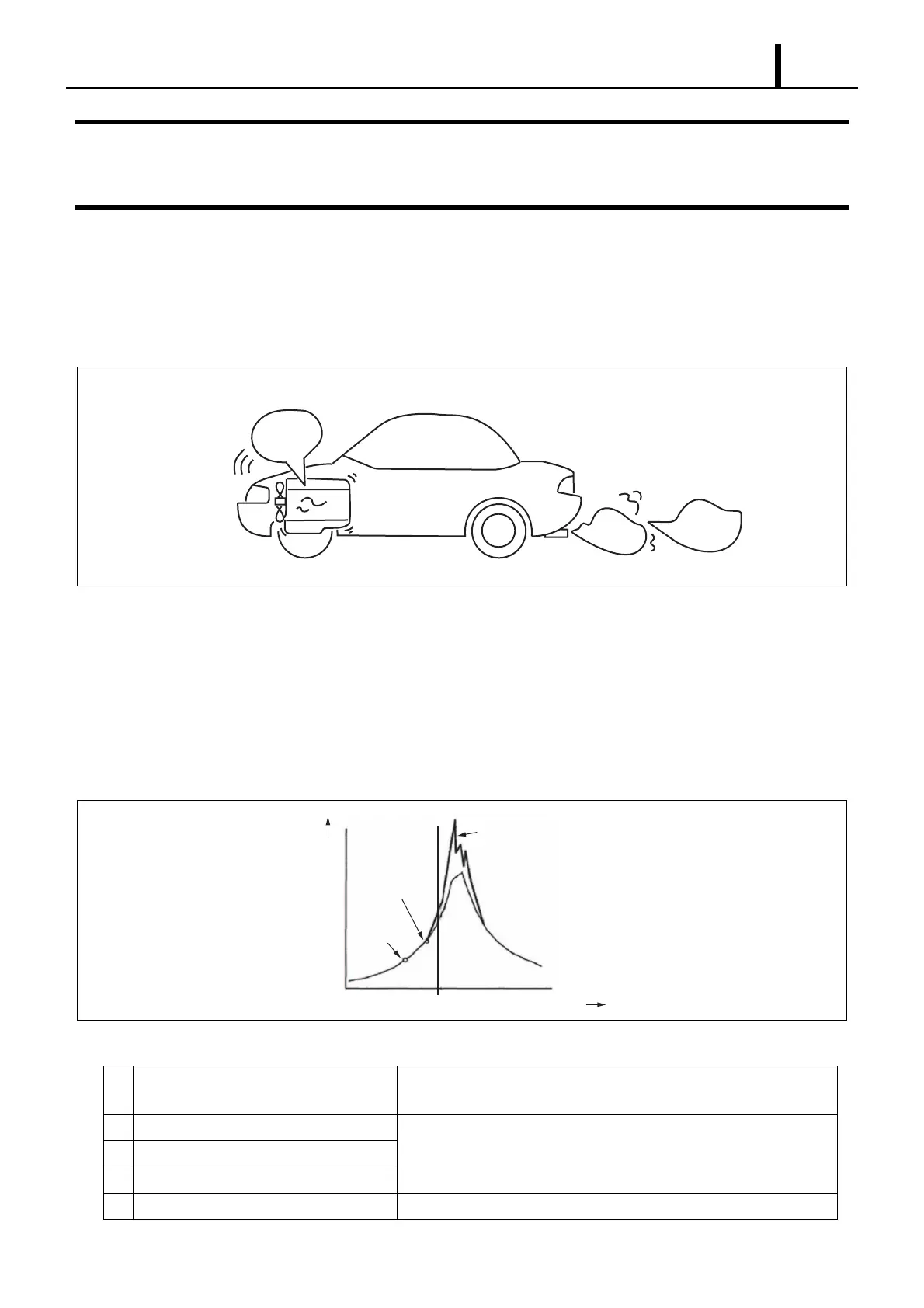
z Depending on the state of combustion in a diesel engine, diesel knock as well as the color of the exhaust gas may
change. Subsequently, the cause of engine malfunctions can be ascertained from changes in diesel knock and exhaust
gas color.
(1) Diesel Knock
• When fuel mixed with air during the ignition lag period (from the time injection begins until the fuel is ignited) reaches
ignition temperature, the mixture is combusted in one burst. The pressure in the combustion chamber at this time rises
as the quantity of the air-fuel mixture increases. If a large amount of air-fuel mixture is created during the ignition lag
period, the pressure in the combustion chamber will rise rapidly. The pressure waves resulting from fuel ignition vi-
brate the cylinder walls and engine components, which generates noise. The generated noise is called "knocking".
To some extent, knocking is unavoidable in engines that use a self-ignition system.
Cause of Diesel Knocking
1 Early Injection Timing
A large quantity of air-fuel mixture is created prior to ignition, or the
cetane value is high.
2 Cold Engine
Ignition occurs late without an increase in temperature.3 Intake air temperature is low.
4 Poor Engine Compression
5 Poor Fuel Combustibility Ignition occurs late (low cetane value.)
Q002310E
Knocking
Sound
Black
Smoke
White
Smoke
Q002311E
Cylinder Internal Pressure
Crankshaft Angle
T.D.C.
Start of
Injection
Ignition
Pressure Increase


 To Next Page