EN - 3
A-535D
IMPORTANT SAFEGUARDS
When using electrical products, especially when children are present, basic safety precautions should always be followed. Read all instructions before using. Important
information is highlighted by these terms:
DANGER Urgent safety information for hazards that will cause serious injury or death.
WARNING Important safety information for hazards that might cause serious injury.
CAUTION Information for preventing damage to the product.
NOTE Information to which you should pay special attention.
Important safeguards are indicated throughout this guide; pay special attention to all safety information.
READ ALL INSTRUCTIONS BEFORE USING.
SAVE THESE INSTRUCTIONS.
General Dangers & Warnings
In order to ensure the safe installation, assembly, and operation of the personal oxygen station, these instructions MUST be followed:
DANGER-NO SMOKING
DANGER
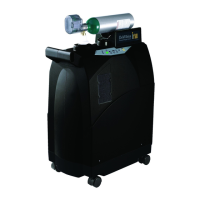
• Electric Shock Hazard. Do not disassemble. The DeVilbiss iFill Personal Oxygen Station contains no user serviceable parts. If service is required, contact
your DeVilbiss provider or authorized service center.
• Fire Hazard. Do not lubricate. Do not allow grease or oil from your hands or other source to come into contact with the regulator or cylinder valve connection.
Thesecontaminantsmaybeammableandcauseinjury.
• Keepthepersonaloxygenstationatleast5feet(1.6m)fromhot,sparkingobjectsornakedsourcesofame.Positionyourunitatleast6inches(15cm)
fromwalls,draperies,oranyotherobjectthatmightpreventtheproperowofairinandoutofyouroxygenstation.Theoxygenstationshouldbelocatedso
as to avoid pollutants or fumes.
• Oxygen causes rapid burning. Do not smoke while your personal oxygen station is operating, or when you are near a person utilizing oxygen therapy. Keep
theoxygenstationatleast5feet(1.6m)fromhot,sparkingobjectsornakedsourcesofame.
• Do not lay the cannula down while the cylinder is delivering oxygen. High concentrations of oxygen can cause rapid burning.
WARNING
• Donotinstall,assemble,oroperatethisequipmentwithoutrstreadingandunderstandingthisinstructionmanualandtheoxygencylinderwarninglabel.If
you are unable to understand the warnings, cautions and instructions, contact your provider or technical personnel if applicable before attempting to install
orusethisequipment-otherwise,injuryordamagemayoccur.
• The use of this device is limited to an oxygen patient. Cylinders MUST be used ONLY by an oxygen patient and are not to be distributed to any other indi-
vidual for any purpose.
• Do not use parts, accessories, or adapters other than those authorized by DeVilbiss.
• NEVER block the air openings of the product or place it on a soft surface, such as a bed or couch, where the air opening may be blocked. Keep the openings
free from lint, hair and the like.
• If the oxygen station has a damaged cord or plug, if it is not working properly, if it has been dropped or damaged, or if it has been submersed in water, do not
useandcallaqualiedtechnicianforexaminationandrepair.
• If any leakage of the oxygen cylinder is detected, do not attempt to use the cylinder. Turn the rotary selector on the regulator to “OFF.” If leakage per sists,
place the cylinder outdoors and notify your Home Health Care Provider or Service Representative of this condition.
• The personal oxygen station is equipped with a High Pressure Relief Valve to ensure the user’s safety. When activated, this safety feature will make an
extremely loud noise. If this noise occurs, turn the unit off and contact your Home Health Care Provider or Service Representative.
• Before moving or repositioning the personal oxygen station, always disconnect the AC power cord. Failure to do so may result in damage to the unit or
personalinjury.
• Childrenshouldalwaysbesupervisedaroundthepersonaloxygenstation.Failuretodosomayresultindamagetotheunitorpersonalinjury.
• Improperuseofthepowercordandplugscancauseaburn,re,orotherelectricshockhazards.Donotusetheunitifthepowercordisdamaged.
• For your safety, the oxygen cylinder must be used according to the prescription determined by your physician.
• Under certain circumstances, oxygen therapy can be hazardous. Seeking medical advice before using oxygen is advisable.
WARNING - HANDLING WARNINGS
• Useextremecarewhenhandlingandllinganoxygencylinder.Fulloxygencylindersareunderpressureandcanbecomeaprojectileifdroppedor
mishandled.
• Nevertransporttheoxygenstationwithacylinderconnectedtoit.Injuryordamagecanoccur.
Cautions & Notes
CAUTION–Federal (U.S.A.) law restricts this device to sale by, or on order of a physician.
CAUTION– Do not place this unit near other equipment or devices that create or attract electromagnetic elds. Placing the unit in electromagnetic elds greater than 10V/m
can affect its operation. Examples of such equipment are debrillators, diathermy equipment, cellular telephones, CB radios, radio-controlled toys, microwave ovens, etc.
NOTE– Do not connect to an electrical outlet controlled by a wall switch. No other appliances should be plugged into the wall outlet.
NOTE– The plug on the DeVilbiss iFill Personal Oxygen Station has one blade wider than the other. To reduce the risk of electric shock, this plug is intended to t in a wall
outlet only one way. Do not attempt to defeat this safety feature.
NOTE– DeVilbiss recommends leaving a full cylinder of oxygen with the patient AFTER setting up the personal oxygen station.


 To Next Page