12
the next cut sequence. By default, this value is calculated to return the table to the same position it
was at the start of the previous cut sequence. This assumes you will be making symmetrical cuts for
each rotational cut sequence. You may enter a different value if your application requires it.
Programming Tip:
Even though the saw utilizes anti-backlash nuts, there is still the possibility of some backlash
in the table index stage. Machine tool operators eliminate the effect of backlash by over-
traveling in the negative direction and approaching all cuts from the same direction.
If you are programming more than one cut sequence and using this step to index the table
backwards between them, any backlash that does exist will cause the first cut of the second and
subsequent cut sequence to be inaccurate. One simple solution is to stop the program after
making cuts in a single axis, and reposition the specimen for the next axis manually. However,
there is a way to eliminate backlash within a multiple sequence program.
Enter an Index Table value greater than what is necessary to move the table back beyond the
specimen (and fixture). Enter a Number Of Cuts value one greater than what you actually
intend to cut. If you must over-index the table back more than one slice width, set the Variable
Width feature to yes and enter the over-index distance for Slice 1 Width. Enter the actual
desired slice width for the remaining cuts.
The first cut occurs out in the open and completes rather quickly since with no wire bow, the yoke
drive moves down at maximum speed. After the programmed dwell time, the yoke raises and the
table indexes forward, eliminating backlash, and the saw proceeds to make the first real cut in the
proper position.
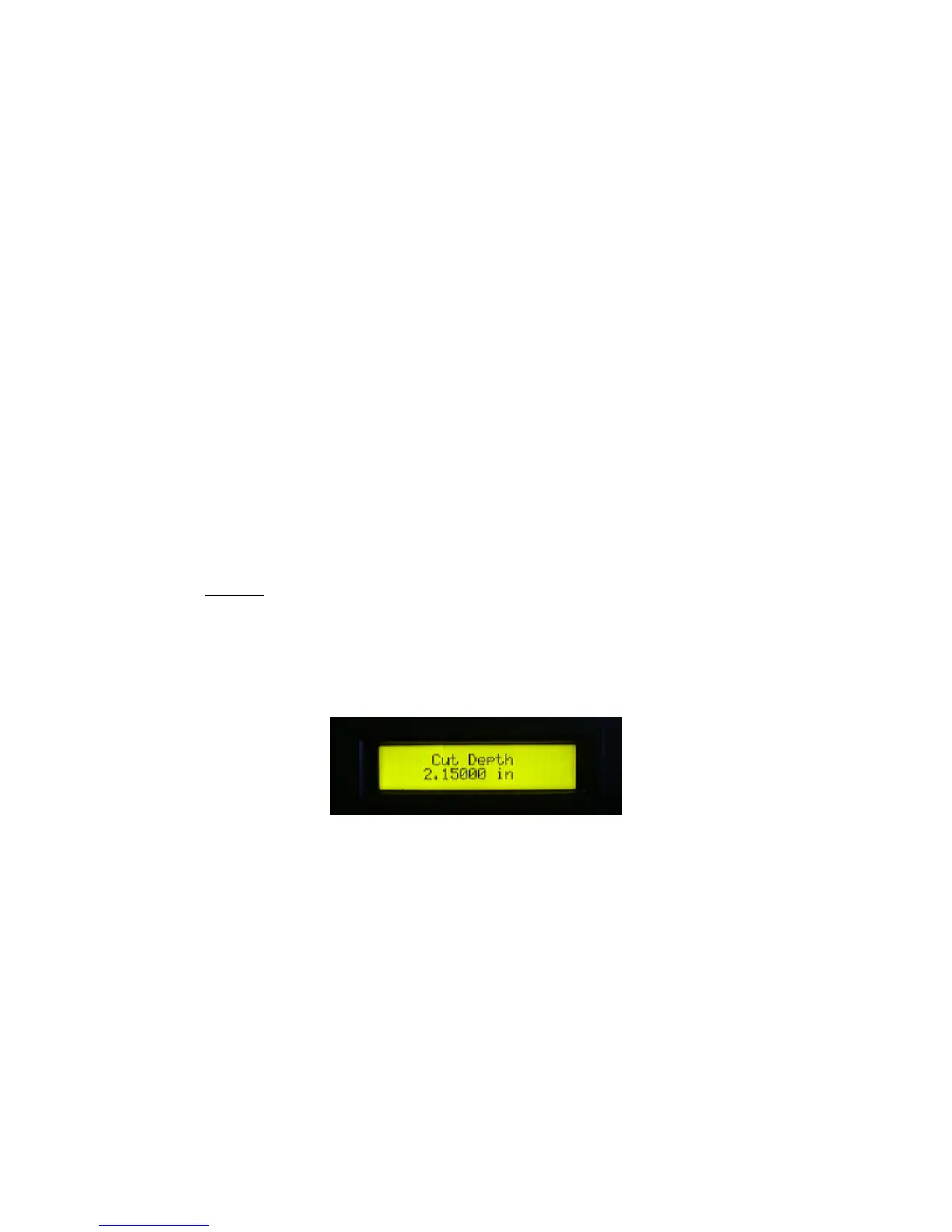
7. Use the up and down arrow keys to specify the total downward motion of the yoke. You must
take into account the distance above the part that is the starting position of the wire, the thickness
of the part itself, and the amount of desired bow. We recommend you test this depth in jog mode to
ensure you are not cutting too deeply into the mounting platform, and that you do not encounter the
lower limit of yoke travel.



 To Next Page