• 5 •
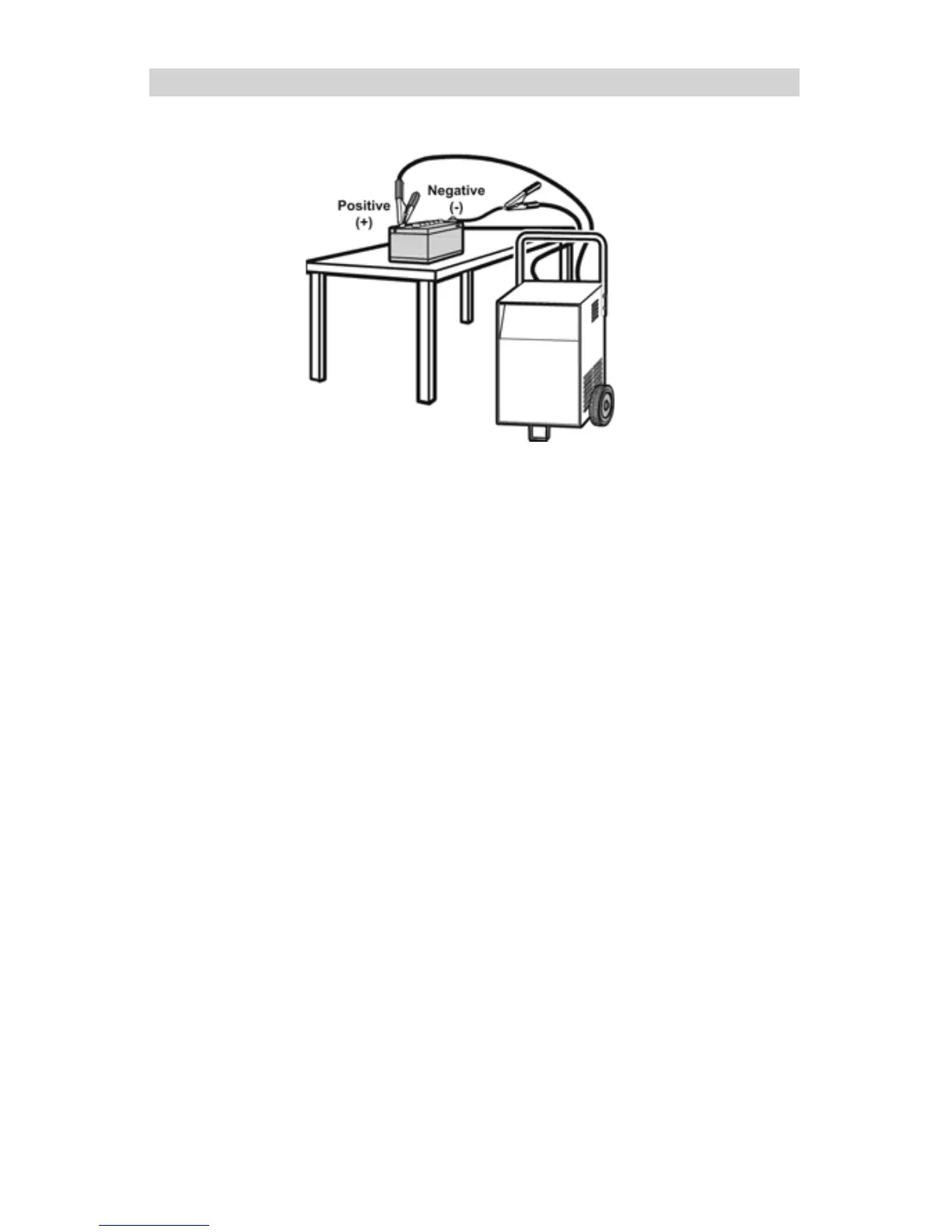
FOLLOW THESE STEPS WHEN BATTERY IS OUTSIDE VEHICLE. 7.
A SPARK NEAR THE BATTERY MAY CAUSE A BATTERY EXPLO-
SION. TO REDUCE THE RISK OF A SPARK NEAR THE BATTERY:
Check the polarity of the battery posts. The POSITIVE (POS, P, +) battery 7.1
post usually has a larger diameter than the NEGATIVE (NEG, N, -) post.
Attach at least a 24-inch-long 6-gauge (AWG) insulated battery cable to 7.2
the NEGATIVE (NEG, N, -) battery post.
Connect the POSITIVE (RED) charger clip to the POSITIVE (POS, P, +) 7.3
post of the battery.
Position yourself and the free end of the cable you previously attached to 7.4
the NEGATIVE (NEG, N, -) battery post as far away from the battery as
possible – then connect the NEGATIVE (BLACK) charger clip to the free
end of the cable.
Do not face the battery when making the nal connection.7.5
When disconnecting the charger, always do so in reverse sequence of 7.6
the connecting procedure and break the rst connection while as far away
from the battery as practical.
A marine (boat) battery must be removed and charged on shore. To 7.7
charge it onboard requires equipment specially designed for marine use.



 To Next Page