4445103618 19
Technical description
General description
MT LB 50: The device charges with 50 A while
driving. The charging power can be limited to
45 A.
MT LB 60: The device charges with 60 A while
driving. The charging power can be limited to
50 A.
MT LB 90:The device charges with 90 A while driv-
ing. The charging power can be limited to 75 A.
The charging booster can be adapted to different
battery types via DIP switches (see chapter “Setting
the charging program” on page 26).
The temperature sensor monitors the battery tem-
perature during the charging process (see chapter
“Temperature sensor” on page 21).
The charging booster is equipped with a remov-
able display panel for remote control.
The charging booster offers the following func-
tions:
• Microprocessor-controlled, temperature-com-
pensated IU0U charging programs for various
battery types
• Auxiliary charging output for the starting battery
• Buffer operation: Compliance with the charging
characteristics even when the battery is charged
with consumers connected
• On-board mains suppression filter: Ensures par-
allel operation of the charging booster with
other charging sources, for example mains sup-
ply chargers, solar systems or generators
• Automatic compensation of voltage loss caused
by the charging cable length (house battery)
The charging booster has the following protective
mechanisms:
• High voltage protection
• Low voltage protection
• High temperature protection
• Low temperature protection (only LiFePO4 bat-
teries)
• Battery overcharge protection
• Reverse current protection
• Protection against short circuit
• Reverse polarity protection (only for house bat-
tery connection)
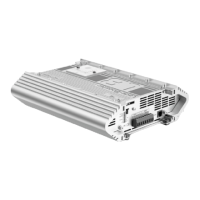
Description of the device
Connections and controls
Item in
fig. 1,
page 3
Designation
1Display panel
2 Rubber feet
3 Connections and controls
4 Temperature sensor
Item in
fig. 2,
page 3
Designation Description
1Service
connection
For authorized personal
only
2 VB–/VB+
terminal (OUT)
Inputs for sense cables to
measure and control the
charging voltage at the
house battery
3 T T terminal 2 connections for tem-
perature sensor
4 CI terminal (without function)
5 TR terminal Output for controlling a
bypass relay
6 VS–/VS+
terminal (IN)
Inputs for sense cables to
measure and control the
charging voltage at the
starting battery
7 D+ terminal Input for D+ signal of the
alternator or ignition lock
signal (terminal 15)
8DIP switches
battery type
Setting of the charging
program (see chapter
“Setting the charging pro-
gram” on page 26)


 To Next Page
 Loading...