DQ Technologies, Inc., phone: 512.248.8324 - www.dqtech.com
11
AD Plus2.0 Installation
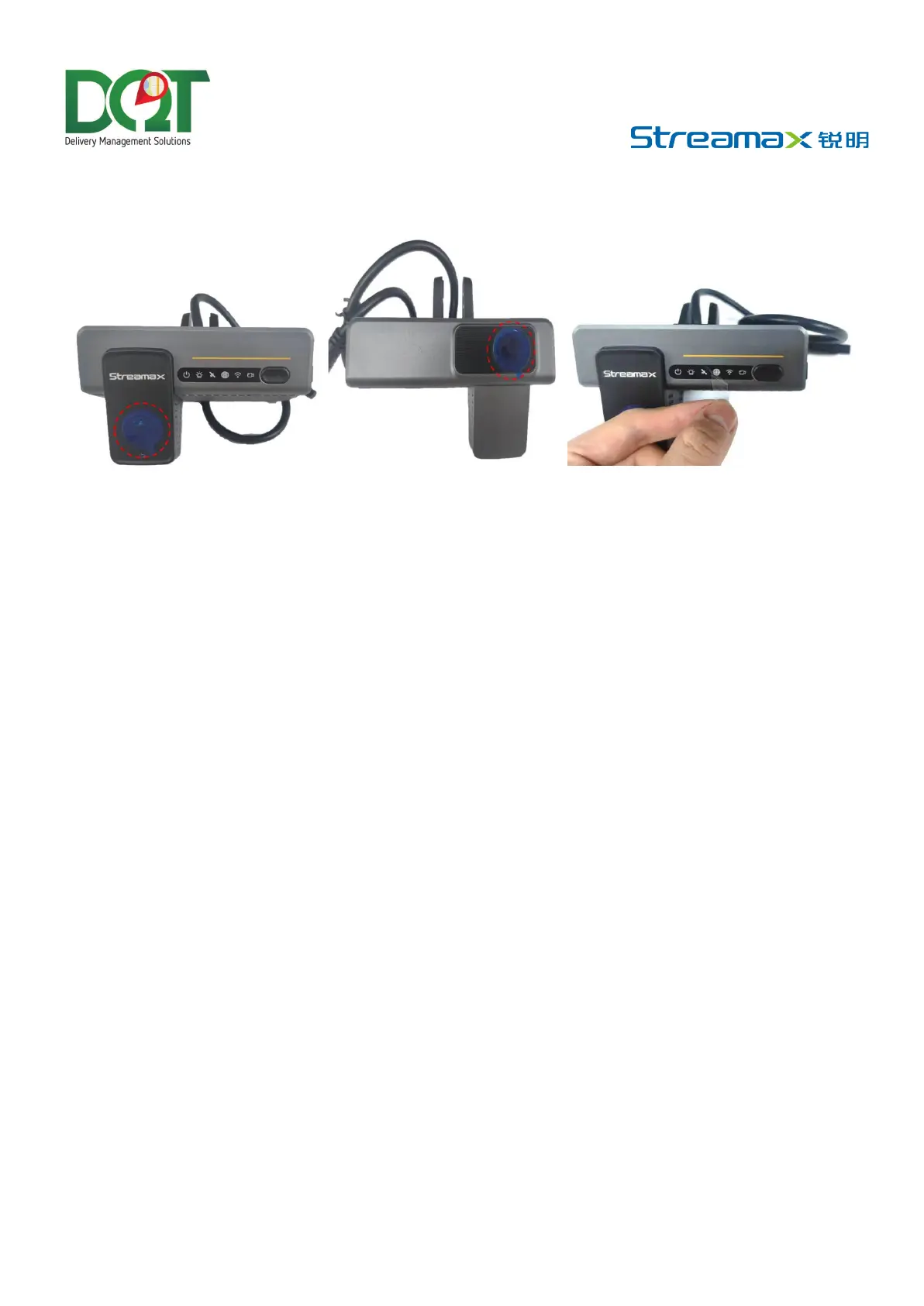
Remove the lens protection stickers on the front and rear lenses of the Dashcam and tear off the protective
film on the LED light on the front panel, as shown in the figure below.
Selection of Dashcam Installation Area
Requirements for installation area of AD Plus2.0:
• The Dashcam must be installed in the middle of the front windshield. It is generally installed in the
rearview mirror area above the centerline of the front windshield. A deviation less than 2” on the
left and right sides is allowed for the installation position if it is not feasible to install the device in
the middle as required (The deviation of the Dashcam relative to the centerline of the front
windshield shall be calculated with the centerline of the forward-facing lens).
• When conditions permit, the height of the DSC lens shall not exceed the height of the driver's
eyes, and the installation position shall be as low as possible provided that the driver's view is not
obstructed. The linear distance from the position of the DSC lens to the driver's face shall not be
more than 45”.
• The lens for road condition monitoring of the Dashcam must be within the working range of the
left and right wipers (to ensure that the screen of the lens for road condition monitoring is clean
and free from stains).
• The preferred vertical distance from the lens for road condition monitoring of the Dashcam to the
ground is in the range of 51”-94”.
• Avoid installing other electronic devices around the Dashcam, including ETC, intelligent rearview
mirrors, and electronic tags. They may affect the positioning signal of the device.
• The installation position should not obstruct the driver’s view of the front blind spot reflector, and
the field of view around the lens must remain clear of any obstructions (e.g., rearview mirror or
glass coating) for both cockpit and road monitoring.



 To Next Page