The E-LINEKX is a busbar energy distribution system manufactured by EAE Elektrik A.S. The manual provides comprehensive instructions for handling, installation, operation, and maintenance of the system.
Function Description
The E-LINEKX busbar system is designed for efficient and reliable electrical power distribution in various applications. It consists of extruded aluminum housing, PE fixing pieces, insulation layers (epoxy+polyester film), joint insulators, joint covers, Belleville washers, alignment pins, conductors, IP55 nut locking pieces, and protection plastics. The system allows for both horizontal and vertical installations and accommodates different types of tap-off boxes (plug-in and bolt-on) to supply energy to loads. Special length busbars and offset sizing modules are available for custom installations, ensuring flexibility in design and application.
Important Technical Specifications
- Busbar Lengths: Standard lengths are 3m, with special lengths available as detailed in project drawings. All modules have a block joint end, and the other end of the module does not have a block joint.
- Minimum Special Element Length: 35cm.
- Offset Sizing:
- Vertical Offset: Min = 250 mm, Max = 490 mm.
- Horizontal Offset: Min = 300 mm.
- The special length (X) is calculated as A - 25 cm, where A is the measured distance between the housing of two busbars.
- Support Distance: Recommended distance between supports is 1.5m, with a maximum distance of 2m. Support positions should not block joint covers or tap-off points.
- DDT Modules: Should be used at a minimum distance of 20cm from each floor concrete.
- Torque Values for Joints:
- Initial torque for bolts: 20 Nm.
- Final torque for bolts: 83 Nm (60 lbft).
- Locking piece torque: 40 Nm.
- Insulation Test: Minimum 1000V AC. Results should not be less than 1 MegaOhm / 30 meters.
- Protection Degree: IP55 & IP65 (Pressure Water: 3 Min, Under water: 30 Min), IP67. The selected IP rating should be suitable for the working environment.
- Neutral Bar Position: For horizontal busbar lines, the neutral bar should be at the bottom. For vertical busbar lines, it should be on the left. Phase changing modules are required to maintain this orientation in vertical installations.
- Tap-Off Boxes:
- Plug-in Busbar Tap Off Boxes (KXP): Designed for easy plug-in installation.
- Bolt-on Busbar Tap Off Boxes (KXB): Require de-energizing the busbar system for mounting or removal.
- Compatibility: Do not install plug-in tap-off boxes to bolt-on busbar points or vice versa. Do not install 4-wire tap-off boxes to 5-wire busbars or vice versa.
- Cable Feed Box Installation (B10, B11): Phase sequence of the feed box must match the busbar. Cable glands should be selected according to cable size and number. Incoming feeder cables for each phase should be of the same length.
Usage Features
- Installation: Installation should follow project drawings and this manual. Proper alignment is crucial to prevent collapses and bends. Busbars should be handled with care to avoid damage.
- Safety:
- Installation, operation, and maintenance must be carried out by qualified personnel trained in electrical equipment, occupational safety, and first aid.
- Personal protective equipment (rubber gloves, helmets, safety glasses, flash-resistant clothing) must be used.
- Busbar system must be de-energized before mounting or removing bolt-on tap-off boxes.
- Dangerous voltage levels can cause serious injury or death.
- Damaged busbars (e.g., by water or moisture) can cause property damage, injury, or death.
- Seismic support systems should be used in earthquake-risk areas.
- Environmental Conditions: Protect busbars from water and moisture during installation. Busbars not completely assembled have no protection against water. Outdoor busbars are not weatherproof until installation is complete.
- Storage: Store in a clean, dry space with uniform temperature, adequate air circulation, and protection from dirt, fumes, and water. Cover with waterproof sheets if stored for an extended period.
- Energizing:
- No electrical load should be present on the busbar system when it is first energized.
- Energizing should be done in sequence, starting from the welding end of the system and working towards the load side.
- All tap-off boxes must be in the "OFF" position before energizing.
- Qualified electrical personnel must be present during initial energization.
- Loads must be switched in sequence after energization.
- Noise: A moderate hum is normal during proper operation. Excessive noise may indicate loose hardware or improperly mounted metal parts.
- Spark Formation: Not normal. If sparks occur, de-energize and correct the condition.
- Chemicals: Do not apply oil or chemicals to joints or tap-off box contacts. Hydrocarbon sprays can degrade plastics.
Maintenance Features
- External Inspection: An external inspection of the system should be carried out once a year.
- Moisture Elimination: Any dripping or other source of moisture onto the busbar modules should be eliminated from the installed area.
- Tap-Off Box Mechanism Check: Operating mechanisms of all electrical and mechanical interlocks in tap-off boxes should be exercised to ensure they operate freely to their full on and off positions.
- Load Current Measurement: The total continuous load current should be measured by a proper instrument. It must not exceed the current rating on the busbar nameplate or the designated design current.
- Infra-Red Temperature Test: After inspections and repairs, an infra-red temperature test on all electrical connections is recommended once the busbar system is re-energized and reaches a stabilized operating temperature.
- Cleaning: If dust and dirt accumulate, clean with a soft brush, vacuum cleaner, or lint-free rags. Do not use blowers or compressed air to avoid blowing dust into joints or circuit breakers.
- Joint Tightness: All joints should be correctly tightened according to the specified torque value and marked. Locking plates should then be installed correctly.
- Insulation Resistance Test: Conducted with a 1000V AC insulation resistance tester between phases, neutral, and earth. Permanent records of readings should be kept. If readings are below 1 MegaOhm / 30 meters, the cause should be investigated.
- Phase Sequence Check: The system phase sequence should be checked to match busbar phases before reconnecting to transformers, switchboards, and meters.

 Need help?
 General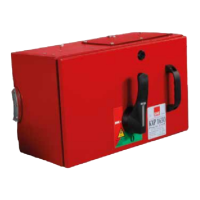

 To Next Page