Venting Part 6: Vent Terminations for All Single Pipe Applications
Intake and exhaust pipes should terminate at a rooftop or side wall location. Keep exhaust plumes well
away from all building air intakes including those of neighbouring properties.
All venting must be installed in accordance with the requirements of the jurisdiction having authority: in Canada, Part
8, Venting Systems of the B149.1-10 Code and any other local building codes are to be followed. In the USA the
National Fuel Gas Code, ANSI 223.1, latest edition, prevails. Where there is a discrepancy between the installation
instructions below, and the code requirements, the more stringent shall apply.
Rooftop Single Pipe Vent Termination
Rooftop vents must terminate as follows:
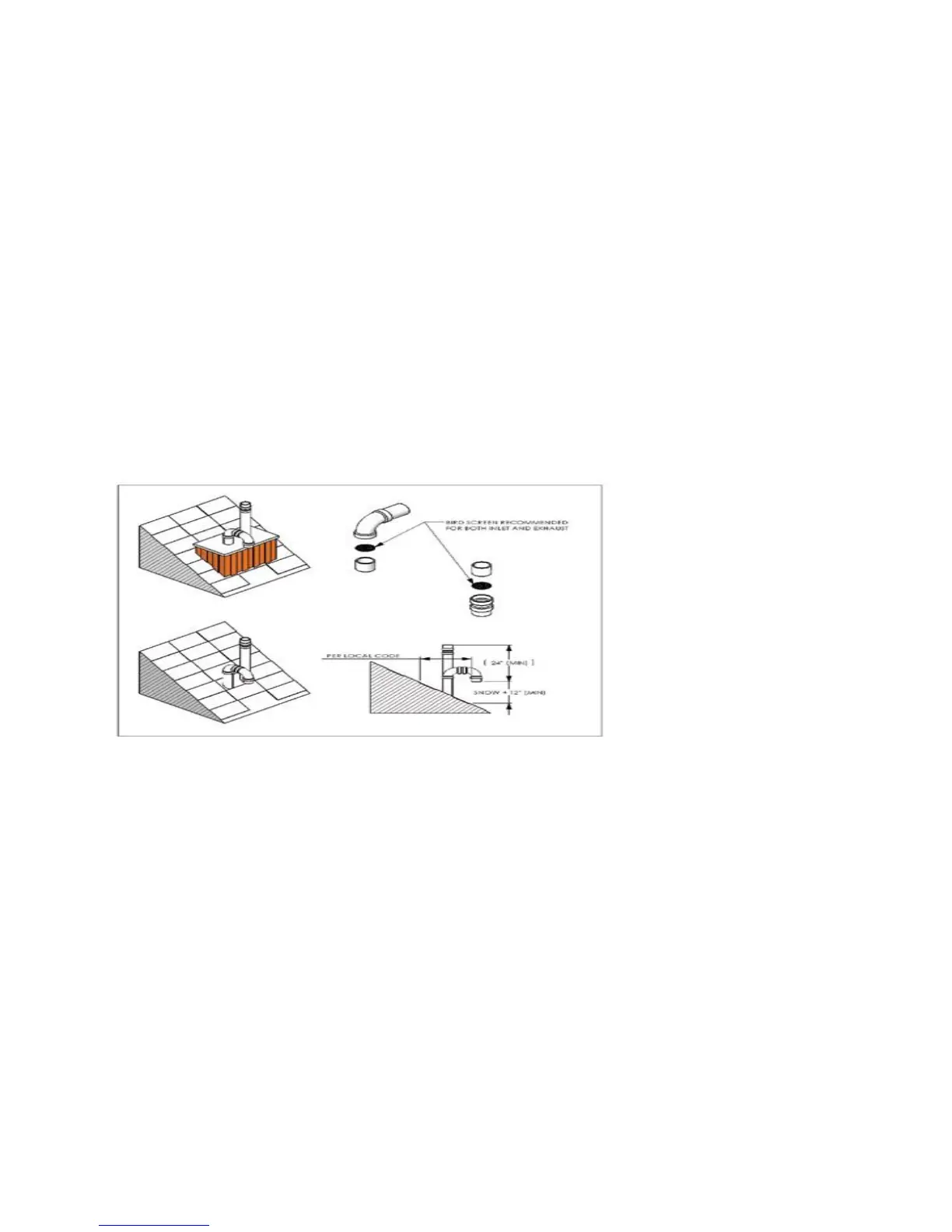
• The exhaust pipe can terminate in an open vertical orientation without concern about rain infiltration because this
will drain away through a properly configured condensate trap.
• If used (see section 4 above and in cases where air intake is brought from sidewall) the intake air pipe is not
typically drained, so it must be terminated with a down-turned elbow (see Figure 5). The intake pipe does not need
to penetrate the roof at the same elevation as the exhaust; lower down the roof is OK.
• To promote the projection of exhaust away from the building and from the intake pipe, minimum distance between
intake and exhaust outlet should be 12”
• Optional bird screen may be placed in a termination fitting. Leave unglued, and hold in place with a short nipple.
This permits easy access for cleaning.
• DO NOT exhaust vent into a common venting system.
35


 To Next Page