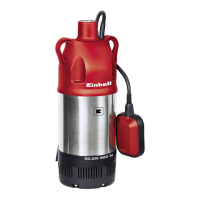
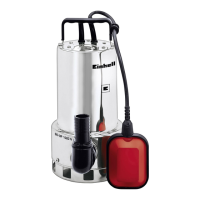
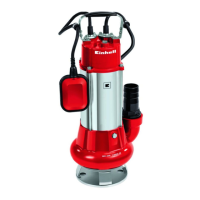
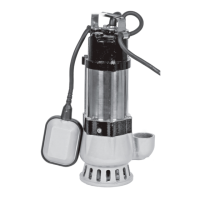
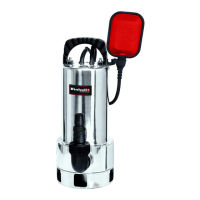
This document provides comprehensive instructions for the safe and effective operation, maintenance, and disposal of your deep well pump. It is crucial to read and understand all safety regulations and operating instructions thoroughly before using the equipment to prevent injuries and damage. Keep this manual in a safe place for future reference and ensure it is passed on to any subsequent users of the equipment. The manufacturer cannot accept liability for damage or accidents resulting from a failure to follow these instructions.
Function Description
The deep well pump is designed to pump water with a maximum temperature of 35 °C. It is suitable for various applications, including moving water in the house, garden, and other general uses. However, it is explicitly not designed for pumping aggressive liquids, abrasive substances, engine fuels, cleaning agents, or other chemically-based products. The equipment is also not intended for use in swimming pools, paddling pools, or any other bodies of water where people or animals may be present during operation. Operating the pump in such environments is strictly prohibited. If you intend to use the equipment in natural, muddy-bottomed bodies of water, it should be placed in a slightly elevated position, such as on bricks, to prevent clogging. The pump is not designed for continuous operation, such as a circulating pump in a pond, as this would significantly shorten its lifespan due to continuous loading. The equipment must be used only for its prescribed purpose; any other use is considered misuse, and the user/operator will be liable for any resulting damage or injuries. This equipment is not designed for commercial, trade, or industrial applications, and its warranty will be voided if used in such settings. The water being pumped may be contaminated by escaping lubricating oil or lubricant.
Usage Features
Before putting the equipment into operation, it is essential to have a specialist check that the earthing, protective multiple earthing, or residual-current operated circuit-breaker circuit complies with the safety regulations of the power supply company and functions correctly. The pump must be powered via an earth-leakage circuit breaker (RCD) with a rated fault current of no more than 30 mA. Electrical plug-in connections must be protected from wet conditions. If there is a risk of flooding, place the plug-in connections in an area safe from water.
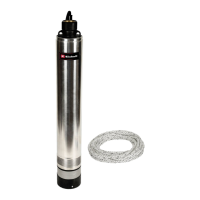
The equipment can be installed either stationary with a rigid pipe line or stationary with a flexible hose line. Connect the pressure hose or pipe to the pressure connector (1) using a suitable connector. Fasten the securing cable (4) to the suspension eyelet (Fig. 1/Item 2). When installing, never hang the equipment by the discharge line or the power cable; always use the provided suspension eyelets. The pump shaft should be large enough. Before using the pump, clarify any possible special conditions for installation. Additional safety measures, such as pumps running in parallel on a separately protected power circuit or moisture sensors for switching off pumps, may be necessary if property damage could result from a power failure, soiling, or a defective gasket. Consult a professional plumber if you have any doubts. The maximum pumping rate is achieved with the largest possible line diameter; using smaller hoses or pipes will reduce the pumping rate.
The equipment comes with an earthing-pin plug and is designed for connection to a socket outlet with earthing contact for 220-240 V ~ 50 Hz. Ensure the socket-outlet is sufficiently fused (at least 6 A) and in good working order. Insert the power plug into the socket-outlet to prepare the equipment for operation.
To operate the pump:
- Check that the discharge line is fitted correctly.
- Ensure the electrical connection is 220-240 V ~ 50 Hz.
- Verify that the electrical socket-outlet is in good working order.
- Make sure no moisture or water ever reaches the power connection.
- Lower the pump into the well or shaft using the securing cable.
- Ensure the pump is completely under the surface of the water and approximately 10 cm above the bottom.
- Make sure the equipment does not run dry.
To switch off the equipment, pull the power plug out of the socket outlet.
Maintenance Features
Always unplug the power plug before performing any maintenance work. For mobile applications, the equipment should be cleaned with clear water after every usage. To clean the dirt screen and intake section, undo the fastening screws on the dirt screen (Figure 1/Item 3), clean the components, and then reinsert the dirt screen. There are no other parts inside the equipment that require additional maintenance.
If the power cable for this equipment is damaged, it must be replaced by the manufacturer, its after-sales service, or similarly trained personnel to avoid danger.
For ordering replacement parts, please quote the machine type, article number, identification number, and the required replacement part number. You can find the latest prices and information on www.Einhell-Service.com.
Disposal and Recycling
The equipment is supplied in packaging to prevent transit damage. The raw materials used in the packaging can be reused or recycled. The equipment and its accessories are made of various materials, including metal and plastic. Never dispose of defective equipment in household refuse. It should be taken to a suitable collection center for proper disposal. If you do not know the whereabouts of such a collection point, inquire at your local council offices. For EU countries, electric power tools must be separated from other waste and disposed of in an environment-friendly fashion, such as by taking them to a recycling depot, in compliance with European Directive 2012/19/EC. As an alternative to returning the equipment to the manufacturer, the owner must ensure proper disposal if they no longer wish to keep it. The old equipment can be returned to a suitable collection point that will dispose of it in accordance with national recycling and waste disposal regulations. This does not apply to accessories or aids without electrical components supplied with the old equipment.
Storage
Store the equipment and accessories in a dark and dry place, above freezing temperature. The ideal storage temperature is between 5 and 30 °C. Store the electric tool in its original packaging.


 To Next Page

 General