
 Need help?
Do you have a question about the elco EKEVO N6.2400 GL-E and is the answer not in the manual?
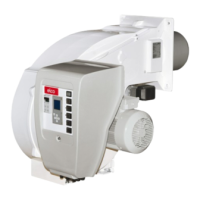
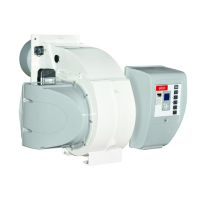
This document describes the Elco Burners, a range of dual-fuel and oil burners designed for various heating applications. The manual provides detailed information on installation, commissioning, maintenance, and technical specifications for different models, including N6/N7/N8/N9 and EKEVO 6/EKEVO 7/EKEVO 8/EKEVO 9 series.
The Elco Burners are forced draught burners designed to efficiently combust natural gas, light fuel oil, or a combination of both (dual-fuel). They are equipped with advanced electronic control systems to regulate the combustion process, ensuring optimal performance and compliance with environmental standards. The burners feature a servomotor-controlled air flap for precise air-fuel mixture adjustment, and various safety devices to ensure reliable operation. Depending on the model, they can be configured for intermittent/continuous operation and offer different control functionalities, including remote control and programming. The dual-fuel burners allow for flexible operation based on fuel availability and cost, switching between gas and oil as needed.
The Elco Burners come in various models with different power outputs and fuel types. For gas burners, models like N6.2400, N7.3600, N8.5800, and N9.10400 offer power ranges from 2300 kW to 11230 kW for natural gas. EKEVO models, such as EKEVO 6.2400 and EKEVO 9.10400, also cover similar power ranges. The gas pressure switches (GW...A5/A6) are designed for monitoring gas pressure, with operating pressures up to 500 mbar or 600 mbar, and an IP 54 protection level.
For dual-fuel burners, models like EKEVO/N 6.2400 (GL-RZ3) offer 290 kW for light fuel oil and 2550 kW for natural gas, while EKEVO/N 9.10400 (GL-EUF) can reach 2550 kW for light fuel oil and 9570 kW for natural gas. Oil burners, such as EKEVO/N 6.2400 (L-EF3), provide 360 kW for light fuel oil, and EKEVO/N 9.10400 (L-EUF) delivers up to 2550 kW.
The servomotors (STE 4.5 and STM 40) operate on 24 VDC or 230 VAC, with power consumption up to 7.5 W, and offer an angle of rotation of 90° or 180°. The nominal torque for STE 4.5 is 3 Nm, and for STM 40 is 15 Nm. The pump type TA, used in fuel-oil systems, has a pumping capacity ranging from 100 to 1900 L/hr, with a pressure range of 35-7 to 30 bar. The heating cartridge for the pump operates at 80-100 W. Flame sensors, such as FFS 08 (IR) and QRA 2, are used for flame monitoring, with different spectral ranges and operating modes (continuous or intermittent/continuous operation).
The Elco Burners are designed for ease of installation and operation. The air box can be rotated in 45° increments up to 180° to accommodate different air duct connections, providing flexibility in installation. The burner control unit (BT300) offers a user-friendly interface with manual terminal display for setting parameters and monitoring operation. For gas train components, various double gas valves (VGD and MBC) and gas filters are used, with detailed instructions for adjustment and replacement. The fuel-oil system includes a feeder pump or direct suction, with pressure switches and hydraulic blocks for precise fuel delivery. The nozzle selection charts (W2 - 45°/50°, Sonic 60°, Sonic 45°) provide guidance on selecting the appropriate nozzle based on desired oil throughput and supply pressure. The electronic control system ensures optimal combustion and safety, with automatic start-up and shut-off modes.
Regular maintenance is crucial for the longevity and efficient operation of the Elco Burners. Key maintenance tasks include checking and cleaning combustion components (deflector, nozzles, ignition electrodes, flame sensors), inspecting gas train components (filters, valves, pressure switches), and verifying the fuel-oil system (filters, pump, pressure switches). The manual provides detailed instructions for disassembling and reassembling components, such as the servomotor and air box grille, to facilitate cleaning and inspection. For instance, the fan wheel can be removed for cleaning by loosening specific screws. The filter element in the MBC-300-700-1200-SE pressure regulation component should be replaced at least once a year. The ignition electrodes and flame sensors should be checked for wear and replaced if necessary. The burner control unit stores operational data, which can be used for troubleshooting and preventive maintenance. The document also provides a comprehensive fault diagnosis and remedy guide for common issues like uneven atomization, combustion component deposits, and flame sensor malfunctions. It emphasizes the importance of using original spare parts and adhering to safety regulations during all maintenance procedures.



 To Next Page
 General