CMS200 Product Manual, Issue 6
www.nexo.com Page 37
4. ALARMS AND TROUBLESHOOTING
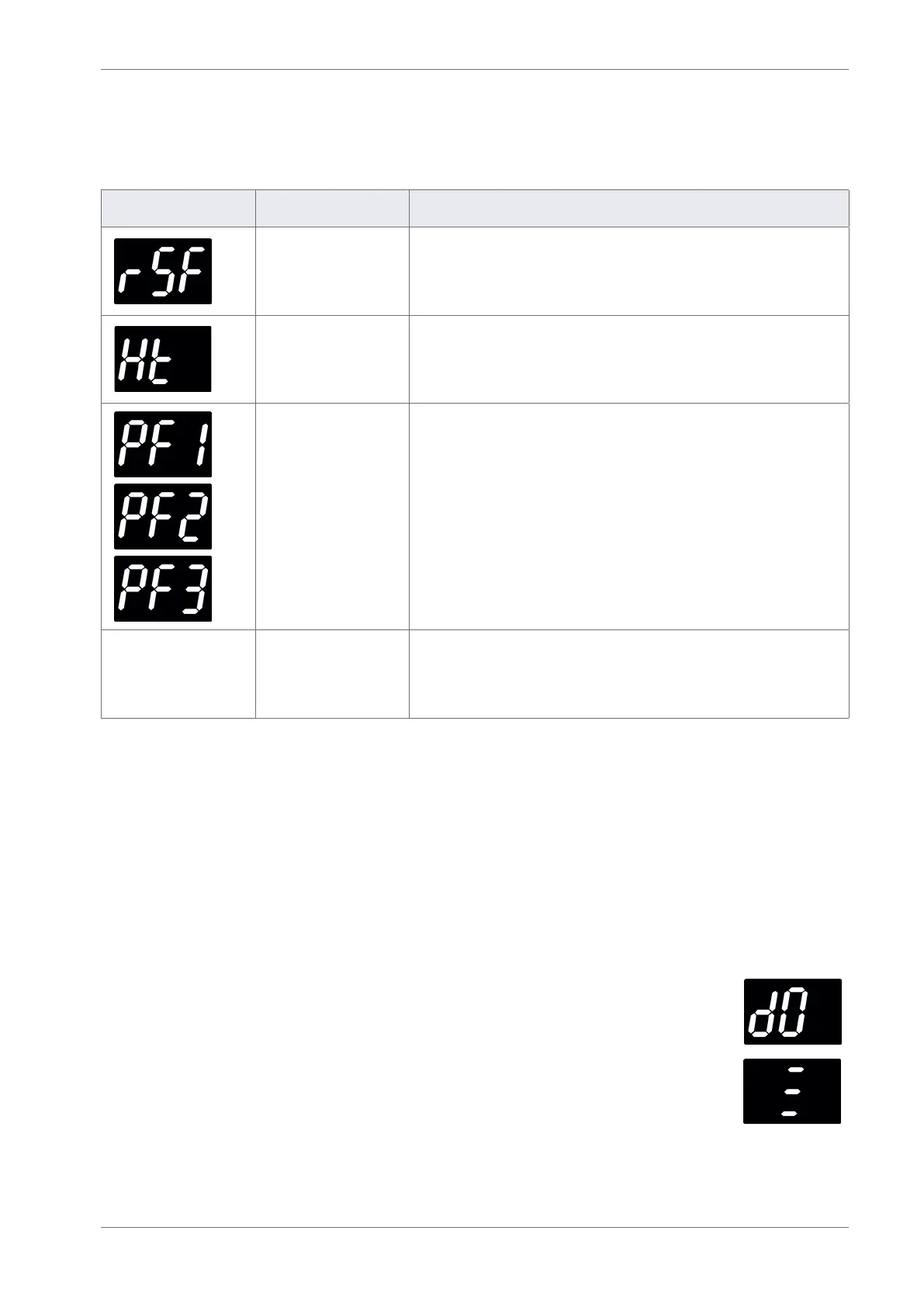
The CMS200 controllers can be set to sound a buzzer with alarm conditions. The following table shows
examples of alarms that could be displayed on an CMS200 controller.
Problem or Alarm Meaning Action
Refrigeration
system failure
Refer to Cooler & Controller Trouble Shooting Tips -
Refrigeration system failure (rSF) alarms
Condenser high
temperature
Refer to Cooler & Controller Trouble Shooting Tips - Condenser
high temperature (Ht) alarms
Sensor failures
Appliance sensor (PF1): Refer to Cooler & Controller Trouble
Shooting Tips - Appliance Sensor Alarms.
Condenser sensor (PF2): Refer to Cooler & Controller Trouble
Shooting Tips – Condenser Sensor Alarms
Evaporator sensor (PF3): Refer to Cooler & Controller Trouble
Shooting Tips – Temperature sensor alarms
Cooler lights do not
switch on
Refer to Cooler & Controller Trouble Shooting Tips - Other
Problems.
Note: Controllers normally switch the cooler lights o in the
Saving mode.
4.1 ‘Limp home’ functionality
As the CMS200 acts as a diagnostic device, and manages various operational functions of the cooler it
serves to prevent faults from becoming critical to the cooler, for example over working of the compressor.
The limp home functionality has been added to the CMS200 controller in order to allow time for the end
user to contact a service engineer in the event of any such problems occurring, while preventing damage to
major cooler components.
4.2 Door open alarms
CMS200 controllers display d0 to show that the cooler door is open. However, if the
cooler door remains open for the duration dened by alarm delay (Ad) parameter, an
alarm buzzer sounds. Then, if the cooler door is still open after the time dened by the
buzzer duration (b1) parameter, the controller switches o the compressor and displays
three horizontal bars, for the duration of rest time (RT).
Once RT has expired and SP+Dif have been exceeded the controller will enter door open
limp home mode.
Door open alarms are triggered if the cooler door is left open for longer than the time dened by the alarm
delay (Ad) parameter. If the door is closed, and a door open alarm is registered, this may indicate problems
with the cooler door or the door switch.



 To Next Page