192 ESI Operation Manual
The auxiliary envelope generator is commonly used to control the cutoff
frequency of the Z-plane filter. This allows the frequency content to be
varied dynamically over the course of the note. Dynamic filtering,
coupled with all the different instruments available, makes for endless
possibilities in the final sound.
Another control on the filter is called Q, or resonance. On a lowpass or
highpass filter, turning up the Q of the filter emphasizes the frequencies
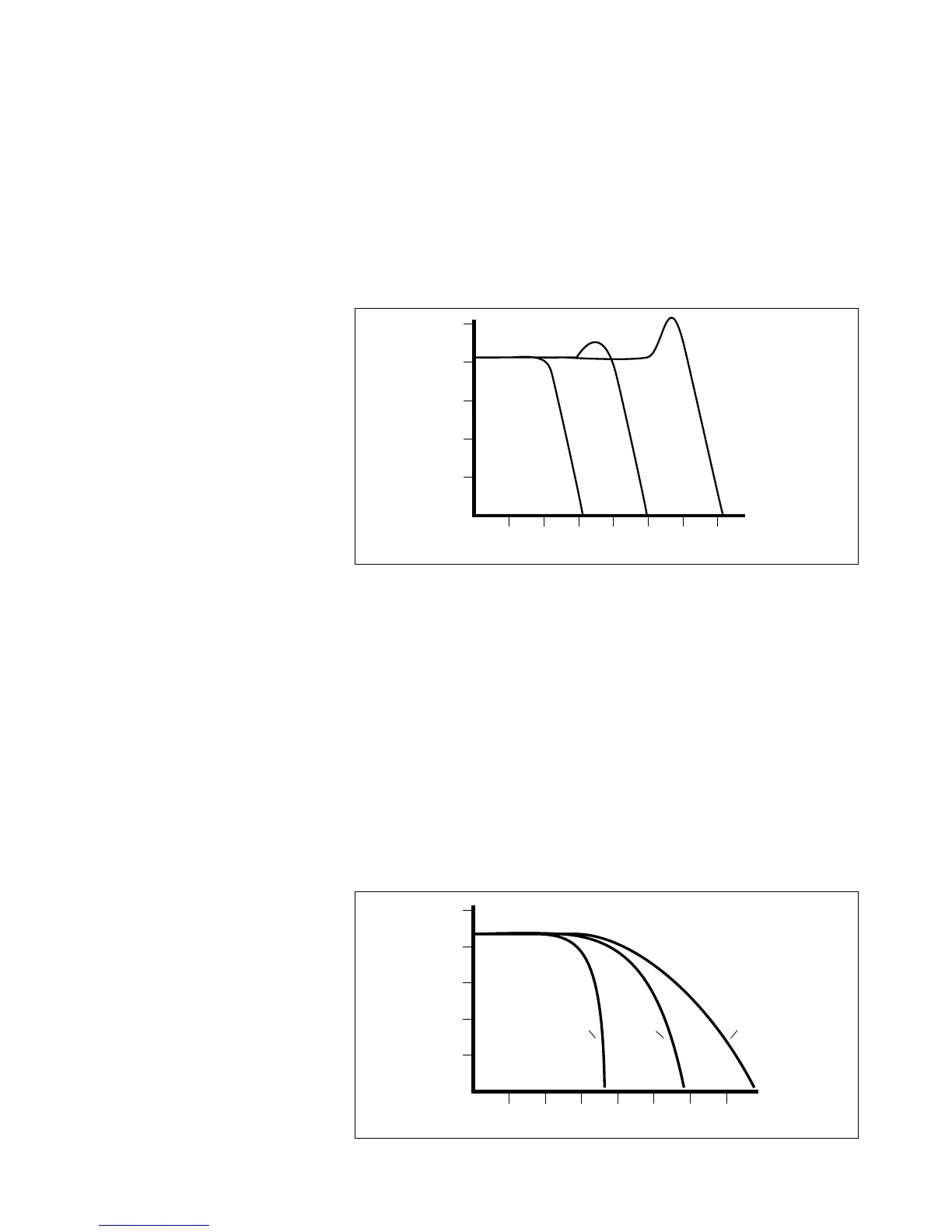
around the cutoff frequency. The chart below shows how different levels
of Q affect the lowpass filter response.
Turning up the “Q” emphasizes the frequencies around the cutoff point.
Frequency
Amplitude
Low Q Med Q High Q
In terms of sound, frequencies around the cutoff tend to “ring” with high
Q settings. If the filter is swept back and forth slowly with a high Q,
various overtones will be “picked out” of the sound and amplified as the
resonant peak sweeps over them. Bells and gongs are real world ex-
amples of sounds which have a high Q.
Another important feature of a filter is the number of poles it contains.
The lowpass filters can be either 2-pole, 4-pole or 6-pole filters. The
highpass and bandpass filters can be either 2nd or 4th order filters,
which is another way to describe the number of filter sections they
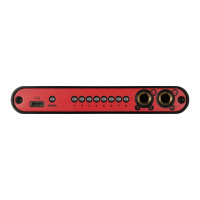
contain. The number of poles in a filter describes the steepness of its
slope. The more poles the steeper the slope, which in turn affects the
sound. In general, the 2-pole filter will have a buzzier sound and the
4-pole filter has the classic low pass resonant filter sound. ESI's 6-pole
low pass filters create a tight, modern sound.
Frequency
2-pole6-pole
Amplitude
4-pole



 To Next Page