36
liquid in pressure measuring line.
6.1.4 Cleaning Method for the Exhalation Valve Assembly
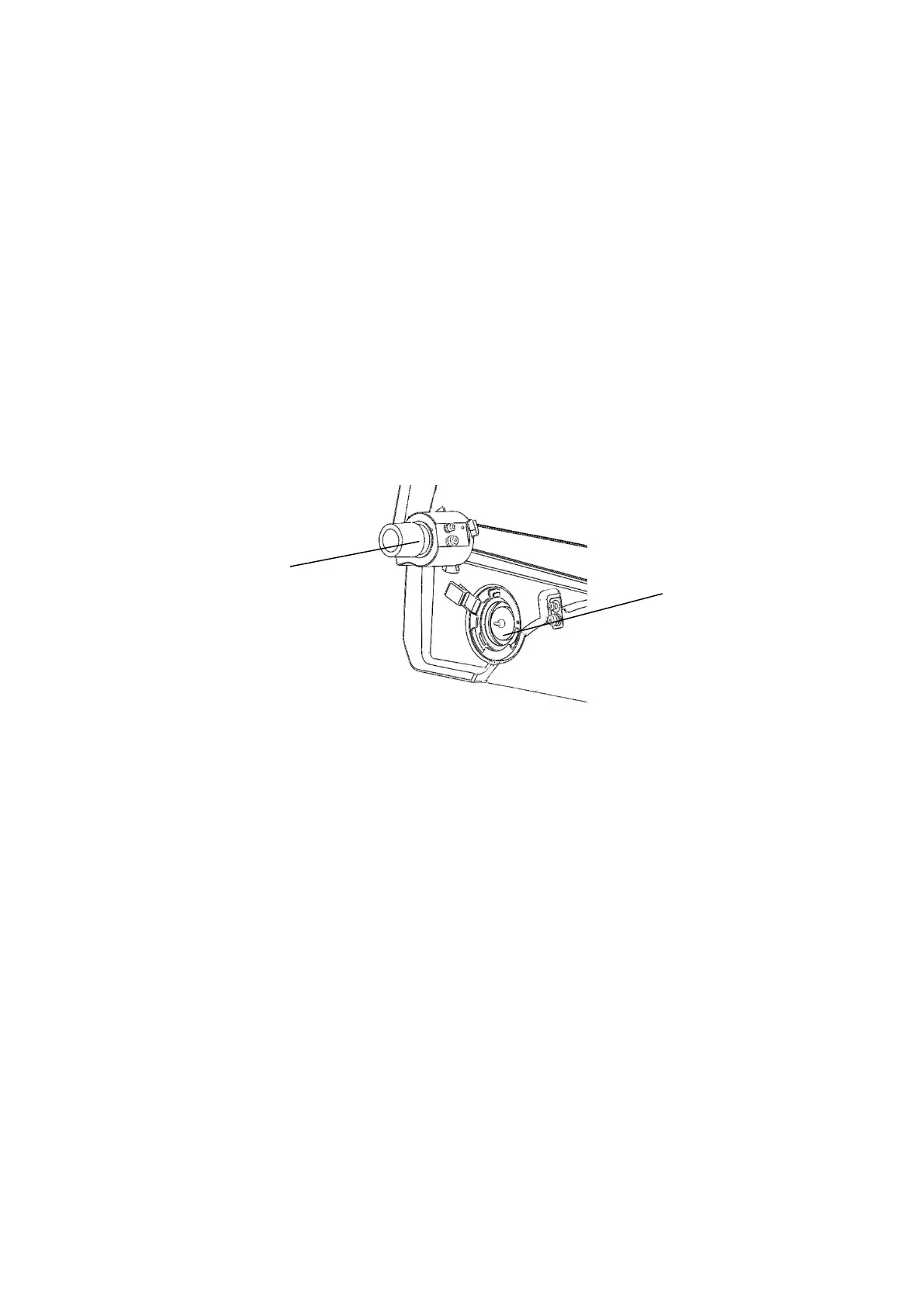
Remove the Exhalation Valve Assembly for Cleaning
1. Press and hold the release latch on the lower right left of the exhalation valve housing.
2. Grasp the exhalation valve body, and then gently pull it free from the housing.
3. rotate platen counter-clockwise until it is removed, Grasp the exhalation valve diaphragm and
remove it from the exhalation valve body.
4. Using a clean soft cloth and Isopropyl Alcohol, wipe all exposed surfaces around the exhalation
valve housing. Do not allow cleaning fluid to spill into the opening in the exhalation valve housing.
To Clean the Exhalation Valve Body and Diaphragm:
1. Soak in Klenzyme solution for 5 minutes. Klenzyme bath may be heated to a maximum of 67 °C
(152 ºF).
2. Rinse in distilled water. After cleaning the surfaces, make sure all excess cleaning solution is
completely removed to prevent residue buildup. Dry with a soft cloth or allow to air dry.
Figure 6-1 Removing of Exhalation Valve
6.1.5 Method of Sterilization for the Exhalation Valve Assembly
The preferred method of sterilization is Steam Sterilization (autoclave), minimum 132° C (270° F)
maximum temperature 134 ºC (273 ºF). It is recommended that the accessories listed above be
replaced after 30 cleaning and sterilization cycles.
1. After cleaning the surfaces, make sure all excess cleaning solution is completely removed
toprevent residue buildup.
2. Sterilize the exhalation valve body and diaphragm using steam autoclaving within the guidelines
stated above.
3. Using a low flow gas source (less than 10 L/min) ensure the differential pressure tubes are free
of moisture and debris.
4. To avoid possible damage to elastomeric components, the peak temperature for Respiratory
Care accessories should not exceed 275 °F (135 °C) for steam autoclave.
5. Steam autoclave at 0 gravity cycle time is 15 minutes. At HiVac (20 psi) cycle time is 7 minutes
and drying time is 10 minutes.



 To Next Page