48
ABF 05-10-15
ENGLISH
Section 6 ROUTINE AND PROGRAMMED MAINTENANCE
The information in this section regards the user, or other non-specialized personnel, and the routine maintenance technician.
6.1 BASIC SAFETY REGULATIONS
We summarize the safety regulations already shown in heading 1.5 to ensure that the user or maintenance technician can perform
the work in conditions of total safety:
- do not touch the unit with wet hands and/or feet
- do not use the appliance with bare feet
- do not insert screwdrivers or other pointed objects between guards or moving parts of the appliance
- do not pull the power cord to disconnect the appliance from the electrical mains
- before performing any cleaning or maintenance on the appliance disconnect it from the electrical mains by switching of
the main switch and extracting the plug
6.1.1 Prohibited: removal of guards and safety devices
It is strictly forbidden to remove guards or safety devices when performing routine maintenance work. The manufacturer disclaims all
liability that may arise if this regulation is not observed.
6.1.2 Indications on emergency measures in case of re
- disconnect the appliance from the electrical power socket or switch off the master switch on the electrical mains line
- do not use water to douse res
- use powder or foam extinguishers
6.2 CLEANING THE APPLIANCE
The unit is designed to preserve food products so it is important to keep it clean for reasons of hygiene and health. The appliance is
thoroughly cleaned in our factory before delivery. We recommend, however, that you clean the interior of the appliance before use.
Before cleaning the appliance make sure the power cord is disconnected.
6.2.1 Cleaning the interior and exterior of the appliance
- cleaning products: water and non-abrasive neutral detergent. DO NOT USE SOLVENT OR THINNERS
- cleaning method: use a cloth or sponge soaked in a suitable cleaning product to clean the interior and exterior parts of the
cabinet
- sanitation: do not use substances that could alter the taste and smell of stored food
- rinsing: use a cloth or sponge soaked un clean water. DO NOT USE WATER JETS
- frequency: once a week or at different intervals in accordance with the type of food product conserved.
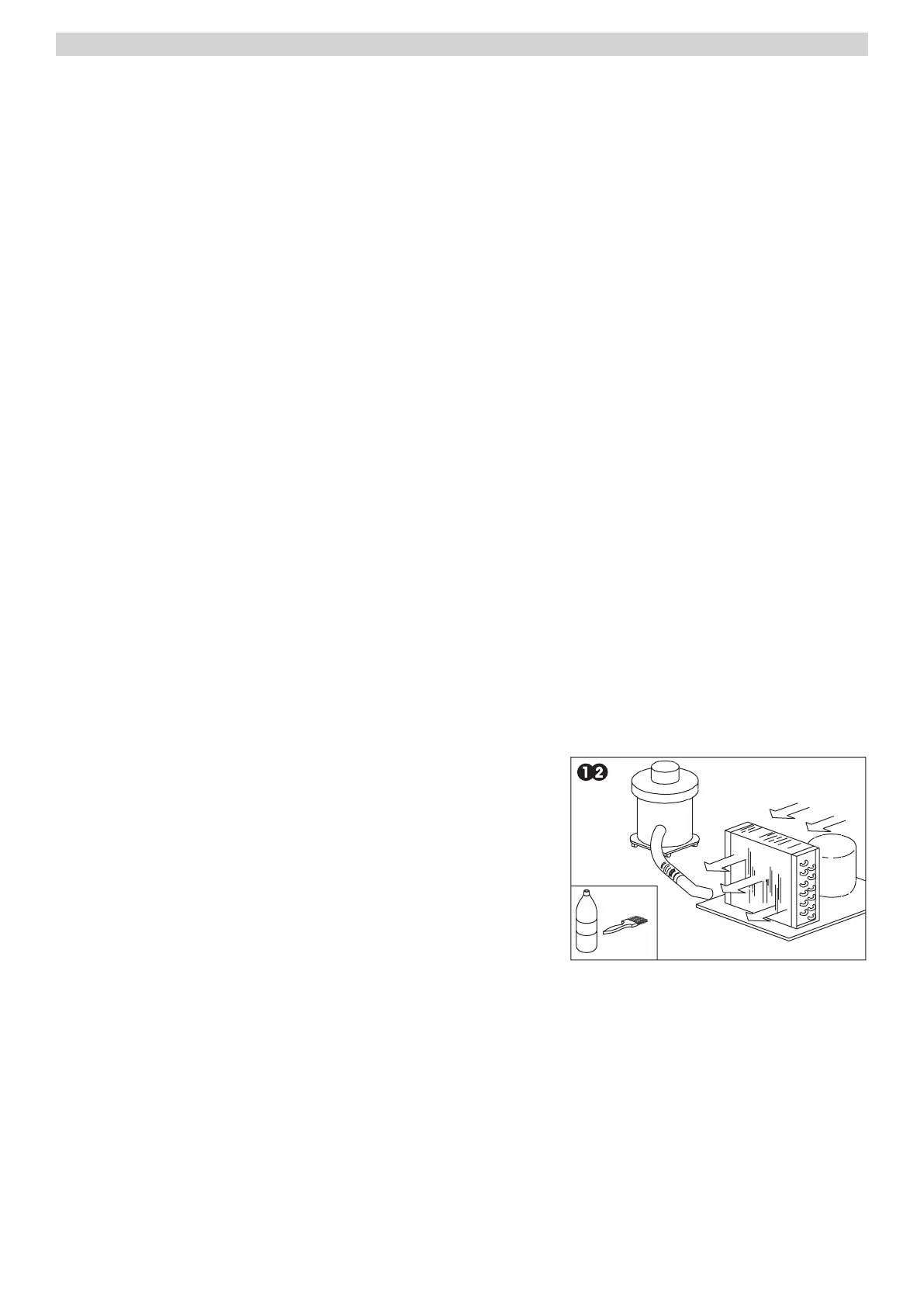
6.2.2 Cleaning the condenser
The condenser will work less efciently if it is obstructed with foreign material so
it must be cleaned once a month. Before cleaning the condenser switch off the
appliance, disconnect the power cord and proceed as follows:
Open the control panel by slackening the screws and pulling it down on its hin-
ges
Use an air jet or dry brush and, working with up and down movements (Fig.12),
remove any dust or uff that has deposited on the heat exchanger ns. If there
are greasy deposits on the ns use a brush soaked in benzene or alcohol. After
cleaning, start the appliance as described in heading 5.1 and 5.2 (with bottom
motor models, remember to close control panel).
During this operation use the following personal safety measures: safety glasses,
respirator mask, chemical resistant gloves (benzine - alcohol).
6.3 PERIODIC CHECKS
The following areas of the appliance or component assemblies require periodic checking:
- condition and efciency of the door sealing elements
- condition of shelves in contact with food products
- condition of hinges and correct xing of the doors
- condition of electrical cables and electrical parts
6.4 PRECAUTIONARY MEASURES FOR PROLONGED DISUSE
If the appliance is to remain unused for more than 15 days proceed as follows:
- switch off the appliance and disconnect it from the electrical supply
- clean the interior of the cabinet, shelves, trays, runners and supports, paying special attention to critical areas such as
articulations and magnetic sealing strips in accordance with the indications in heading 6.2.
- leave doors slightly open to prevent accumulation of residual humidity



 To Next Page