© Ferno-Washington, Inc. 234-3257-01 December, 2004 19
Ferno Model 50-E Setup
6 - STRETCHER SETUP
6.2 Guidelines for Using Restraints
• Three restraints must be used to properly secure
a patient: one harness restraint (torso and pelvis
straps) and two one-piece restraints. See
Accessories and Related Products, page 37 to
order restraints.
• To meet Australian crash standards, all three
restraints must be used and attached as shown in
this manual.
• Dispose of and replace restraints that are worn,
damaged, or have been involved in a vehicular
accident. Restraints that have been involved in a
vehicular accident could have hidden damage.
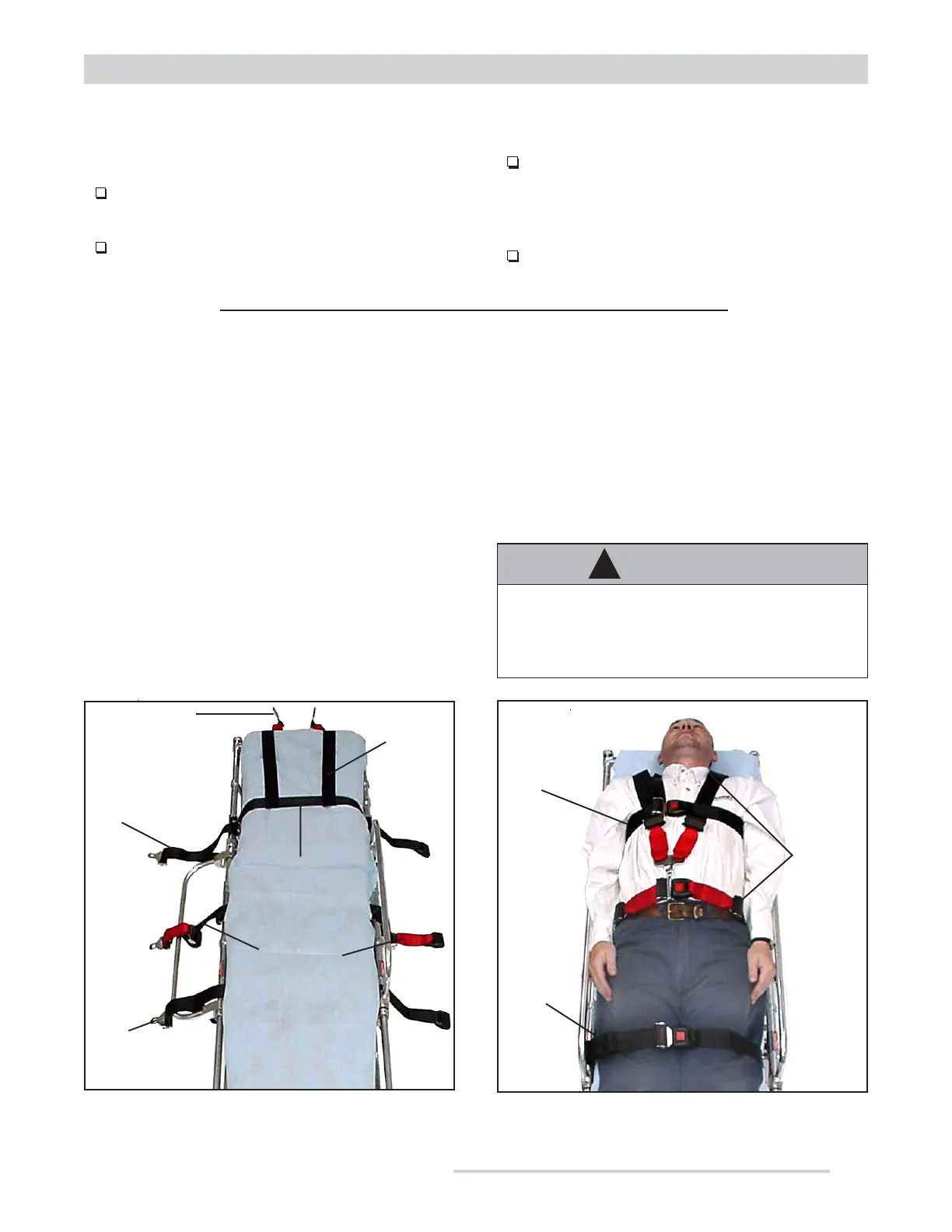
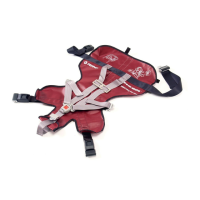
• Unbuckle the restraints and lay the straps out of
the way before transferring the patient (Figure 17).
• Adjust restraints to safely secure the patient
without causing discomfort or impairing
circulation (Figure 18).
• Keep restraints fastened when not in use to prevent
them from interfering with stretcher operation.
6.1 Preparing the Stretcher for Use
Attach Australian Standards-approved restraints
as shown in this section.
Put the mattress in place.
Worn or damaged restraints can fail and
cause injury. Inspect restraints regularly.
Dispose of restraints that are worn, damaged,
or have been involved in a vehicular accident.
WARNING
!
Attach any accessories that will be used with the
stretcher. Follow the instructions included with
accessories. Keep accessory instruction manuals
with this manual.
Conduct a preliminary inspection of the stretcher
(See Inspecting the Stretcher, page 35).
Figure 18 - Patient Secured
Harness
Restraint
One-Piece
Restraint
(For Chest)
One-Piece
Restraint
(For Thighs)
Figure 17 - Restraints Prepared for Use
Harness
Torso Strap
(2)
Link (2)
Harness
Pelvis Strap
One-Piece
Restraint
(For Thighs)
Harness
Cross-Strap
One-Piece
Restraint
(For Chest)



 To Next Page