C6.1.6/0513-0515/E 11
at all times. In case of controller breakdown the low pressure switch could be used for
emergency operation (rewiring required).
A crankcase heater is directly connected to the controller. The crankcase heater will be
energized when the ambient sensor is below a given value (10°C) and the compressor has been
off for a period of time (5 minutes). The minimum off time does not apply at initial power up.
In addition to the above, the [ CF ] EASY condensing unit has the following features:
Liquid line assembly (filter drier and sight glass/moisture indicator)
Anti-corrosion treatment to the condenser fins
The electronic controller is also the base controller for the connection of many optional and
customer supplied functions such as:
Main load controller (or thermostat)
Evaporator electric defrost heater contactor
Evaporator fan contactor
Superheat controller for one electronic expansion device (not available on CFLE models)
NOTE: For additional features please contact your local Application Engineering
representative.
2.9 Electronic controller XCM25D – Programming
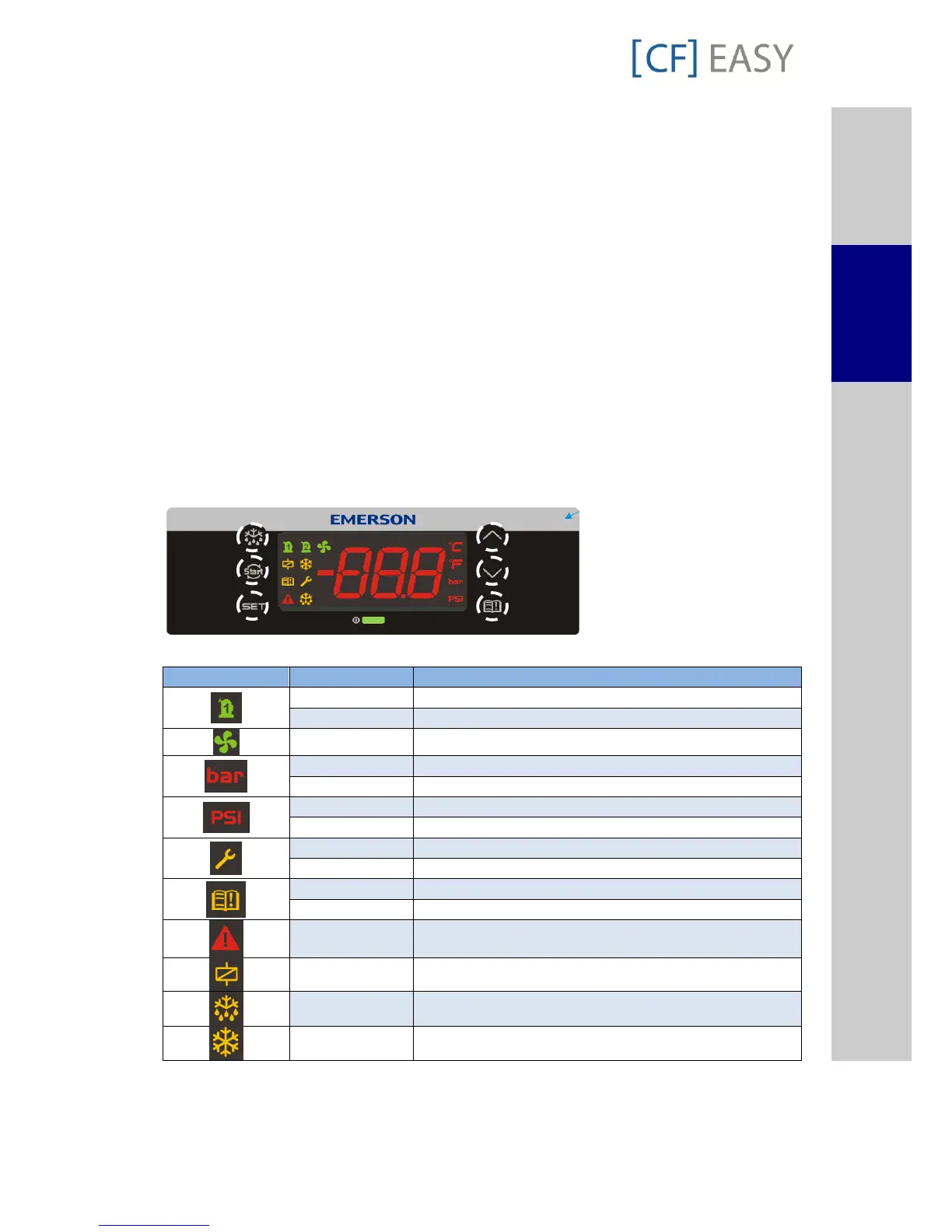
2.9.1 Programming the local display
Figure 8: Local display
Table 8: LED functions description
NOTE: By default the local display will show the value of the suction pressure during
operation. This can be changed by choosing another value for parameter B03 (Remote
Display visualization).

![FISCHER [CF] EASY](https://data.easymanua.ls/products/636208/200x200/fischer-cf-easy.webp)

 To Next Page