22
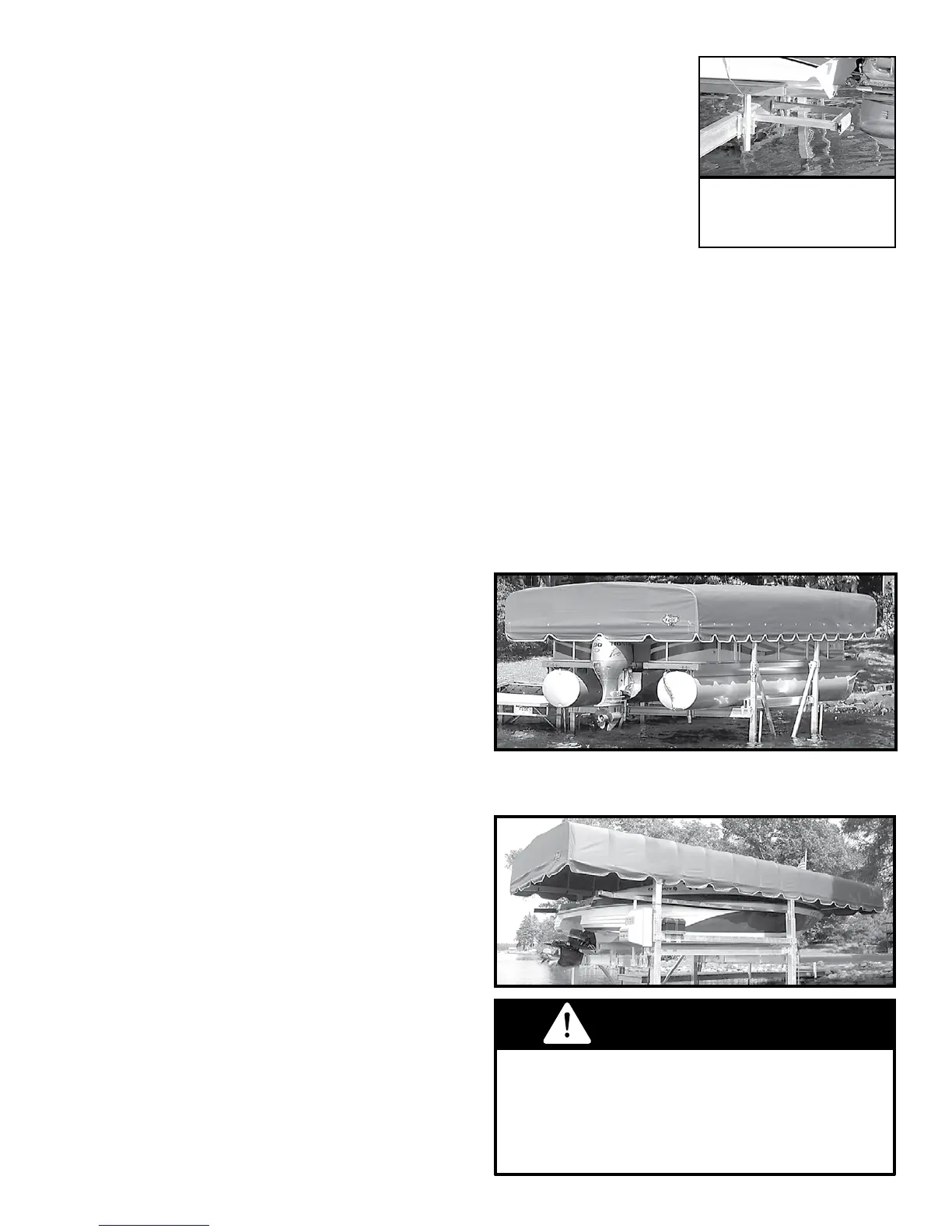
BOAT PLACEMENT & MOTOR STOP
In order to properly distribute the weight of the
boat on the lift, it is important that the boat is
parked in the correct location. The best way to
determine this location for your particular craft,
is to log onto FLOE’s website, www.oeintl.com,
and click on the Boat Lift Selector Program.
Because the majority of a standard boat’s weight
is typically in the back by parking further forward
more of this weight gets transferred to the front lift
beam. See Figs. 50 & 51.
HOW TO POSITION A PONTOON BOAT
If you have a longer craft such as a pontoon boat
that proportionally does not have a lot of weight
in the back, it can be parked, depending upon its
length, with more rear overhang (up to 2 - 7 ft.)
and still achieve proper weight distribution. See
Fig. 51. For instance, the back of an average
21’ pontoon boat should overhang approximately
3’ past the back end of the lift. For every addi-
tional foot of length, the stern can overhang 4”
more beyond the rear of the lift. These are only
general guidelines. Consult the Boat Lift Selector
Program and your dealer for more information.
PROPER CANOPY FRAME
POSITIONING
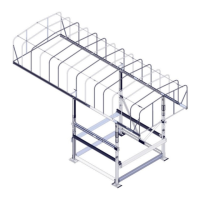
The FLOE canopy system is adjustable vertically
and horizontally. Detailed instructions on how to
make these adjustments are included with the
canopy system. Once the boat’s proper position
is known, follow the simple steps below to ensure
proper canopy placement as shown in Figs. 50,
51, & 52.
1. With the boat in place, determine how far the
canopy needs to extend beyond the rear of the
lift. Remove boat and position the frame accord-
ingly. (Normally this distance will be between 3.5
- 5 ft. for standard boats, and 4 - 8 ft. for longer
pontoons.) Do not tighten at this point.
Note: It is recommended to allow at least 6” of
extra coverage in both the front and rear of the
boat and outdrive. When adjusting the horizontal
position of a canopy frame, the frame will extend
further off the front of the lift than off the rear. This
Fig. 50 - Boat shown in proper position so that an even
amount of weight is transferred to the front beam. The
canopy is positioned so that it covers the entire boat.
depends on the length
of the canopy and the
position needed to
cover the rear of the
boat. If this front over-
hang is more than
11-ft., or if the canopy
is 26-ft. or larger, a
canopy frame support
system is needed as shown in Fig. 53 (the 26’,
28’ & 30’ canopy systems come standard with
the canopy support system). This will reduce ex
and bowing in the canopy frame and give you an
additional 2-ft. of overhang.
2. Raise the boat to its maximum height and de-
termine how high the canopy framework needs to
be in order to clear the tallest point of the boat.
3. Remove the boat before making adjustments.
Set the canopy frame height by adjusting the
four vertical tubes and tightening each set bolt to
45-ft. lbs. See Fig. 53.
4. Tighten the horizontal adjustment bolts to 45-ft. lbs.
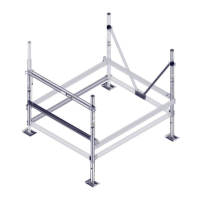
If the canopy frame extends more than 11 ft.
from the end of the lift, a canopy frame support
is needed. This will add rigidity to the frame for
up to an additional 2’ of overhang and reduce
the potential for wind damage.
WARNING
A motor stop can help achieve
correct location every time and
prevent your motor from hitting
the rear main cradle lift beam.
Fig. 51



 To Next Page