EasyManua.ls Logo

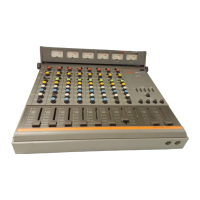
Fostex 350 - FEATURE DESCRIPTIONS; INPUT SIGNAL MANAGEMENT; EQUALIZATION AND MONITORING FEATURES; OUTPUT AND BUSS CONTROLS

Fostex 350
18 pages
Print Icon
To Next Page IconTo Next Page
To Previous Page IconTo Previous Page
Loading...
SECTION
1
FEATURE
DESCRIPTIONS
1.
INPUT
SELECTOR.
A
three
position
switch
to
select
which
of
the
signals
applied
to
the
input
connectors
is
to
be
routed
to
the
preamplifier
and
fader.
LINE/MIC:
In
this
position,
signal
applied
to
the
input
phone
jack
on
the
rear
panel
is
routed
to
the
preamplifier.
OFF:
The
input
signals
are
shut
off
completely.
TAPE:
The
signal
applied
to
the
TAPE
connector
on
the
rear
panel
is
routed
to
the
preamplifier.
2.
INPUT
LEVEL
TRIM.
When
the
input
selector
is
set
at
Line/Mic
position,
this
TRIM
control
adjusts
gain
of
the
preamplifier
over
a
range
of
0
to
50
dB.
Clockwise:
Maximum
gain,
which
matches
the
nominal
level
of
most
microphones.
Counter-clockwise:
Minimum
gain,
for
nominal
line
level
of
lOdBV,
or
0.3V
r.m.s.
When
the
input
selector
is
set
at
Tape
position,
this
TRIM
con¬
trol
adjusts
gain
of
the
preamplifier
over
a
range
of
0
to
30
dB.
Clockwise:
Maximum
gain
of
20dB
and
thus
mat¬
ches
a
level
of
-
30dBV
(0.01V).
Counter-clockwise:
Minimum
gain
(0
dB)
and
thus
matches
a
level
of
-
lOdBV,
or
0.3V
r.m.s.
3.
4
CHANNEL
BUSS
SELECTOR.
In
combination
with
the
pan
control
located
directly
beneath,
this
switch
assigns
the
signal
to
the
4
channel
buss
output
group.
A-B:
Ths
signal
will
appear
at
output
A
or
B
or
both,
depend¬
ing
on
the
pan
control
position,
and
its
final
level
determined
by
the
left-most
master
fader.
OFF:
The
signal
is
muted
at
this
point.
C-D:
The
signal
will
appear
at
output
C
or
D
or
both,
depending
on
the
pan
control
position,
and
its
final
level
determined
by
the
right-most
master
fader.
4.
PAN
CONTROL.
Distributes
the
signal
in
panoramic
fashion
between
4
chan¬
nel
buss
outputs
A-B
or
C-D
as
selected
above.
Counter-clockwise:
To
A
only,
if
selected,
or
C
only,
if
selected.
Clockwise:
To
B
only,
if
selected,
or
D
only,
if
selected.
Centered:
Equally
distributed
to
A
and
B,
if
selected,
or
C
and
D,
if
selected.
All
other
intermediate
positions
of
this
control
will
vary
the
A-B
level
ratio
or
C-D
ratio
as
graphically
illustrated
by
the
pointer.
In
typical
monitoring
ar¬
rangements,
the
acoustic
image
of
the
signal
will
be
sensed
to
move
or
“pan”
from
left
to
right
as
the
control
is
rotated
C.C.W.
to
C.W.
Extreme
C.C.W.
or
C.W.
settings
enable
you
to
route
the
signal
to
the
selected
buss
only.
AUX
BUSS
SEND
CONTROLS.
5.
INPUT
SELECTOR.
Signals
to
be
sent
to
the
auxiliary
buss
are
selected
by
this
switch.
PRE:
In
this
position,
the
input
channel
signal
BEFORE
the
input
fader
and
equalizer
will
be
selected.
POST:
This
selects
input
channel
signal
AFTER
the
input
fader
and
equalizer.
TAPE:
Output
of
the
tape
recorder
plugged
into
the
“tape-in”
connector
on
the
rear
will
be
selected.
6.
GAIN
POT.
Controls
the
level
of
signal
as
selected
above.
7.
PAN
POT.
Positions
the
signal
selected
above
between
the
left
and
right
auxiliary
busses,
(as
described
in
(4)
above).
PARAMETRIC
EQUALIZER.
8.
A
two
band
parametric
type
equalizer
offering
wide
range
of
tonal
correction.
The
high
frequency
control
adjusts
resonance
between
800Hz
and
12kHz.
The
gain
knob
immediately
below
it
ad¬
justs
the
effectiveness
over
a
range
of
±
12
dB.
The
low
frequency
control
adjusts
resonance
between
80Hz
and
1.2kHz.
Its
attendant
gain
knob
also
adjusts
the
effec¬
tiveness
of
the
selected
frequency
over
a
range
of
±
12dB.
For
more
information
see
Section
5.
9.
OVERLOAD
INDICATOR.
A
fast
electronic
circuit
triggers
this
red
LED
indicator
to
show
near
overload
in
the
input
amplifier.
When
the
red
LED
ignites,
reduce
the
setting
of
the
trim
control
accordingly.
10.
INPUT
FADER.
This
is
the
“active”
input
channel
level
control
on
your
350,
If
the
trim
control
and
other
presets
have
been
adjusted
proper¬
ly,
the
fader
should
typically
be
about
7
or
8
on
the
scale
for
best
performance.
As
will
become
obvious
in
use
however,
you
will
have
many
occassions
to
change
this
setting,
such
as
compensation
for
a
performer
temporarily
moving
off-mic,
killing
an
unused
input,
or
expressive
fading
of
an
instrument.
The
7—8
setting
should
be
considered
nominal.
OUTPUT
SECTION.
11.
FOUR
CHANNEL
BUSS
MASTER
FADER.
These
two
faders
control
the
overall
output
level
of
channels
A-B,
C-D
as
marked.
12.
FOUR
CHANNEL
BUSS
INPUT
LEVEL
These
controls
give
individual
level
control
over
the
echo
return
or
other
signals
applied
via
the
“buss-in”
jacks
on
the
rear
panel.
MONITOR
SECTION.
13.
MONITOR
SELECT
SWITCH.
With
these
pushbuttons,
channel
A,B,C,
or
D
of
the
4
channel
buss,
and
the
left/right
output
of
the
Aux
buss
can
be
applied
to
the
monitor
and
headphone
amplifier
circuits.
With
A
and
B
pushbuttons
pressed
at
the
same
time,
signal
2

Related product manuals