technique permits operating within the most eco-
nomical power range of the engine.
4.
When approaching a hill, open the throttle
smoothly to start the upgrade at full power, then
shift down as desired to maintain the maximum
vehicle speed. The high torque of Cummins en-
gines may permit topping some grades without
shifting.
5.
Cummins engines are designed to operate over
a wide speed range. More frequent shifting than
necessary does not allow proper utilization of this
flexibility. The driver who stays in top gear and
uses the wider speed range will achieve the best
fuel economy.
6.
The Cummins diesel engine is effective as a
brake on downhill grades, but care must be used
not to overspeed the engine going downhill. The
governor has no control over engine speed when
it is being pushed by the loaded vehicle.
Never turn off the ignition switch while going
downhill. With the engine still in gear, fuel pres-
sure will build up against the shutdown valve,
and may prevent it from opening when the igni-
tion key is turned on.
CAUTION
Do not allow the engine to exceed its governed
speed, or serious engine damage could result.
7.
Use a combination of brakes and gears to keep
the vehicle under control at all times and to keep
the engine speed below the rated governed rpm.
DDE S60
Individual driving habits can make a difference in the
performance and economy of any engine. The rec-
ommendations below call attention to the techniques
that can be employed to save fuel and extend the
operating efficiency and life of a new Detroit Diesel
engine for the longest possible time.
Engines with Detroit Diesel Electronic Control
(DDEC) can be equipped with a variety of options
designed to warn the operator of engine problems.
The operator of a DDEC-equipped engine should
know the extent of the warning system in order to
bring the vehicle to a safe stop if the engine malfunc-
tions. If the operator does not understand how the
system works, an engine shutdown could cause a
safety hazard. See Chapter 2 for information on the
DDEC control panel.
All engines have an operating range in which the en-
gine performs most efficiently. The operating range
extends from maximum torque rpm at the low end to
engine rated speed at the high end. Detroit Diesel
engines deliver best fuel economy when operated in
the low- and mid-speed segments of the efficiency
range and produce maximum horsepower at rated
speed, which is also the recommended maximum
speed of the engine.
1.
It is seldom necessary to accelerate the engine
to governed speed in the lower gears to get the
vehicle moving, except in a high power demand
situation such as starting on a grade.
To conserve fuel, start off in low gear and de-
velop only the engine speed needed to get roll-
ing. Then, increase engine speed gradually as
upward gear shifting progresses.
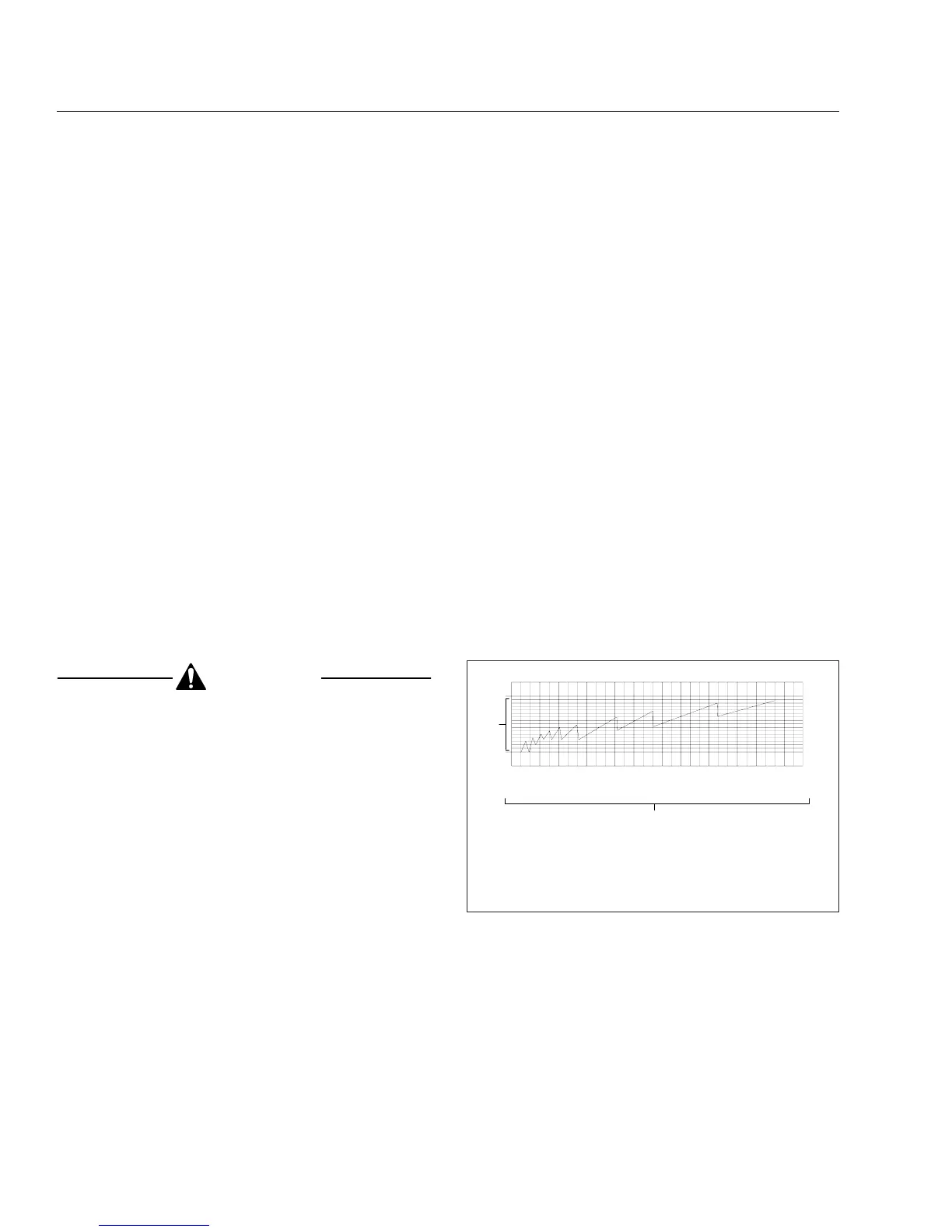
As described by Detroit Diesel, this progressive
shifting technique will get the vehicle up to the
desired cruising speed while minimizing noise
emission and maximizing fuel economy. A pro-
gressive shift pattern is illustrated in Fig. 7.7.
NOTE: A momentary hesitation in throttle re-
sponse will occur when a vehicle with a turbo-
charged engine is started on a grade.
Do not
disengage the clutch. The rpm will recover, and
the vehicle will accelerate up the grade.
2.
For city driving, run in the highest gear possible
and reduce engine speed. This enables you to
operate at a safe speed for traffic conditions
010
(16)
20
(32)
30
(48)
40
(64)
50
(80)
60
(97)
f250319
11/02/95
1
2
3
4
1. Governed RPM
2. Engine RPM
3. Idle RPM
4. Miles (Kilometers) Per Hour
Fig. 7.7, Progressive Shift Pattern
Engines and Clutches
7.13


 To Next Page