When the differential lock disengages, the indicator
light will go off and the buzzer will stop.
Meritor Tandem Drive Axles
With Interaxle Differential
Meritor tandem drive axles with an interaxle differen-
tial have a lockout feature. Differential lockout is con-
trolled by a switch (Fig. 9.2) on the control panel.
In the UNLOCK position, there is differential action
between the two axles. The differential compensates
for different wheel speeds and variations in tire size.
Keep the interaxle differential unlocked for normal
driving on roads where traction is good.
In the LOCK position, the interaxle differential is
locked out and the driveshaft becomes a solid con-
nection between the two axles. Power entering the
forward axle is also transmitted straight through to
the rear axle, so both axles turn together at the same
speed. The LOCK position should be used when the
vehicle encounters poor traction conditions; however,
it also increases drivetrain and tire wear and should
be used only when improved traction is required.
Meritor Interaxle Differential
Lockout Operation
To lock the interaxle differential and achieve maxi-
mum pulling power when approaching slippery or
poor road conditions, move the lockout control valve
to LOCK while maintaining vehicle speed, before en-
countering the poor road conditions. Let up momen-
tarily on the accelerator to engage the differential
lock. Proceed over poor road conditions with caution.
Do not wait until traction is lost and the tires are
spinning before locking the interaxle differential.
CAUTION
Do not actuate the interaxle differential control
valve while the tires are slipping. Do not operate
the vehicle continuously with the interaxle differ-
ential locked during extended good road condi-
tions. To do so could result in damage to the axle
gearing and excessive tire wear.
To unlock the interaxle differential, move the lockout
control valve to UNLOCK while maintaining vehicle
speed, after leaving the poor road conditions. Let up
momentarily on the accelerator to allow the shift,
then resume driving at normal speed.
Eaton Single Reduction Axles
With Controlled Traction
Differential
The controlled traction differential system is a differ-
ential assembly designed to transfer torque from the
slipping wheel to the one with traction.
A control valve (Fig. 9.3) in the cab is actuated by
the driver to engage and disengage the controlled
traction feature.
Disengaged, the axle has differential action all the
time. One wheel will spin independently of the other,
if slippery conditions are encountered.
Engaged, wheel slippage and spinout are minimized.
02/09/96
f350079a
A
B
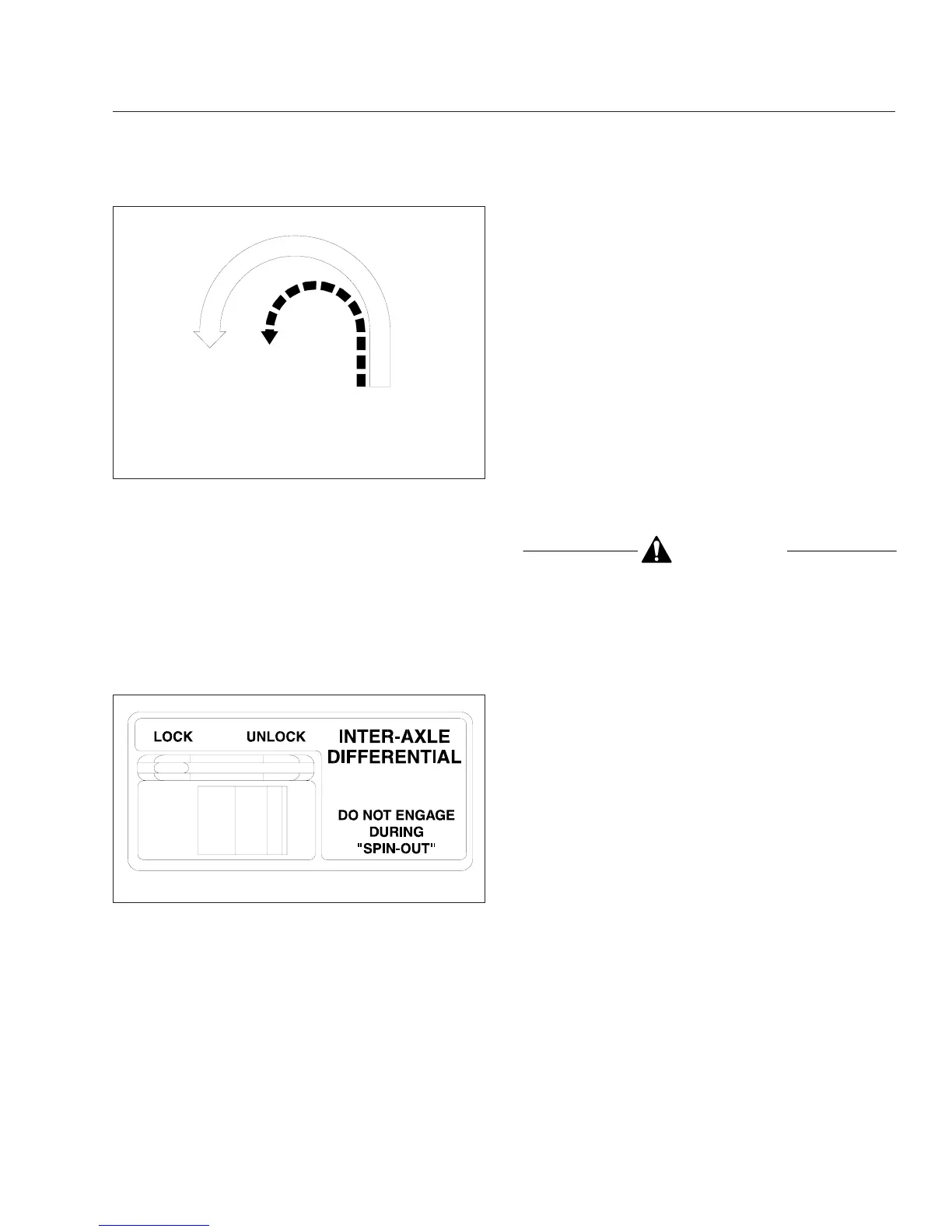
A. Turning Radius When Differential is Locked
(engaged)—Understeer Condition
B. Turning Radius When Differential is Unlocked
(disengaged)
Fig. 9.1, Turning Radius
09/26/95
f350141
Fig. 9.2, Interaxle Differential Control
Rear Axles
9.2



 To Next Page