EasyManua.ls Logo

GE JB258 - User Manual

GE JB258
28 pages
Print Icon
To Next Page IconTo Next Page
Loading...
Write the model and serial
numbers here:
Model # _________________
Serial # _________________
You can find the rating label on
the front behind the range drawer.
ESPAÑOL
Para consultar una version en
español de este manual de
instrucciones, visite nuestro sitio de
internet GEAppliances.com.
OWNER’S MANUAL
RANGES
Electric Free-Standing
49-2000950 Rev. 1 12-21 GEA
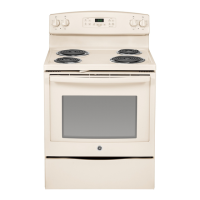
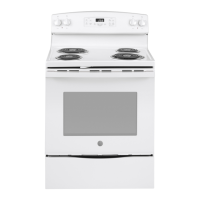
JB258 - 30" Free-Standing Range
GE is a trademark of the General Electric Company. Manufactured under trademark license.
SAFETY INFORMATION .......... 3
USING THE RANGE
Surface Units ........................... 8
Oven Controls ..........................10
Special Features ........................11
Oven Racks ............................12
Aluminum Foil and Oven Liners ...........12
Cookware ..............................12
Cooking Modes .........................13
Cooking Guide .........................14
CARE AND CLEANING
Cleaning the Range – Exterior ............15
Cleaning the Range – Interior ............18
Oven Light .............................19
Oven Door ............................20
Storage Drawer. . . . . . . . . . . . . . . . . . . . . . . . 20
TROUBLESHOOTING TIPS ....... 23
LIMITED WARRANTY ............ 26
ACCESSORIES .................... 27
CONSUMER SUPPORT ........... 28

Questions and Answers

  • K
    Kathleen GonzalezSep 5, 2025
    Why do my GE JB258 surface units cycle on and off frequently?
    • S
      Sarah RichSep 5, 2025
      If the surface units on your GE Ranges cycle on and off frequently, it may be due to using improper cookware. Use only flat cookware to minimize cycling.
  • O
    ofreemanAug 25, 2025
    What to do if the GE JB258 Ranges oven door will not open after a clean cycle?
    • K
      Kathy FloresAug 25, 2025
      If your GE range oven door won't open after a clean cycle, it's likely because the oven is still too hot. Allow the oven to cool down below the locking temperature, and then try opening the door again.
  • W
    whitecatherineAug 25, 2025
    Why does my GE JB258 Ranges oven not work?
    • K
      Kenneth ChristensenAug 26, 2025
      If your GE range oven isn't working or doesn't seem to be functioning, there are a few things to check. First, see if a fuse in your home has blown or if the circuit breaker has tripped; if so, replace the fuse or reset the breaker. Next, consult the Using the Oven section to ensure the oven controls are properly set. Lastly, verify that the oven isn't accidentally in Sabbath Mode by referring to the Special Features section.
  • K
    Kendra RobertsSep 13, 2025
    How to prevent excessive condensation in the drawer of GE JB258 Ranges?
    • M
      milleramySep 13, 2025
      To prevent excessive condensation in the drawer of your GE Ranges: * Remove any liquid in the drawer. * Cover any uncovered foods with a lid or aluminum foil. * Reduce the temperature setting.
  • N
    Nancy RussellSep 23, 2025
    Why does my GE JB258 Ranges control signal after entering cooking time or start time?
    • D
      Daniel BallardSep 23, 2025
      If your GE range control signals after entering cooking or start time, it means you forgot to enter a bake temperature or cleaning time. Touch the Bake pad and the desired temperature, or the Self Clean pad and the desired clean time.
  • C
    Charles MaldonadoSep 9, 2025
    What does "F— and a number or letter" mean on GE JB258 display?
    • C
      Cynthia TerrySep 9, 2025
      If “F— and a number or letter” flash in the display of your GE Ranges, it indicates a function error code. Press the Cancel/Off pad and allow the oven to cool for one hour before putting it back into operation. If the code repeats, disconnect power to the oven for at least 30 seconds, then reconnect it. If the error persists, call for service.
  • J
    Joe ChristensenSep 1, 2025
    Why is there excessive smoking during broiling in my GE JB258 Ranges oven?
    • V
      Victor GreenSep 1, 2025
      If you're experiencing excessive smoking while broiling in your GE range, it's likely because the food is positioned too close to the burner element. To reduce the smoking, simply lower the rack position of the food.
  • R
    Roger BondSep 23, 2025
    Why is there steam from the vent of my GE JB258?
    • M
      mariaedwardsSep 23, 2025
      When using the ovens in your GE range, it's normal to see steam coming out of the oven vents. The amount of visible steam will increase as the number of racks or the amount of food being cooked increases. This is a normal occurrence.
  • L
    Lawrence PerezSep 17, 2025
    Why is there a “burning” or “oily” odor emitting from the vent of my GE Ranges?
    • B
      Brooke SmithSep 18, 2025
      If you notice a “burning” or “oily” odor coming from the vent of your new GE range, it's normal and will dissipate over time. To speed up the process, you can set a self-clean cycle for at least 3 hours. Refer to the Cleaning the Oven section for instructions.
  • A
    Anna PetersAug 28, 2025
    How to fix a crooked oven door on GE Ranges?
    • E
      Emily MillerAug 28, 2025
      If the oven door on your GE Ranges is crooked, it may be out of position, especially after installation. To straighten it, push down on the high corner.

Summary

Safety Information

Anti-Tip Device Safety

Crucial safety measure to prevent range tipping and potential injury.

General Safety Instructions

Essential guidelines for safe operation and user protection.

Flammable Materials Warning

Warnings against storing flammable items near the appliance.

Fire Safety and Prevention

Steps to take in case of a fire to prevent injury and spread.

Cooktop Safety Precautions

Specific safety precautions for using the cooktop surface units.

Coil Cooktop Safety

Safety guidelines related to coil-type surface units and their components.

Oven Safety Precautions

Precautions for safe operation of the oven cavity and its elements.

Self-Cleaning Oven Safety

Critical safety instructions for operating the self-cleaning feature.

Removing Shipping Materials

Instructions for safely removing protective materials before use.

Appliance Disposal Guidance

Guidance on environmentally safe disposal of the appliance.

Using the Range

Surface Units Operation

How to operate and use the surface units safely and effectively.

Cookware for Coil Cooktops

Recommendations for cookware suitable for coil cooktops.

Cookware Guidelines

General guidelines for selecting and using cookware for optimal performance.

Home Canning Tips

Specific advice for using the range for home canning procedures.

Oven Controls Overview

Explanation of the various oven control buttons and their functions.

Adjusting Oven Temperature

How to calibrate the oven temperature for precise baking.

Auto Shut-Off and Sabbath Mode

Details on auto shut-off and special Sabbath mode features.

Oven Racks and Placement

Guidance on using oven racks and their recommended positions.

Aluminum Foil and Oven Liners

Precautions and guidelines for using foil or liners in the oven.

Cooking Modes Explained

Description of different oven cooking modes like Bake and Broil.

Cooking Guide

Recommendations for food types, modes, rack positions, and suggestions.

Care and Cleaning

Cleaning Control Knobs

Instructions for removing and cleaning the range control knobs.

Cleaning Control Panel

Methods for cleaning the range's control panel safely.

Cleaning Oven Exterior

Procedures for cleaning the exterior surfaces of the oven.

Cleaning Painted Surfaces

Guidelines for cleaning painted parts of the range.

Cleaning Stainless Steel Surfaces

Recommendations for cleaning and maintaining stainless steel surfaces.

Cleaning Porcelain Enamel Cooktop

Specific instructions for cleaning the porcelain enamel cooktop.

Surface Unit Cleaning and Removal

How to clean, remove, and replace surface units and drip pans.

Cleaning Drip Pans

Detailed steps for cleaning drip pans, including removal and cleaning methods.

Lift-Up Cooktop Maintenance

Instructions for lifting the cooktop for easier cleaning and access.

Manual Oven Interior Cleaning

Steps for manually cleaning the inside of the oven.

Self Clean Mode Operation

Guide to operating the self-cleaning cycle for the oven interior.

Oven Racks Cleaning

How to clean oven racks, especially after self-cleaning.

Oven Heating Elements Cleaning

Information on cleaning oven heating elements and the oven floor.

Oven Light Bulb Replacement

Step-by-step guide for replacing the oven light bulb.

Oven Door Removal and Replacement

Instructions for safely removing and reinstalling the oven door.

Storage Drawer Removal and Replacement

Guide for removing and reinstalling the storage drawer.

Troubleshooting Tips

Surface Unit Troubleshooting

Common problems and solutions for surface unit operation.

Oven Baking and Broiling Issues

Troubleshooting tips for improper baking or broiling results.

Oven Not Working or Temperature Issues

Diagnosing issues with the oven not working or temperature inaccuracies.

Oven Door and Light Issues

Resolving common problems with the oven door and light.

Self-Clean Cycle Troubleshooting

Solutions for issues encountered during the self-clean cycle.

Display and Odor Troubleshooting

Addressing display errors, odors, and preheating issues.

Limited Warranty

Warranty Service and Coverage

Details on warranty service, what is covered, and what is not.

Warranty Exclusions

Specific conditions and damages not covered by the limited warranty.

Extended Warranties Information

Information on purchasing extended warranties and benefits.

Accessories

Available Accessories and Parts

List of available accessories, parts, and cleaning supplies.

Recommended Cleaning Supplies

Specific cleaning products recommended by the manufacturer.

Consumer Support

Website and Registration

Resources for online support, product registration, and website information.

Scheduling Service and Extended Warranties

How to schedule service, and information on extended warranty purchases.

Parts, Accessories, and Contact

Details on ordering parts, accessories, and general contact information.

Overview

This document is an owner's manual for a GE Appliances JB258 - 30" Free-Standing Range. It provides comprehensive information on safety, usage, care, cleaning, troubleshooting, warranty, and consumer support for the appliance.

Function Description

The GE Appliances JB258 is a 30-inch free-standing electric range designed for cooking. It features a cooktop with coil surface units and an oven with various cooking modes. The range is intended for residential use and offers both traditional baking and broiling functions, along with a self-cleaning mode for the oven.

Important Technical Specifications

  • Model: JB258
  • Type: 30" Free-Standing Range
  • Oven Temperature Adjustment: Can be adjusted up to 35°F hotter or down to 35°F cooler. This adjustment affects only the Bake mode.
  • Oven Light Bulb: 120/130-volt halogen bulb, not to exceed 50 watts (G9 base) for some models; 40-watt appliance bulb for other models.
  • Self-Clean Cycle Time: Adjustable between 3:00 and 5:00 hours.
  • Cooktop Type: Coil surface units with "SENSI-TEMP TECHNOLOGY."
  • Power Requirements: The manual implies standard household electrical power, with warnings about fuses and circuit breakers.

Usage Features

Cooktop:

  • Setting Controls: Knobs are pushed in and turned to the desired setting. A surface ON indicator light glows when any surface unit is active.
  • SENSI-TEMP TECHNOLOGY: Reduces the risk of oil and grease fires by temporarily interrupting power if a pot or pan exceeds expected cooking temperatures.
  • Cookware Recommendations:
    • Recommended: Stainless Steel (heavy weight), Aluminum (heavy weight), Copper Bottom, Enamel (painted) on Cast Iron, Cast Iron.
    • Avoid/Not Recommended: Thin unclad stainless steel, thin weight aluminum, Enamel (painted) on Steel, Glass-ceramic, Stoneware.
    • General Cookware Guidelines: Use flat-bottomed pans large enough to cover the heating element. Handles should be turned toward the center of the range. Woks should be flat-bottomed and match the surface element diameter.
  • Home Canning: Canner must be centered over the surface unit and have a flat bottom.

Oven:

  • Oven Controls: Includes pads for Bake, Broil Hi/Lo, Start, Cancel/Off, Self Clean, +, -, Cook Time, Timer On/Off, Set Clock, Delay Time, Oven Light, and Lock Controls.
  • Traditional Cooking Modes:
    • Bake: Intended for single-rack cooking, uses heat from both upper and lower elements. Preheating is generally recommended.
    • Broil Hi: Uses intense heat from the upper element for searing thinner cuts of meat. No preheating necessary.
    • Broil Lo: Uses less intense heat from the upper element for thorough cooking and surface browning of thicker cuts of meat. No preheating necessary.
  • Special Features:
    • Adjust Oven Temperature: Allows adjustment of oven baking temperature by +/- 35°F.
    • 12-hour Auto Shut-off: Turns off the oven after 12 hours of continuous operation.
    • Sabbath Mode: Disables oven lights, sounds, Broil, Cook Time, Timer, Clock, and Delay Time functions. Can only be used with Bake. Oven temperature defaults to 350°F but can be adjusted in 25°F increments (170°F to 550°F).
  • Oven Racks: Seven rack positions are available (may vary by model). Recommendations for rack placement are provided in the Cooking Guide. Vegetable oil can be used to lubricate racks for easier sliding.
  • Aluminum Foil and Oven Liners: Not recommended for covering the oven bottom or entirely covering oven racks due to heat trapping and melting risks. Can be used on a lower rack to catch spills, keeping 1-1/2" from oven walls.
  • Cookware Guidelines (Oven): Material, finish, and size affect baking performance. Dark/coated pans absorb heat more readily, leading to browner crusts. Shiny pans produce more evenly cooked goods. Glass/ceramic pans heat slowly but retain heat well. Air-insulated pans heat slowly and reduce bottom browning.

Maintenance Features

General Care and Cleaning:

  • Safety First: Always ensure controls are OFF and surfaces are cool before cleaning.
  • Anti-Tip Device: Crucial for safety; must be properly installed and re-engaged if the range is moved.
  • Control Knobs: Removable for cleaning, can be washed in a dishwasher or with soap and water.
  • Control Panel: Wipe with mild soap and water or vinegar and water, rinse, and polish dry. Avoid abrasive cleansers.
  • Oven Exterior: Clean with mild soap and water or vinegar and water. Avoid oven cleaners, abrasive cleansers, steel wool, or plastic scouring pads.
  • Painted Surfaces: Clean with soap and water or vinegar and water. Avoid commercial oven cleaners or harsh abrasives.
  • Stainless Steel Surfaces: Use warm sudsy water or a stainless steel cleaner/polish, wiping in the direction of the grain. Oxalic acid cleaners can remove rust/tarnish.

Cooktop Cleaning:

  • Porcelain Enamel Cooktop: Acid-resistant. Wipe acidic food spills immediately when hot, then wash with soap and water after cooling. For fat spatterings, use soap and water or cleansing powders.
  • Coil Surface Units: Turn control to highest setting for a minute to burn off soil. Clean Sensi-Temp Technology sensor cap with a damp sponge or cloth. For cooked-on spills, gently scrub with a damp plastic scouring pad. Do not immerse units in liquid, put in dishwasher, or bend plug terminals.
  • Drip Pans: Remove surface units, then lift out drip pans. Clean by hand with ammonia (in a covered container) or in a dishwasher. Do not cover with foil. Black/gray porcelain-coated drip pans can be cleaned in the self-cleaning oven (on racks, not oven bottom); shiny, silver-colored drip pans should not be self-cleaned.
  • Lift-Up Cooktop: Can be lifted for easier cleaning underneath. Clean with hot, mild soapy water and a clean cloth.

Oven Interior Cleaning:

  • Manual Cleaning: Use mild soap and water or vinegar and water. Avoid oven cleaners (unless self-clean certified), abrasive cleaners, steel wool.
  • Self Clean Mode: Operates at high temperatures to burn away food soils.
    • Preparation: Remove pans, shiny metal oven racks, and other utensils. Wipe up grease and soils. Close and latch the door.
    • Operation: Press Self Clean, adjust time (3-5 hours), and press Start. Oven turns off automatically.
    • Post-Clean: Allow oven to cool, unlatch door, and wipe out ash.
    • Gasket: Do not clean or damage the oven door gasket.
    • Ventilation: Recommend venting kitchen during first self-clean cycle.
    • Birds: Move birds to a well-ventilated room due to fumes.
  • Oven Racks: Wash with warm, soapy water. Lubricate edges with vegetable oil if difficult to slide after self-clean.
  • Oven Heating Elements: Do not clean; soil will burn off.
  • Oven Light Replacement:
    • Safety: Disconnect electrical power before replacing. Allow glass cover and bulb to cool.
    • Procedure: Turn glass cover counterclockwise, pull out bulb. For some models, turn bulb counterclockwise.
    • Bulb Type: Use specified wattage and voltage (e.g., 120/130-volt halogen G9 base, or 40-watt appliance bulb).
    • Handling: Use gloves or a dry cloth for halogen bulbs to avoid skin oils.
    • Cleaning: Clean glass cover frequently with a wet cloth for improved lighting.

Storage Drawer:

  • Removal/Replacement: Pull out until it stops, lift front to clear guides, then remove. Reverse steps to replace.

Troubleshooting Tips:

  • Provides solutions for common issues like surface units not boiling, oven not cooking properly, error codes, and cleaning problems.

GE JB258 Specifications

General IconGeneral
BrandGE
ModelJB258
CategoryRanges
LanguageEnglish

Related product manuals