EasyManua.ls Logo

Gehl RT175 - User Manual

Gehl RT175
280 pages
Print Icon
To Next Page IconTo Next Page
Loading...
RT175/RT175 Gen:3
Tier 4i Engines – Serial Numbers 10951 - 811000
Tier 4 Engines – Serial Numbers 811051 and Up
RT210/RT210 Gen:3
Tier 4i Engines – Serial Numbers 21201 - 921000
Tier 4 Engines – Serial Numbers 921651 and Up
RT250 Gen:3
Tier 4 Engines – Serial Numbers 70501 and Up
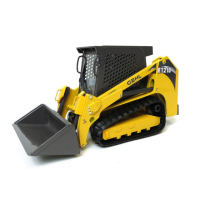
Compact Track Loader
Operator’s Manual
50940411 Rev. G 02/19

Table of Contents

Questions and Answers

  • R
    Robert SavageAug 8, 2025
    What to do if Gehl RT175 Compact Loader engine runs, but travel drive doesn't operate?
    • E
      ehernandezAug 8, 2025
      If your Gehl Compact Loader's travel drive isn't working despite the engine running, several things could be the cause. The parking brake might be applied, so disengage it. There could be a parking brake switch malfunction, so replace the parking brake switch(es). A blown fuse could also be the issue, so check the circuit and replace the fuse. The operator might not be in the operator’s seat, so ensure the seat is occupied for the travel drive to operate. The cab door might be open (if equipped), so close the cab door. A drive system component malfunction could also be the problem or there might be an error code present.
  • J
    James RiosAug 12, 2025
    Why aren't the hydraulics working on my Gehl RT175 Compact Loader?
    • J
      Jennifer DavisAug 12, 2025
      If the hydraulics on your Gehl Compact Loader aren't working or have poor performance, there are several potential causes. There might be an error code present. The hydraulic oil level could be low, so top it off. The hydraulic oil might not be at operating temperature, so allow for a longer warm-up. Other possibilities include damage to the engine to pump coupling or hydraulic pump (contact dealer), pressure limiting valves set too low or damaged (contact dealer), damaged hydraulic cylinder(s) (contact dealer), damaged control valve(s) (contact dealer), engine speed too low (adjust engine speed), or dirty/restricted air filter(s) (replace filter(s) and/or remove restriction).
  • M
    montgomerykatherineAug 17, 2025
    How to troubleshoot loss of electrical power in Gehl RT175?
    • T
      Tiffany DavisAug 17, 2025
      If you're experiencing a loss of electrical power in your Gehl Compact Loader, start by checking the battery terminals and cables for looseness or corrosion; clean and tighten them as needed. If that's not the issue, the battery itself might be malfunctioning, so test it and recharge or replace it as necessary. Finally, a blown main fuse could be the culprit; correct the over-current problem and replace the main fuse.
  • M
    Monica WrightAug 21, 2025
    What causes instrument display not to activate on Gehl RT175 Compact Loader?
    • G
      Gregory SanchezAug 21, 2025
      If the instrument display on your Gehl Compact Loader doesn't activate when the ignition is turned on, it could be due to a few reasons. First, check for a blown main fuse and replace it after correcting any over-current issues. Also, inspect the battery terminals and cables for looseness or corrosion, cleaning and tightening them as needed. Another possibility is an ignition switch malfunction, which would require replacing the switch. In very cold weather, the display screen might be slow to activate, so allow a few minutes for it to display.
  • D
    David SandovalOct 25, 2025
    Why won't my Gehl Compact Loader engine start?
    • Y
      Yvonne TaylorOct 26, 2025
      The Gehl Compact Loader might not start due to several reasons. It could be an error code “0” because the arm rest/safety bar is in a raised position, the cab door isn't closed (if equipped), or the operator’s seat isn't occupied. In this case, lower the arm rests/safety bars, close the cab door (if equipped), and occupy the operator’s seat. Alternatively, it might be an engine error code “1078-4”, in which case you should check the starting circuit wiring. Other potential causes include a blown fuse (check the circuit and replace the fuse), a dead battery (charge or replace the battery), a malfunctioning seat switch or safety bar arm/rest switch (replace the switch), a starter malfunction or engine electronics logic error (contact dealer), or the multi-purpose display not completely initi...
  • M
    Miss Laura ByrdOct 29, 2025
    What to do if Gehl Compact Loader engine turns over but doesn't start?
    • D
      Debra EsparzaOct 30, 2025
      If the engine of your Gehl Compact Loader turns over but doesn't start, several factors could be at play. The engine cranking speed might be too slow, so check the battery and charge or replace it if necessary. The fuel tank could be empty, so fill the tank and vent the fuel system. A plugged or restricted fuel filter could also be the culprit, requiring a replacement. In winter, paraffin separation might occur, so use winter grade diesel fuel. Check for fuel line leakage and tighten all threaded connections and clamps. Other potential issues include a pre-heating module malfunction (check connection and voltage and charge/replace as necessary), the fuel shut-off solenoid not energizing (check electrical connections/voltage to shut-off solenoid), a fuel pump malfunction (contact dealer), t...
  • M
    mario06Nov 2, 2025
    Why is my Gehl RT175 Compact Loader engine overheating?
    • R
      Randall AlexanderNov 2, 2025
      If your Gehl Compact Loader's engine is overheating, there are several potential causes. It could be due to an incorrect engine oil level (adjust the oil level), restricted cooling air circulation (turn the engine off and allow it to cool, then remove the restriction), or an improperly positioned fan shroud (contact dealer). Other possible reasons include using an improper oil grade or excessively dirty oil (change the engine oil and filter), a restricted exhaust (turn the engine off and allow it to cool, then remove the restriction), a restricted air filter (replace the filter(s)), a low coolant level (add coolant), leaks in the coolant system (repair/replace if necessary), a loose/worn V-belt (tighten/replace the V-belt), a dirty/restricted radiator (clean the radiator), or a slipping fa...

Summary

Introduction

Safety

Safety Symbol and Signal Words

Details safety symbols, signal words (DANGER, WARNING, CAUTION), and general safety precautions.

Mandatory Safety Shutdown Procedure

Step-by-step procedure for safely shutting down the machine before servicing.

Before Starting

Pre-operation safety checks and warnings, including modifications and attachments.

During Operation

Guidelines for safe operation, including seat belt use, controls, and visibility.

Maintenance and Service Safety Practices

General safety rules for performing maintenance and service on the machine.

Specifications

Fluids;Lubricants Types and Capacities

Details the types and quantities of fluids and lubricants required for the machine.

Payloads;Capacities

Lists the rated operating capacity and tipping loads for different attachments and configurations.

Controls

Multi-Function Display

Overview of the multi-function display's screens and functions.

Control Joysticks

Explains the functions controlled by the left and right joysticks.

Parking Brake;Work Hydraulics Lock-out

Describes how the parking brake and work hydraulics are locked out.

Seat Belt

Instructions on fastening, unfastening, and maintaining the seat belt.

Operation

Operational Checks

Essential checks to perform before starting the engine and using the machine.

Before Operation

Steps and safety precautions required before operating the machine.

Parking Brake

Automatic application and disengagement of the parking brake.

Starting the Engine

Step-by-step instructions for starting the machine's engine safely.

Diesel Particulate Filter (DPF) Regeneration Procedures

Explanation of DPF regeneration modes and procedures.

Jump-Starting

Safe procedure for jump-starting the machine using a booster battery.

Travel Drive Operation

Safe practices for operating the machine's travel drive system.

Lift Arm Operation

Instructions for operating the lift arm and managing attachments.

Lift Arm Support

Procedures for engaging and disengaging the lift arm support device.

Connecting;Disconnecting Attachments

Steps for securely connecting and disconnecting machine attachments.

Auxiliary Hydraulics Operation

How to operate standard and high-flow auxiliary hydraulic functions.

Working with Buckets

Guidelines and tips for operating the machine with buckets.

Working with Pallet Forks

Safety instructions and procedures for using pallet forks.

Lifting the Machine using a Crane

Critical procedures for safely lifting the machine with a crane.

Loading and Transporting the Machine on a Transport Vehicle

Detailed steps for safely loading and securing the machine for transport.

Maintenance

Maintenance Schedule

Recommended maintenance intervals based on operating hours and time.

Checks, Cleaning and Inspection

Daily, 250-hour, and 500-hour checks for machine condition.

Lubrication and Filter Changes

Procedures for lubricating grease fittings and changing filters.

Engine Maintenance

Procedures for accessing and maintaining the engine.

Engine Oil

Checking engine oil level and changing oil and filter.

Engine Air Filters

Procedure for checking and changing engine air filter elements.

Engine Cooling System

Checking coolant level and procedures for draining/refilling the cooling system.

DPF Service

Information regarding DPF filter soot filter replacement.

Fuel System Maintenance

Procedures for adding fuel and maintaining the fuel filter and water separator.

Hydraulic System Maintenance

Procedures for checking hydraulic oil, changing oil/filter, and hydraulic hose maintenance.

Track Maintenance

Guidelines for inspecting tracks for damage and wear, and track replacement.

Electrical System

Safety precautions and maintenance for the machine's electrical system.

Fuses and Relays

Identification and location of fuses and relays in the engine compartment and under ROPS/FOPS.

Final Shutdown; Decommissioning

Procedures for final shutdown, decommissioning, and disposal of the machine.

Troubleshooting

Engine Troubleshooting

Common engine problems and their corrective actions.

Indicator Lamp Troubleshooting

Diagnosing issues based on illuminated indicator lamps on the dashboard.

Hydraulic System Troubleshooting

Diagnosing and resolving problems with the hydraulic system.

Hydrostatic Travel Drive System Troubleshooting

Troubleshooting issues with the hydrostatic drive and lift/tilt functions.

Electrical Troubleshooting

Diagnosing and resolving problems within the machine's electrical system.

Error Codes

Explanation of error codes displayed on the multi-function display.

Torque Specifications

Gehl RT175 Specifications

General IconGeneral
BrandGehl
ModelRT175
CategoryCompact Loader
LanguageEnglish

Related product manuals