
 Need help?
Do you have a question about the Hayward Perflex EC50C Series and is the answer not in the manual?
Details entrapment risks like hair, limb, body, and mechanical entanglement from suction outlets.
Covers risks from system pressure and component separation during operation.
Includes cautions about child access to pool equipment and general operational safety notes.
Electrical safety, grounding, bonding, GFCI requirements, and wiring standards.
Recommendations for hot tub use, temperature limits, and health risks.
Guidelines for positioning the filter system for optimal performance and accessibility.
Instructions for connecting pipes, using fittings, and securing the system.
Step-by-step guide for assembling and securing the filter clamp.
Procedures for priming, starting the pump, venting, and adding D.E. for initial operation.
How filtering works, pressure monitoring, and the process to regenerate the filter.
Steps for thorough filter cleaning and vacuuming debris directly into the filter.
Recommendations for yearly chemical cleaning of the filter assembly.
Instructions for draining and storing the filter in sub-freezing temperatures.
Guidance on consulting dealers or service centers for repairs.
Common problems, probable causes, and remedies for filter operation.
Details the one-year limited warranty for filters and its terms.
Instructions for registering the product for warranty purposes.
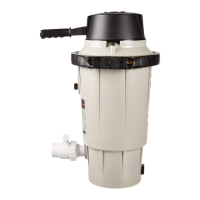
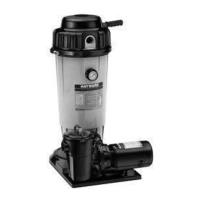
This document outlines the operation, maintenance, and safety guidelines for the Hayward Perflex® Series Extended Cycle Filtration Systems, specifically models EC50AC and EC50C. These systems are designed for high-performance swimming pool filtration, utilizing diatomite filter powder (D.E.) for efficient dirt removal.
The Hayward Perflex® filter is a high-performance swimming pool filter system with an output rating of 3,000 gallons (11 Kl) per hour. It is designed for continuous operation and is intended for installation below the pool water line, suitable for both fresh and salt water swimming pools. The system employs diatomite filter powder, known as D.E., which is highly effective at removing dirt from pool water.
The filtration process begins by feeding D.E. into the system through the skimmer when the filter is initially started. As water passes through the D.E. media, dirt and impurities are trapped. The filter's exclusive "BUMP" action allows for periodic regeneration of the D.E. without needing to change the powder, extending the filter cycle. When the D.E. powder is fully used and can no longer efficiently remove dirt, the "BUMP" action also facilitates draining the used diatomite without disassembling the filter.
The system includes Hayward Pool Pumps, which are non-corrosive, centrifugal pumps specifically designed for swimming pool service. These pumps feature pressure, flow, and safety features, driven by heavy-duty motors that are electrically isolated and insulated from the pool water. The output pressure and flow of the pump are tuned to the filter, creating a balanced and non-corrosive system.
The system is designed for outdoor use, but it is recommended to protect electrical components from the weather by selecting a well-drained area that will not flood. For optimal pump performance, the system must be located below the swimming pool water line, with the mounting platform level. The filter bump handle, drain outlet, and pressure gauge should be accessible for convenient operation. An alternate bump handle location is available on the other side of the filter outlet, and instructions for changing its position are provided. The system should be positioned to allow the filter tank to drain by gravity.
For plumbing and installation, union connections at the suction and outlet ports are recommended to facilitate servicing and indoor storage during winter. Flexible plastic pipe or hose (1-1/4" or 1-1/2" I.D.) joined with insert fittings and stainless steel clamps should be used. All plumbing connections on the system are 1-1/2" N.P.T., and plastic male-end adapters should be used with three turns of Teflon tape or plastic pipe sealant. Suggested valving, preferably ball-type valves, should be installed. The pump base mounting bolts should be tightened, and the union nut between the filter and pump should be securely hand-tightened.
The pool suction plumbing connects between the skimmer, pool outlet, and the pump, while the pool return (inlet) plumbing is also connected. If a pressure gauge is not installed, Teflon tape should be applied to the gauge threads, and the gauge carefully screwed into the threaded hole in the side of the filter body. A filter drain plug with gasket is provided for complete filter draining. Drain piping can be extended from the filter using an optional Drain Valve Kit (Model SP0723), ensuring it slopes away from the filter for gravity drainage. All electrical connections must comply with applicable electrical codes. Before operating the system, all joints should be checked for leaks.
Before starting the filter, users need to obtain operating chemicals, D.E., and a pool test kit. Only swimming pool grades of D.E. (e.g., CELATOM®, DICALITE®) should be used. The pool water should be superchlorinated using unstabilized granular or liquid chlorine, following chemical manufacturer's recommendations. Stabilized forms of chlorine are recommended for normal daily use after the initial clean-up.
For initial setup, the pump must be turned off, and tank pressure relieved by opening the Air Relief Valve before loosening the Center Clamp or servicing the filter. When re-assembling the clamp, it must be properly located and centered over the filter flange. If tight, tapping the clamp with a rubber mallet or block of wood can help seat it. The T-bolt assembly, including washers, spring, and sleeve nut, must be tightened until the spring coils touch, and then an additional 2 full turns for metal-type clamps. For plastic-type clamps, the sleeve nut should be tightened until engaged (approx. 100 in-lbs), then an additional 1/4 to 1/2 turn. To restart the system, all in-line valves and the Air Relief Valve must be open before starting the pump. Once a steady stream of water emerges from the Air Relief Valve, it should be closed.
Starting the filter involves closing the filter drain and vent valve. All suction and discharge valves must be open when starting the pump to avoid personal injury or property damage. The pump should be primed and started according to the manufacturer's instructions. Air trapped in the system will automatically vent to the pool. Once a steady flow of water returns to the pool, the filter is ready for precoating. The filter should not be operated for more than one minute without the precoat charge.
Precoating involves scooping 5 lbs. (2.3 kgs.) of diatomite into the system through the skimmer as quickly as the plumbing allows. The pressure gauge reading after D.E. addition should be noted as the "precoat pressure." Filtration begins after precoating. As dirt accumulates, the gauge pressure will rise, and flow will decrease. When the pressure rises 7-10 psi (.49-.70 Bar) above the precoat pressure, the filter needs regeneration.
Regeneration (extending the cycle) is performed by stopping the pump, moving the bump handle down slowly, then up briskly, repeating 3 times. Restarting the pump will resume filtration at near the original flow and pressure. After each regeneration, a slight increase in starting pressure is normal due to dirt accumulation.
Vacuuming can be performed directly into the filter as needed. For fastest results, the filter should be regenerated before and after each vacuuming operation.
The bump handle position can be changed by removing the grip, pushing in the tab at the base, prying off the cover, and sliding it off. The pivot pin can be tapped out to free the handle, which can then be rotated to an alternate position and realigned. The pivot pin is then tapped back into place, and the bump cover and grip reinstalled.
Preventive maintenance is crucial for the longevity and efficiency of Perflex filters. While the filters are resistant to chemical build-up, the mineral content in pool water increases daily due to chemicals and evaporation, leading to deposits on the Flex-Tubes and shortened filter cycles. To prevent this, a yearly chemical cleaning (soaking) of the Flex-Tube assembly is suggested. This can be done using commercially available 20% muriatic acid (1:1 ratio with water) or other commercial filter element cleaners, following package instructions. A plastic container should be used for mixing. Personal protective gear, including gloves and eye protection, should be worn when handling chemicals. After cleaning, all affected parts should be thoroughly flushed with cold water.
In areas prone to sub-freezing temperatures, the filter should be drained and removed from its operating location and stored indoors for winter. Before removal, the filter should be cycled as described under CLEANING.
Cleaning is recommended when the gauge pressure rises more than 10 psi (.70 Bar) in less than a 24-hour period or when cloudy water returns to the pool for more than 30 seconds after regeneration. To clean, stop the pump, move the bump handle down slowly, then up briskly, repeating 8 times. The vent valve (under the bump cover) and the filter drain should then be opened to allow water and dirt to empty completely. If the filter is installed below the pool water line, the suction and return valves should be closed. After draining, with the drain still open, the pump should be run for a few seconds to flush out any remaining dirt from the bottom of the filter. If the filter is installed below the pool water line, opening the suction valve for a few seconds with the pump off will adequately flush the unit. The filter drain and vent valve are then closed, and suction and return valves (if used) opened. The pump is started to fill the filter with water, and the cleaning procedure is repeated. This completes the cleaning phase, and the filter is then ready for recharging.
Troubleshooting guidance is provided for common problems:
The manual also provides suggested pool chemistry levels for pH, total alkalinity, chlorine (unstabilized and stabilized), and chlorine stabilizer (Cyanuric Acid), along with actions required to correct imbalances (e.g., adding soda ash, muriatic acid, chlorine chemical, or stabilizer, or diluting pool water).
Safety warnings are prominently featured throughout the manual, covering risks such as suction entrapment, hazardous pressure, separation hazards, electric shock, and hyperthermia. These warnings emphasize the importance of following all instructions, maintaining equipment, and ensuring proper installation and operation to prevent severe injury or death. Regular inspection and replacement of suction outlet components are advised. Electrical wiring must conform to applicable codes, and equipment must be grounded and bonded. GFCI protection is required for supply circuits, and routine testing of the GFCI is essential. The manual also includes "Safety Rules for Hot Tubs" to prevent hyperthermia, advising on water temperature limits, avoiding alcohol consumption, and consulting a physician for individuals with certain medical conditions.
 General
| Model | EC50C |
|---|---|
| Filter Area | 50 sq. ft. |
| Flow Rate | 50 GPM |
| Max Working Pressure | 50 PSI |
| Drain Connection | 1.5" |
| Air Relief | Manual |
| Warranty | 1 Year Limited |
| Type | Diatomaceous Earth Filter |
| Pipe Size | 1.5" |
| Inlet/Outlet Size | 1.5" |


 To Next Page