20 / 32
PL
SK
DE
EN
CS
HU
AUXILIARY PULLEY
The rope hoist is equipped with an auxiliary pulley (fig. 1 / part 15) and an auxiliary hook
(fig. 1 / part 16). With the correct use of these parts, the rope hoist can be used to lift up to
twice the rated load.
- Install the return auxiliary pulley (fig. 1 / part 15) and auxiliary hook (fig. 1 / part 16)
to the rope as shown in figures (fig. 6-8).
- Attach the main lashing hook (fig. 9 / part 8) to the hook mounting hole (fig. 9 / part 2).
- The load is thus lifted by two steel wire ropes.
CONTROL
The motor (fig. 1 / part 14) of the rope hoist is equipped with a thermostatic switch. The motor
(fig. 1 / part 14) can stop even when the rope hoist is in operation. After cooling down,
the thermostat closes the circuits again.
- This electric rope hoist is not equipped with a rated power limiter. Therefore, you should
not repeat attempts to lift a load if overloading restricts the operation of the hoist. In
this case, the load exceeds the rated capacity of the rope hoist.
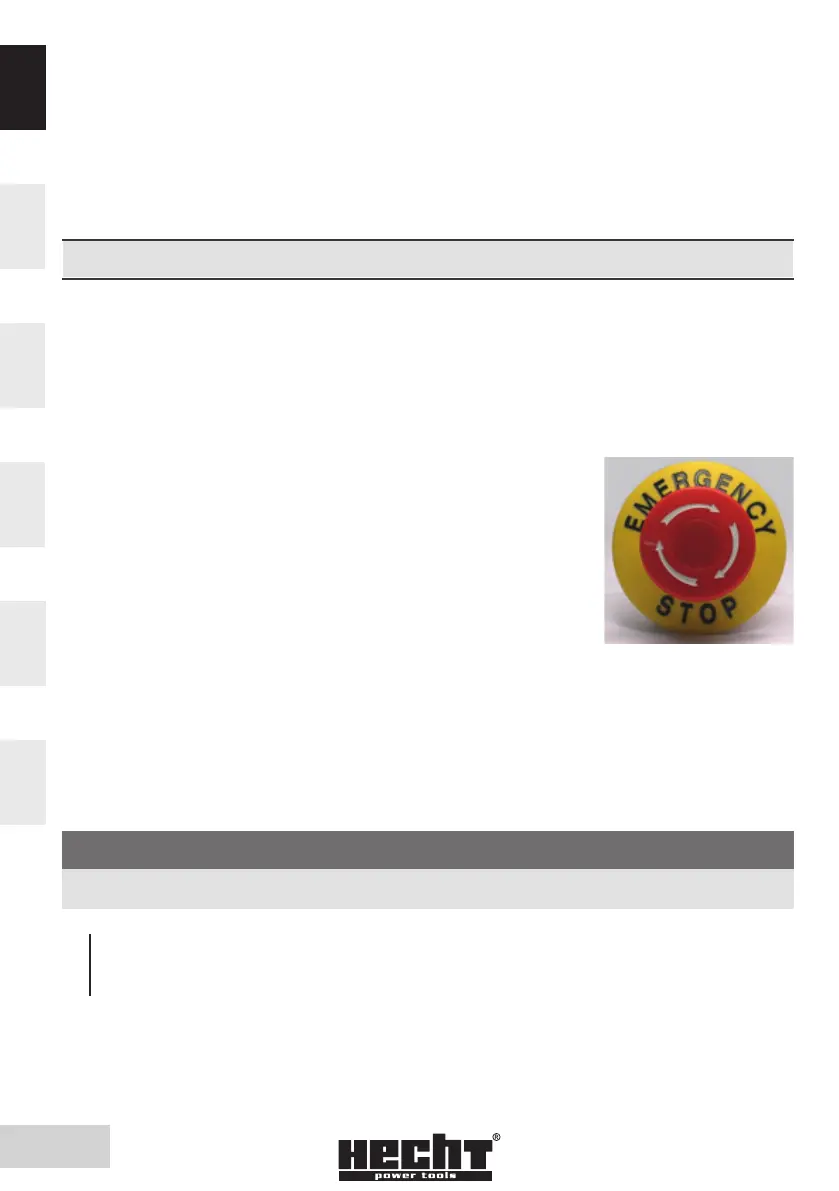
The remote control (fig. 10 / part 11) includes a circuit breaker (in the red emergency stop
button) (fig. 10 / part 9). The RCD provides additional protection
against potential emergency hazards. If the RCD is included, turn
the switch in the direction of the arrow after correcting the problem
to restore its function.
1. Before using the hoist for the first time, remove the adhesive tape
from the drum (fig. 1 / part 3).
2. Perform all checks listed in the paragraph Before starting.
3. Check that the steel wire rope (fig. 1 / part 6) on the drum
(fig. 1 / part 3) is wound correctly (fig. 3). The distance between
the individual turns must be less than the diameter of the rope
(fig. 3).
4. Secure the load correctly and firmly to the hook (fig. 1 / part 8) or auxiliary pulley
(fig. 1 / part 16). Always keep a safe distance from the load and the steel wire rope
(fig. 1 / part 6).
5. The user should lift the load off the ground at the slowest possible speed. The rope must be
taut when lifting the load.
CAUTION! A
Do not leave any hanging loads unattended.
C Do not use the lower and upper end switch brackets (fig. 1 / part 4+5) for normal
shutdown of the machine. These brackets are only used for emergency shutdown of
the motor. The rope may get stuck!



 To Next Page