17730-241 19 Preventive Maintenance
AR2
™
The gap at each side of the visible rubber on the lower part of the bar pin end bushing is normal,
see Figure6-5, and is not an indication to replace the bushing. Because all rubber end bushings
are in compression, with the load bearing on the top side, the lower side of the rubber is slightly
relieved, allowing the rubber to move inward, and a gap appears.
■
IF BAR PIN MOVEMENT OR LOOSENESS IS NOTED IN THE EQUALIZING BEAM END HUB, DO NOT
OPERATE THE VEHICLE. REPLACE THE RUBBER END BUSHINGS AND ALL CONNECTING PARTS.
THE ABOVE CONDITION CAN RESULT IN COSTLY REPAIR, DOWNTIME, POSSIBLE SEPARATION OF
COMPONENTS, ADVERSE VEHICLE HANDLING, PROPERTY DAMAGE, OR PERSONAL INJURY.
An equalizing beam end connection that is visibly cleaner than the other connections may indi-
cate a loose connection.
2. If bar pin end bushing movement or looseness is detected in the equalizing beam end hub,
replace the end bushings and all connecting parts. Refer to the Component Replacement
section of this publication.
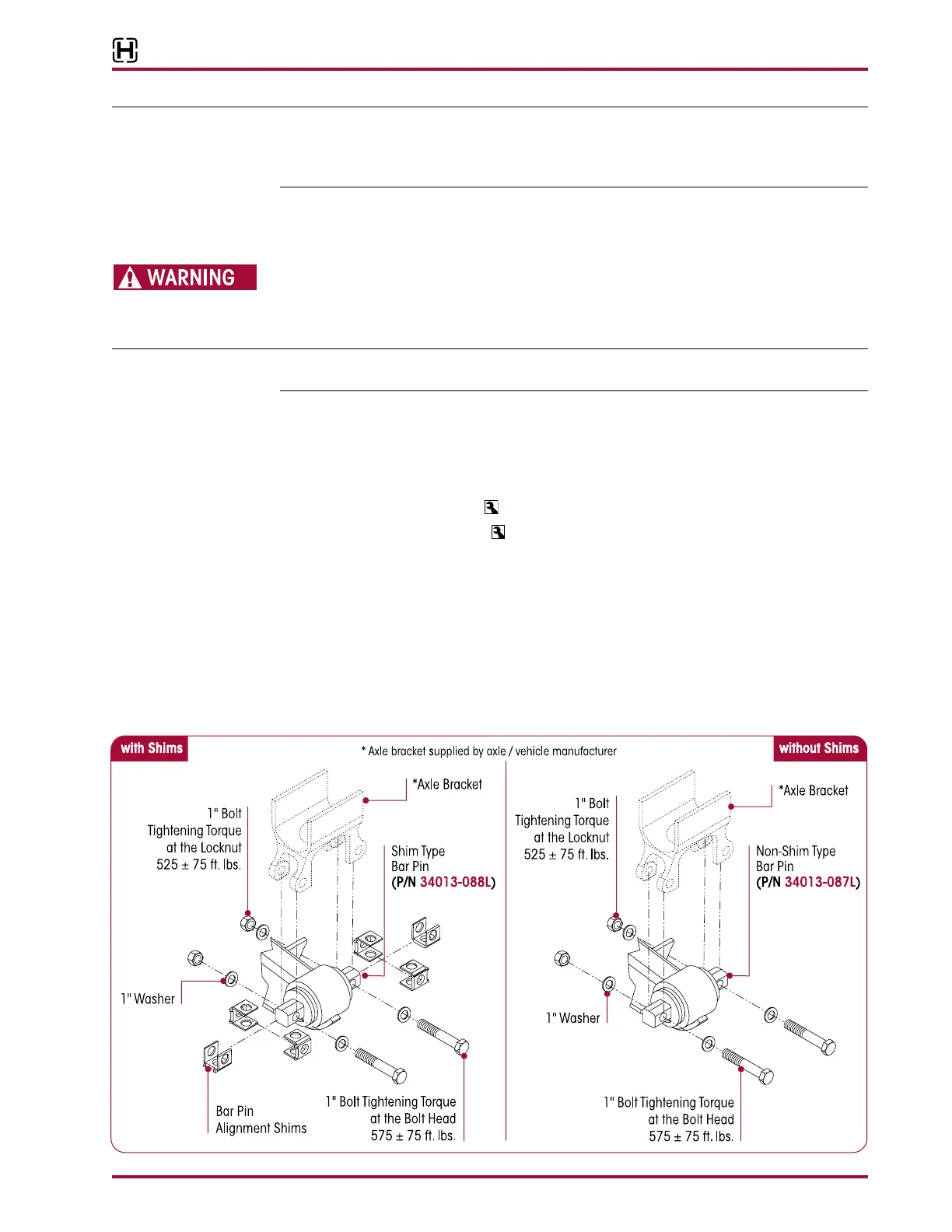
3. Check and record torque values for each 1" bar pin fastener, see Figure 6-6. Ensure all fasten-
ers are tightened to the following:
■
At the locknuts tighten to 525 ± 75 foot pounds torque
■
At the bolt head tighten to 575 ± 75 foot pounds torque
4. Recheck equalizing beam end connections for signs of looseness.
■
Inspect alignment shims in equalizing beam end for looseness. Lightly tap on the align-
ment shims to see if they can be moved. If movement is detected, tighten fasteners to the
proper torque value, see Figure 6-6
■
Inspect equalizing beam end connection for signs of excessive wear or looseness
5. If bar pin looseness is still detected in the equalizing beam end hub, operate the
vehicle. One or more components will require replacement, see Component Replacement
section of this publication.



 To Next Page