Preventive Maintenance 18 17730-241
AR2
™
An inspection of the beam end connections are necessary when a vehicle is in the shop for major
repair work or every six months, whichever comes first. Periodic visual inspection by the driver and
service personnel is also recommended. Off-highway and severe service operating conditions
require more frequent inspections than on-highway service operation.
The equalizing beam end connection requires that the fasteners are tightened to torque specifi-
cations to maintain the clamp load of the axle bracket legs to the bar pin. All bushing motion is
accommodated by rubber deflection.
■
1. Chock the wheels.
2. Visually inspect suspension components for signs of movement or excessive wear.
■
Inspect alignment shims in equalizing beam end for looseness. Lightly tap on the align-
ment shims to see if they can be moved. If movement is detected, tighten fasteners to the
proper torque value, see Figure 6-6
■
Inspect equalizing beam end connection for signs of excessive wear or looseness
An equalizing beam end connection, which is visibly cleaner than the other connections, may
indicate a loose connection.
■
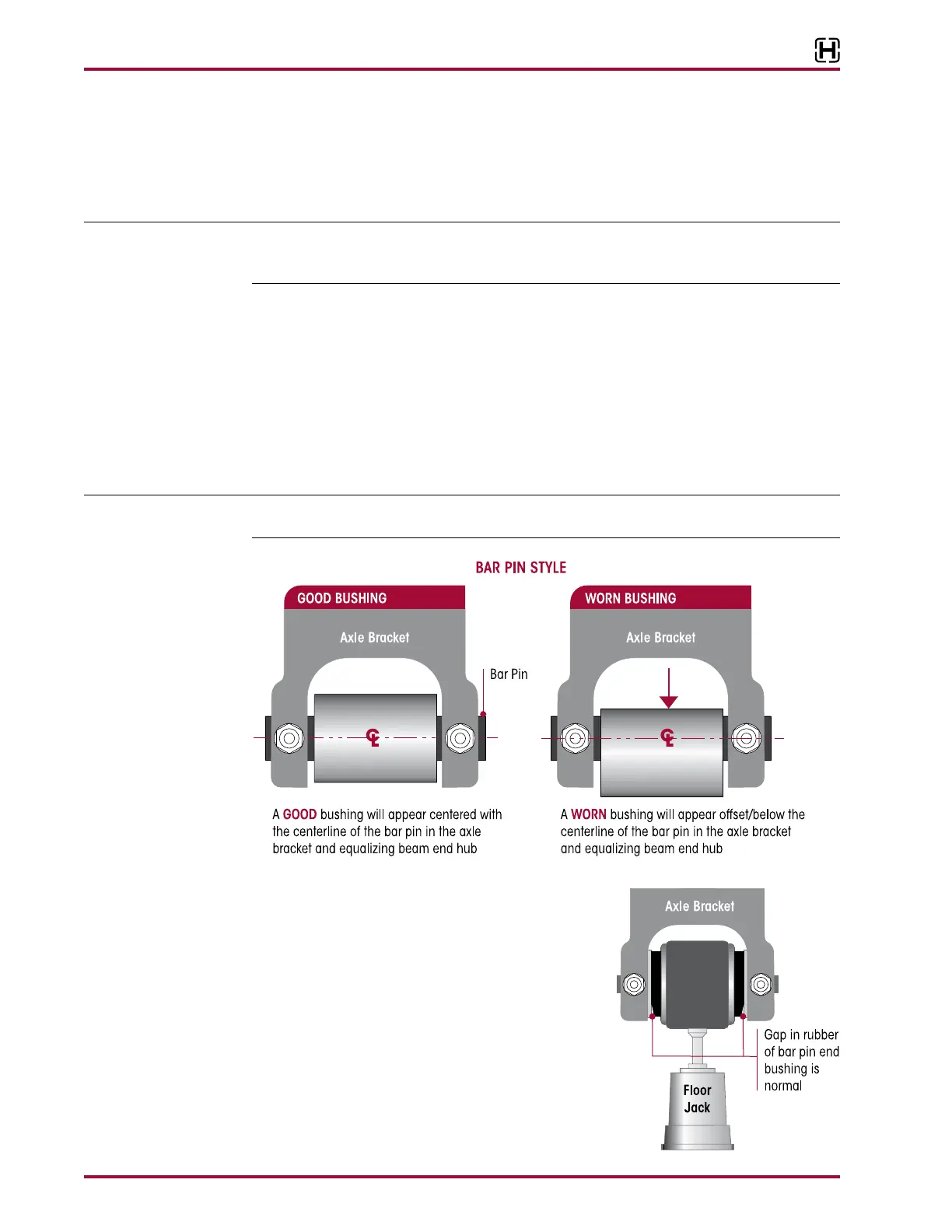
Look for worn, frayed or distorted rubber in the bar
pin beam end bushing, see Figure 6-4
■
Look for the equalizing beam to be lower in the
beam hanger, see Figure 6-4
■
If the bar pin beam end bushing is visually offset
a floor jack test should be performed. See Jack
Test in this section
1. Place a jack under each beam end as shown. Raise
the jack to check for movement in the connection or
rubber components, see Figure 6-5.



 To Next Page