EasyManua.ls Logo

HermanMiller Embody Knocked Down - User Manual

HermanMiller Embody Knocked Down
9 pages
Print Icon
To Next Page IconTo Next Page
Loading...
2018 Herman Miller, Inc., Zeeland, Michigan Printed in U.S.A.
,
Abak, Action Office, Avive, Co/Struc, Ethospace, Intersect, Meridian, Passage, Prospects, Quadrant, Resolve, Scooter, Vivo interiors, Lifework, Teneo,
and V-Wall are among the registered trademarks of Herman Miller Inc.
Burdick Group, CLT, Flex-Edge, My Studio Environments, and Q system, are among the trademarks of Herman Miller Inc.
Illustrations and specifications are based on the latest product information available at the time of publication. The right is reserved to make changes in design and specifications
at any time, without notice, and also to discontinue products.
©
®
1
1B4B13 REV E
Embody
“Knocked Down” chair Assembly
Question and Answer IconNeed help?

Do you have a question about the HermanMiller Embody Knocked Down and is the answer not in the manual?

Overview

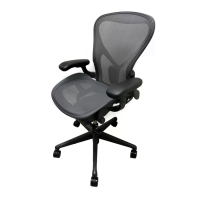
This document provides assembly instructions for the Embody™ "Knocked Down" chair, a product of Herman Miller, Inc. The chair is designed for ergonomic support and comfort, featuring a unique spine and back structure that adapts to the user's body. The assembly process is detailed across multiple steps, focusing on the connection of the chair's main components: the chair base, spine, chair back, and various hardware elements.

Function Description:

The Embody chair is a high-performance ergonomic office chair designed to provide comprehensive support and promote healthy posture. Its primary function is to distribute pressure evenly, encourage movement, and adapt to the user's spine, thereby reducing discomfort and fatigue during prolonged sitting. The chair's "Knocked Down" designation indicates that it is shipped disassembled and requires user assembly, which is facilitated by the provided instructions and specialized tools. Key features contributing to its ergonomic function include a flexible spine, adaptable back support (Antler), and a seat designed to conform to the user's body. The chair's adjustability, including back angle and tension, allows for personalized comfort and support.

Important Technical Specifications:

The assembly requires specific hardware and tools, all of which are included in the hardware pack.

  • Spine Cap Screws: (2) M6 x 12, T-27 Torx. These screws secure the spine caps. Torque specification: 35 in-lbs (4 n-m).
  • Chair Back Screws: (2) M8 x 25, T-40 Torx. These screws attach the chair back to the tilt mechanism. Torque specification: 90 in-lbs (10.2 n-m).
  • Spine Heel Screws: (2) M6 x 60, T-40 Torx. These screws secure the spine heel to the tilt mechanism. Torque specification: 90 in-lbs (10.2 n-m).
  • Torx Hand Tools: T-27 and T-40. These are provided for tightening the various screws.
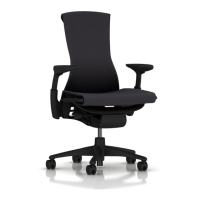
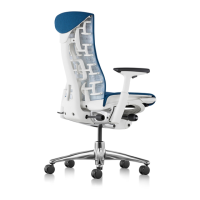
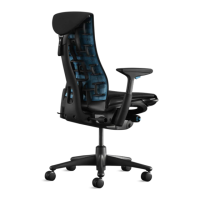
  • Components: Chair Base Assembly (shown with adjustable arms), Chair Back (ships pre-assembled), Chair Spine, Spine Shaft, Left and Right Spine Caps, Angle Knob.
  • Materials: The chair components are made from durable materials suitable for office furniture, though specific material compositions are not detailed in this manual. The design emphasizes flexibility and strength in the spine and back structure.

Usage Features:

The Embody chair is designed for intuitive use and adjustability once assembled.

  • Ergonomic Design: The chair's spine and Antler components are engineered to mimic the human spine, promoting natural alignment and movement.
  • Adjustable Back Angle: The Angle Knob, once inserted, allows users to adjust the back angle for personalized recline and support.
  • Pressure Distribution: The flexible seat and back are designed to distribute body weight evenly, reducing pressure points.
  • Movement Support: The chair's design encourages subtle movement, which is beneficial for circulation and spinal health during long periods of sitting.
  • Customization: The assembly process highlights the distinct left-hand and right-hand spine caps, indicating attention to detail in ergonomic fit.

Maintenance Features:

While the manual primarily focuses on assembly, some aspects imply maintenance considerations:

  • Durable Construction: The use of specific torque specifications for screws suggests a design intended for long-term stability and durability, minimizing the need for frequent re-tightening under normal use.
  • Component Replacement: The modular nature of the "Knocked Down" design implies that individual components, such as the spine caps or screws, could potentially be replaced if damaged, although specific replacement procedures are not covered in this assembly guide.
  • Fabric Care: Step 9 mentions ensuring "seat fabric flaps are placed securely over the seat clips," which suggests that the fabric components are designed to be securely attached and potentially removable for cleaning or replacement, though explicit instructions for this are not provided.
  • Initial Inspection: The "NOTICE!" in Step 1 emphasizes inspecting all components for damage upon removal from packaging, which is a crucial initial maintenance step to ensure the chair's integrity before assembly and use.

The assembly process itself is designed to be straightforward, with clear illustrations and step-by-step instructions. The use of a detachable cardboard filler (Step 4) is a thoughtful design aid to simplify alignment during assembly, demonstrating an emphasis on user-friendly setup. The final check for a "credit card's thickness gap" (Step 11) ensures proper engagement of the seat clips, which is vital for the chair's structural integrity and ergonomic performance. The manual also includes important legal disclaimers regarding trademarks and the right to make design changes, typical for a product from a reputable manufacturer like Herman Miller.

HermanMiller Embody Knocked Down Specifications

General IconGeneral
BrandHermanMiller
ModelEmbody Knocked Down
CategoryIndoor Furnishing
LanguageEnglish

Related product manuals