EasyManua.ls Logo

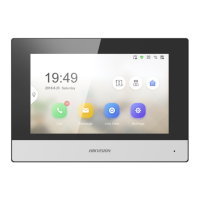
HIKVISION DS-KH8350-WTE1 - User Manual

HIKVISION DS-KH8350-WTE1
21 pages
Print Icon
To Next Page IconTo Next Page
Loading...
Video Intercom Demo Case
User Manual

Other manuals for HIKVISION DS-KH8350-WTE1

Question and Answer IconNeed help?

Do you have a question about the HIKVISION DS-KH8350-WTE1 and is the answer not in the manual?

Summary

Quick Start Guide

Safety Instruction

1 Demo Case Overview

1.1 Devices Overview

Overview of indoor stations and door stations in the demo case.

1.2 Default Parameters

Details default network and device parameters for the demo case.

2 Getting Started

2.1 Activate Indoor Station

Steps for activating the indoor station by creating a password.

2.2 Quick Operation

Wizard setup steps for device activation and initial configuration.

2.3 Configure Sub Module Address

Instructions for setting sub module addresses using DIP switches before installation.

3 Video Intercom Function

3.1 Video Intercom Function of Group 1 and Group 2

Describes video intercom setup for Group 1 and Group 2 indoor and door stations.

3.2 Video Intercom Function of Group 3

Details the video intercom setup for Group 3 door station modules.

3.3 Video Intercom Function Among Indoor Stations

Explains how indoor stations can call each other when connected to the same door station.

4 Live View

5 Remote Operation via Mobile Client

5.1 Set Up Mobile Client

Steps to install and register the Hik-Connect client for mobile devices.

5.2 Add Device to APP via QR Code

Method to add devices by scanning the QR code using the mobile client.

5.2.2 Add Device to Mobile client via Serial No.

Method to add devices by entering the serial number via the mobile client.

Overview

This document serves as a user manual for the Hikvision Video Intercom Demo Case, providing comprehensive instructions for its setup, operation, and maintenance. The demo case is designed to showcase the functionalities of Hikvision's video intercom systems, featuring various indoor stations and modular door stations arranged into three distinct groups to demonstrate different calling relationships and configurations.

The primary function of the demo case is to illustrate the core capabilities of Hikvision's video intercom solutions, including basic video intercom calls, door unlocking mechanisms, and remote operation via a mobile client. It allows users to experience firsthand how these devices interact within a simulated environment, making it an ideal tool for demonstrations, training, and understanding the system's potential applications.

Function Description

The demo case is structured around three groups of video intercom devices, each demonstrating specific functionalities:

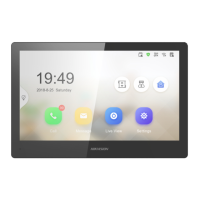
  • Group 1 and Group 2 Video Intercom Function: These groups feature an 8-series indoor station (DS-KH8350-WTE1) and a 6-series indoor station (DS-KH6320-WTE1) respectively, each connected to a modular door station (DS-KD8003-IME1 main unit with DS-KD-KK nametag module and DS-KD-IN indicator module). The core function here is the ability to initiate and receive video calls between the door station and the indoor station. When a call is placed from the door station, the indoor station automatically displays a call receiving page, allowing the user to answer or reject the call. During an active call, the indoor station also provides options to unlock the door and capture snapshots, demonstrating basic access control and monitoring features.

  • Group 3 Video Intercom Function: This group expands on the basic intercom functionality by showcasing a more modular door station setup. It includes a main unit (DS-KD8003-IME1) along with multiple accessory packages and modules such as a nametag module (DS-KD-KK), keypad module (DS-KD-KP), card reader module (DS-KD-M), and indicator modules (DS-KD-IN). This configuration highlights advanced calling methods and access control features.

    • Call Resident: Residents can be called in two ways: by pressing a call button on the main unit or nametag module, or by entering the room number on the keypad module followed by the '#' key. This demonstrates flexibility in initiating calls based on the door station's configuration.
    • Issue Card: The system supports issuing cards for access control. This involves swiping a main card on the card reading area, followed by swiping unauthorized sub-cards in turn, and finally swiping the main card again to complete the issuing process. This feature is crucial for managing resident access. The system supports Mifare cards (DS-KD-M) and EM cards (DS-KD-E), with a capacity for up to 2500 sub-cards.
    • Unlock Door: Doors can be unlocked using multiple methods:
      • By Password: Users can input a password via the keypad module. Three password formats are supported, including public passwords, room-specific passwords, and duress passwords, offering different levels of security and functionality. Passwords are 6 digits long, and up to 3 public passwords can be set via iVMS-4200.
      • By Card: Once a card has been issued (either via the door station or iVMS-4200 client software), it can be swiped on the card induction area to unlock the door. It's important to note that the main card used for issuing does not support unlocking the door itself.
  • Video Intercom Function Among Indoor Stations: The demo case also illustrates how two indoor stations connected to the same door station can call each other. This feature enhances internal communication within a building or complex. Users can initiate calls between indoor stations by entering the target room number on their indoor station's dial page. The system is designed to allow omission of community, building, and unit numbers when calling another indoor station connected to the same door station, simplifying the calling process.

  • Live View: For network indoor stations, the demo case allows users to access a live view of the added door stations directly from the indoor station's live view page. This provides real-time visual monitoring of the door station's surroundings. From the live view, users can also tap to unlock the door or initiate a call to the door station, integrating monitoring with access control and communication.

  • Remote Operation via Mobile Client (Hik-Connect): A significant feature of the demo case is the ability to configure and operate devices remotely using the Hik-Connect mobile client. This extends the system's reach and convenience, allowing users to manage their intercom system from anywhere with network access.

    • Set Up Mobile Client: This involves installing the Hik-Connect client on an iOS or Android device, registering a user account, and logging in.
    • Add Device: Devices can be added to the mobile client by scanning a QR code displayed on the device's panel or by manually entering the device's serial number. Before adding, it's crucial to enable the Hik-Connect Service in the device settings and ensure the device is activated and linked to the indoor station. The mobile client allows for comprehensive configuration and operation of the indoor station.

Usage Features

The demo case is designed for ease of use and demonstration, incorporating several features that enhance the user experience:

  • Quick Start Guide: The manual provides a quick start guide to help users get the system up and running efficiently.
  • Default Parameters: All devices in the demo case come with default parameters, including activation passwords and configuration passwords, simplifying initial setup. This allows for immediate demonstration without extensive prior configuration.
  • Wizard-Guided Setup: For indoor stations, a wizard-guided setup process is initiated upon activation, prompting users to select language, configure network parameters (including DHCP options), set indoor station type, floor, and room number, and link related devices. This streamlines the initial configuration, making it accessible even for new users.
  • Modular Design Demonstration: The inclusion of various modules (nametag, keypad, card reader, indicator) in Group 3 effectively demonstrates the modularity of Hikvision's door stations, allowing users to see how different functionalities can be integrated.
  • Clear Calling Interface: The indoor station's calling page features a clear numeric keypad and call/reject buttons, making it intuitive to dial room numbers and manage calls.
  • Multiple Access Control Methods: The demonstration of password and card-based door unlocking highlights the versatile access control options available within the system.
  • Integrated Monitoring and Control: The live view function on the indoor station, combined with the ability to unlock doors and make calls from the live view, showcases an integrated approach to security and convenience.
  • Mobile Accessibility: The Hik-Connect mobile client integration emphasizes the modern aspect of remote management, allowing users to control and monitor their intercom system from their smartphones. The process of adding devices via QR code or serial number is straightforward.

Maintenance Features

While the manual primarily focuses on setup and operation, it also includes important safety instructions and general maintenance guidelines to ensure the longevity and proper functioning of the devices:

  • Safety Instructions: The manual provides critical warnings and cautions regarding the use and handling of the devices. These include guidelines on operating temperature, compliance with electrical safety regulations, proper power adapter usage, avoiding adapter overload, ensuring power disconnection before wiring or dismantling, firm fixation during installation, and immediate action in case of device malfunction (e.g., smoke, odors).
  • Handling Precautions: Users are advised not to drop the device, subject it to physical shock, or expose it to high electromagnetism radiation or vibrations. It also warns against installing equipment in extremely hot, cold, dusty, or damp locations.
  • Environmental Considerations: The manual explicitly states that exposing the equipment to direct sunlight, low ventilation, or heat sources is forbidden to prevent fire hazards. It also advises against aiming the device at the sun or overly bright places to prevent blooming or smearing and to protect the sensor's endurance.
  • Cleaning Guidelines: When cleaning the device cover, users are instructed to use a soft and dry cloth and avoid alkaline detergents. The use of provided gloves when opening the device cover is recommended to prevent acidic sweat from eroding the surface coating.
  • Packaging Retention: Users are advised to keep all original wrappers after unpacking for future use, especially in case the device needs to be returned for repair or maintenance, to prevent damage during transportation and avoid additional costs.
  • Battery Safety: For devices with batteries, the manual includes a caution about improper use or replacement, which may result in an explosion. It specifies replacing with the same or equivalent type only and disposing of used batteries according to manufacturer instructions.
  • Professional Repair: Users are strongly cautioned against attempting to disassemble the device themselves and are advised to contact their dealer or service center for any malfunctions, emphasizing that unauthorized repairs may void responsibility.
  • Password Management: The manual stresses the importance of creating strong passwords (minimum 8 characters, including at least three categories of upper case letters, lower case letters, numbers, and special characters) for device activation and recommends regular password resets, especially in high-security systems, to enhance product security.

In summary, the Hikvision Video Intercom Demo Case manual provides a comprehensive guide to understanding and utilizing the various features of their video intercom systems. It covers everything from basic calling and access control to advanced modular configurations and remote management via mobile clients, all while emphasizing safety and proper maintenance practices.

HIKVISION DS-KH8350-WTE1 Specifications

General IconGeneral
Product colorBlack
Package weight899 g
Indoor unit includedYes
Outdoor unit includedNo
Display diagonal7 \
Display resolution1024 x 600 pixels
Operating system installedLinux
Voice codecsG.711u
Number of speakers1
CertificationFCC, IC, CE, C-TICK, ROHS, REACH, WEEE, UL, CB, RCM
Connectivity technologyWired & Wireless
Maximum number of cameras supported-
Wi-Fi standards802.11b, 802.11g, Wi-Fi 4 (802.11n)
Networking standardsIEEE 802.3af
Ethernet LAN data rates10, 100 Mbit/s
Ethernet interface typeFast Ethernet
Supported network protocolsTCP/IP, SIP, RTSP
Compatible memory cardsMicroSD (TransFlash)
Maximum memory card size32 GB
Power consumption200 mA
Indoor unit power typeDC
Power consumption (typical)7 W
Operating relative humidity (H-H)10 - 90 %
Main monitor station operating temperature (T-T)-10 - 55 °C
Weight and Dimensions IconWeight and Dimensions
Weight355 g
Door station dimensions (WxDxH)180 x 140 x 22.4 mm

Related product manuals