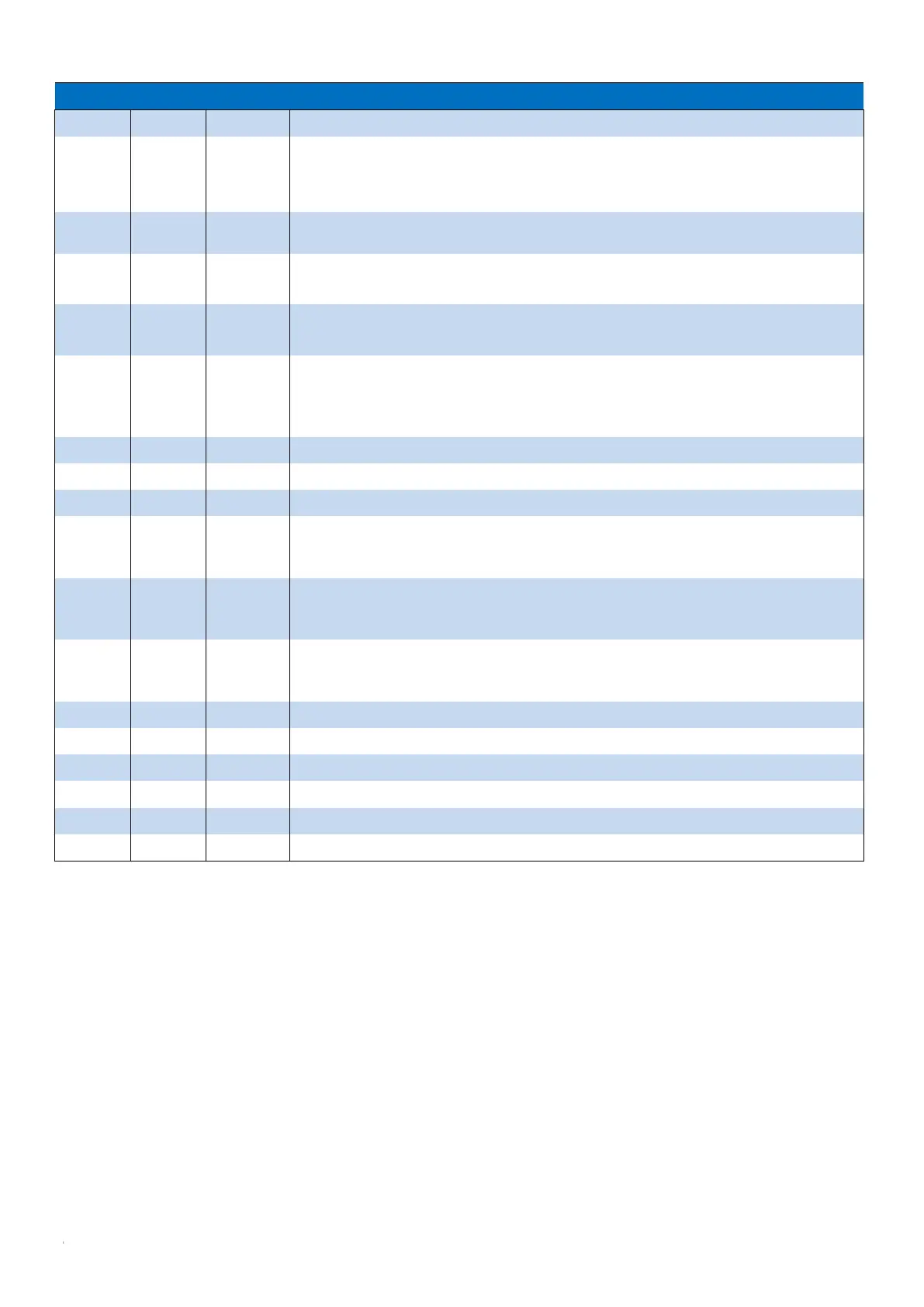
Canadian Marine VHF Channels and Frequencies
All areas except EC Inter-ship, Ship/Shore, Commercial, Non-commercial,
Safety:May also be used for communications with aircraft engaged in coordinated
search and rescue and antipollution operations.
EC, PC Inter-ship, Ship/Shore, Commercial, Non-commercial and Ship Movement.
Simplex port operation, Ship movement and navigation related communication only.
1 watt maximum
Simplex port operation, Ship movement and navigation related communication
only.1 watt maximum
Inter-ship, Ship/Shore, Safety and Ship Movement: Pilotage on Pacific Coast. Port
operations only in the St. Lawrence River/Great Lakes areas with 1W maximum
power.
EC, PC Inter-ship, Ship/Shore and Commercial
EC, PC Inter-ship, Ship/Shore and Commercial
EC, PC Inter-ship, Ship/Shore and Commercial
Inter-ship and Ship/Shore: Canadian Coast Guard use only in the St. Lawrence
River/ Great Lakes areas.
Inter-ship and Ship/Shore: Canadian Coast Guard use only in the St. Lawrence
River/ Great Lakes areas.
EC Inter-ship and Ship/Shore: Canadian Coast Guard and other Government
agencies.
AC, GL Safety: Continuous Marine Broadcast (CMB) Service.
PC Ship/Shore and Public Correspondence
AC, GL, NL Ship/Shore and Public Correspondence
PC Ship/Shore and Public Correspondence
AC, GL, NL Ship/Shore and Public Correspondence
AC, GL, NL Ship/Shore and Public Correspondence
AC: Atlantic Coast, Gulf and St. Lawrence River up to and
including Montreal
EC: (East Coast): includes NL, AC, GL and Eastern Arctic
areas
GL: Great Lakes (including St. Lawrence above Montreal)
NL: Newfoundland and Labrador
PC: Pacific Coast
WC:(West Coast): Pacific Coast, Western Arctic and
Athabasca-Mackenzie Watershed areas All areas:
includes East and West Coast areas
Notes:
1. An “A” following a channel number indicates simplex
use of the ship station transmit side of an international
2. duplex channel. Operations are different from that of
international operations on that channel.
3. Channel 16 is used for calling other stations or for
distress alerting.
4. The letter “B” following a channel number indicates
simplex use of the coast station transmit side of an
international duplex channel. That is, the channel is
Receive Only.
5. Channel 70 is used exclusively for Digital Selective
Calling (DSC) and is not available for regular voice
communications.
6. Channels 75 and 76 are reserved as guard bands for
Channel 16 and are not available for regular voice
communications.


 To Next Page