EasyManua.ls Logo

Honda 08E91-E54-100 - User Manual

Honda 08E91-E54-100
25 pages
Print Icon
To Next Page IconTo Next Page
Loading...
Publications No.
Issue Date
INSTALLATION
INSTRUCTIONS
Accessory Application
© 2013 American Honda Motor Co., Inc. – All Rights Reserved. AII 50024-50373 (1308) 1 of 25
08E92-T0A-1B00-90
AII 50024-50373
REMOTE CONTROL
ENGINE STARTER
2014 CR-V
AUG 2013
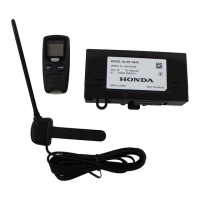
PARTS LIST
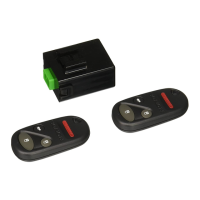
Remote Control Engine Starter Kit
P/N 08E91-E54-100
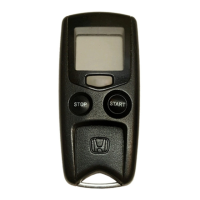
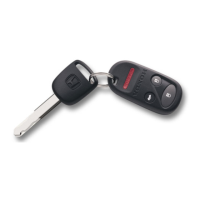
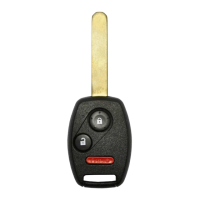
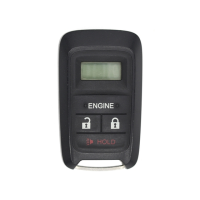
Transmitter
Control unit
Antenna
ID label
Remote Control Engine Starter Attachment Kit
P/N 08E92-T0A-100B
Control unit bracket
Engine starter harness
3 Relays
20 Cable ties
Long Cable tie
6 Urethane tapes
Clip
Caution label
Fuse label
Accessory User’s Information Manual

Other manuals for Honda 08E91-E54-100

Question and Answer IconNeed help?

Do you have a question about the Honda 08E91-E54-100 and is the answer not in the manual?

Overview

This document outlines the installation and operation of the Honda Remote Control Engine Starter Kit, designed for the 2014 CR-V. This accessory allows for remote starting of the vehicle's engine, enhancing convenience, particularly in varying weather conditions.

Function Description

The Remote Control Engine Starter provides the capability to start the vehicle's engine from a distance using a dedicated transmitter. This feature allows the user to warm up or cool down the vehicle's interior before entry, improving comfort. The system integrates with the vehicle's existing electrical and security systems, ensuring safe and controlled operation. It utilizes a control unit, an antenna, relays, and a specialized wiring harness to establish communication between the transmitter and the vehicle's engine management system. The installation process involves connecting various components to the vehicle's fuse box, steering column, and other electrical points, ensuring seamless integration.

Usage Features

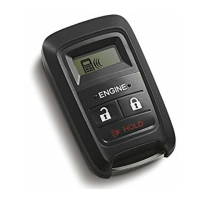
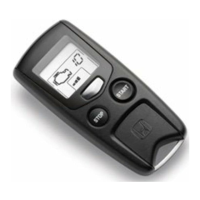
The primary usage feature is the remote engine start function. To activate this, the user presses and releases the engine/command button on the transmitter, and then, within two seconds, presses the lock/start button. The system is designed to operate only under specific conditions to ensure safety and prevent accidental starts. These conditions include:

  • The hood must be closed.
  • The shift lever must be in the "Park" position.
  • The ignition switch must be off, and the key must be outside the vehicle.
  • All doors and the tailgate must be closed and locked.
  • No vehicle key should be present inside the vehicle.
  • The brake pedal and accelerator should not be pressed.

Once the engine is started remotely, it will run for a predetermined period (indicated by the "REMAINING IDLING TIME" on the transmitter display, if equipped with automatic climate control) and can be stopped remotely by pressing the engine/command button followed by the unlock/stop button within two seconds. The engine will also automatically stop if any of the following events occur:

  • The shift lever is moved out of the "Park" position.
  • Any door or the tailgate is unlocked or opened.
  • The hood is opened.
  • The key is inserted into the ignition.
  • The brake pedal is pressed.

The transmitter also provides visual feedback through indicators such as "RECEPTION INDICATOR," "CHECKING INDICATOR" (which blinks during checks), and "ENGINE RUNNING INDICATOR." For vehicles equipped with automatic climate control, an "IN-CAR TEMPERATURE" indicator might also be displayed. The system allows for checking the operation of power windows, moonroof, and shift lever movement when the vehicle is started remotely, ensuring that these functions are appropriately restricted for safety. The remote control range is approximately 120 meters (400 feet) in direct sight, allowing for considerable flexibility in starting the vehicle. The transmitter can also be used to unlock and lock the doors remotely.

Maintenance Features

The installation process itself involves several steps that, while not direct maintenance, are crucial for the long-term reliability and proper functioning of the device. These include:

  • Cleaning Surfaces: Before attaching components like the ID label, antenna, and urethane tapes, the specified areas on the transmitter, windshield, and vehicle unit must be thoroughly cleaned with isopropyl alcohol. This ensures proper adhesion and prevents premature detachment.
  • Secure Connections: All electrical connectors, including 28-pin, 5-pin, 4-pin, 24-pin, 7-pin, 10-pin, and 12-pin connectors, must be securely plugged in. Loose connections can lead to intermittent operation or even engine stalling. Cable ties are extensively used throughout the installation to secure harnesses and cables to the vehicle frame and existing harnesses, preventing movement, chafing, and potential damage.
  • Proper Routing: The antenna cable and engine starter harness must be routed carefully, avoiding pinching or interference with moving parts like the steering wheel. This attention to detail during installation is a preventative measure against future electrical issues or mechanical wear.
  • System Registration: After physical installation, the Remote Control Engine Starter Unit must be registered using the Honda Diagnostic System (HDS/MVCI) tester. This involves inputting vehicle information, selecting the appropriate system, and entering a PCM code (password) obtained from the Interactive Network (iN). This electronic registration is vital for the system to function correctly and securely.
  • Operational Checks: Post-installation, a series of operational checks are performed to verify that the engine starts and stops correctly, and that all safety conditions are met. This includes checking the engine stop conditions (e.g., when a door is opened or the brake is pressed) and verifying the remote control range. If any issues arise, troubleshooting involves checking harness connections and using the HDS/MVCI tester to diagnose failures, referring to the service manual for detailed guidance.
  • Caution Label: A caution label is attached to the hood, serving as a reminder of important safety information related to the remote starter.

The design emphasizes robust installation practices to minimize the need for frequent maintenance. However, in case of operational anomalies, the diagnostic capabilities of the HDS/MVCI tester are essential for identifying and resolving issues. Regular checks of the system's functionality, as outlined in the operational checks, can help ensure continued reliable performance.

Honda 08E91-E54-100 Specifications

General IconGeneral
Part Number08E91-E54-100
Product TypeRemote Starter
CompatibilityHonda vehicles
FeaturesKeyless entry, engine start/stop
InstallationProfessional installation recommended
Power SourceVehicle battery

Related product manuals