
 Need help?
Do you have a question about the HTP Everlast EV-6 and is the answer not in the manual?
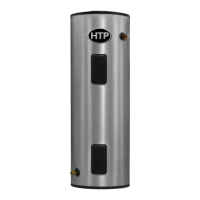
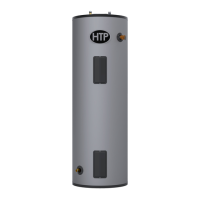
This manual describes the Everlast Electric Water Heater, a device designed to provide hot water for residential use. The water heater is intended for indoor installations only and must be installed by qualified and licensed personnel in accordance with all local, state, provincial, and national codes, laws, regulations, and ordinances, as well as the latest version of the National Electrical Code, NFPA No. 70.
The Everlast Electric Water Heater heats potable water using one or more electric heating elements. It is equipped with a combination Thermostat and High Limit Control (ECO) to regulate water temperature and prevent overheating. The thermostat allows users to set the desired water temperature, while the ECO acts as a safety mechanism, breaking the circuit to the heating element if the water temperature becomes excessively high. Once the ECO switch opens, it must be manually reset after the cause of the over-temperature condition has been corrected. The unit is factory-wired to a junction box for field electrical connections and requires a dedicated circuit with a minimum 30 amp capacity. Grounding is essential for safe operation and can be achieved through rigid metal conduit or a separate green ground wire provided in the junction box.
Before operating the water heater, it is crucial to ensure the tank is completely filled with water. Failure to do so can damage the heating elements, a condition known as "dry-firing," which is not covered by the warranty. To fill the tank, close the drain valve, open the cold water supply line shut-off valve, and open hot water faucets to allow air to vent. Once the tank is full, turn on the electrical power.
The water heater can deliver scalding hot water, so caution is advised when using hot water to prevent injury. For installations servicing disabled or elderly persons, or children, the use of a temperature limiting or mixing valve is recommended to reduce the point of discharge temperature by mixing cold and hot water in branch supply lines. The thermostat(s) are factory-set to 120°F to minimize the risk of scald injury, which is suitable for average household use. If a higher temperature is needed for appliances like dishwashers or automatic clothes washers, the thermostat can be adjusted, but this increases the potential for scald injury. To adjust the thermostat or reset the ECO, power to the water heater must be turned off at the circuit breaker or by removing the fuse. The access cover and insulation are then removed to expose the control, allowing the red RESET button to be pushed and the white adjustment knob to be turned to the desired temperature. After adjustment, the insulation and access cover must be replaced, and power restored.
Routine preventative maintenance is essential for safe and efficient operation of the water heater over its service life. This includes monthly flushing of the tank, periodic checks for leaks, and annual inspections by a qualified service technician.
It is recommended to drain a few quarts of water from the heater to flush out sediment deposits, which helps prolong the heater's service life. Before draining, turn off power to the heater to prevent damage to the heating elements from "dry-firing." Attach a hose to the drain valve, close the supply line shut-off valve, and open the drain valve and hot water faucet(s) to vent the heater. Direct the drained water, which may be scalding hot, to a safe drainage location. After flushing until the water runs clear, close the drain valve, reopen the supply line shut-off valve, and ensure the heater is completely full of water before restoring power.
Check around the water heater and related plumbing for leaks. If the temperature and pressure relief valve discharges periodically, or if water is leaking from around the heating element, it may indicate a problem with the water system that requires professional assistance. Do not attempt to repair leaks yourself; contact a qualified service contractor. Also, inspect the area around the water heater for flammable liquids or combustible materials and remove any found.
During extended mild or warm weather periods when hot water is not in use, shut off the electric power to the tank. Restore power when hot water is needed again. During extended cold weather periods when freezing conditions are possible, shut off electric power, close the supply line shut-off valve, and drain the water heater completely to a safe drainage location. Once drained, close the drain valve. Restore water supply and power when the tank is full.
A qualified service technician should perform an annual inspection to ensure the heater is operating safely and efficiently. This includes:
When replacing heating elements, it is critical to use only HTP heating elements of the same voltage, wattage, and incoloy sheath construction with a stainless steel hex plug. Failure to use approved elements will void the warranty. Before replacing an element, completely drain the water heater and disconnect power to prevent electric shock, scalding, and property damage. After replacement, refill the tank with cold water and pressure check for leaks before restoring power.
 General
| Brand | HTP |
|---|---|
| Model | Everlast EV-6 |
| Type | Electric Water Heater |
| Capacity | 6 Gallons |
| Voltage | 120 V |
| Wattage | 1440 W |
| Amperage | 12 A |
| Energy Factor | 0.95 |
| Warranty | 6-Year Limited Warranty |



 To Next Page