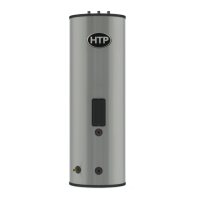
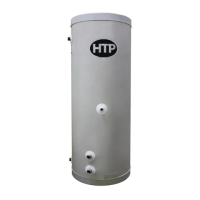
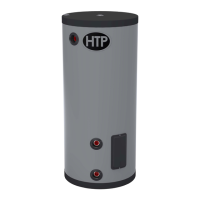
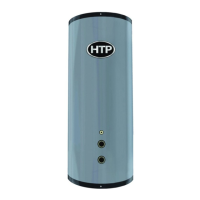
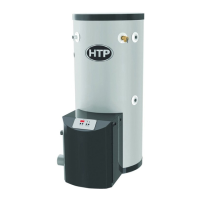
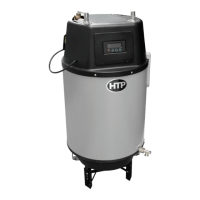
This manual describes the HTP Superstor Contender Indirect Fired Water Heater, a device designed for residential and commercial hot water applications. It is intended for indoor installation only and must be installed by a qualified and licensed professional. The water heater operates by utilizing a boiler's heat to warm domestic water, offering an efficient way to provide hot water.
Function Description:
The HTP Superstor Contender is an indirect-fired water heater, meaning it uses a heat exchanger to transfer heat from a boiler's closed-loop hydronic system to the potable domestic water supply. This design allows the water heater to leverage an existing heating system, such as a boiler, to produce hot water without requiring its own dedicated burner. The boiler's hot water circulates through a coil within the water heater tank, heating the domestic water stored inside. A surface-mounted control, factory-set at 120°F (with a fixed differential of 3-5°F), regulates the water temperature. This control ensures that the water heater calls for heat from the boiler when the domestic water temperature drops below the set point. The system is designed to be integrated with various boiler setups, including those with zone valves or circulators, as illustrated in the wiring diagrams. It can also be installed in multiple tank configurations for high-demand applications. The water heater is equipped with a temperature and pressure (T&P) relief valve, which is a critical safety device designed to discharge water if either the temperature or pressure within the tank exceeds safe limits. A magnesium anode rod is also included, serving as a sacrificial component to protect the tank from corrosion caused by water chemistry.
Usage Features:
The water heater is designed for continuous hot water supply, making it suitable for various domestic and commercial needs. When filling the water heater, it is crucial to open a hot water tap to release air from the tank and piping to ensure proper operation and prevent damage. The control allows for temperature adjustment, though users are cautioned about scalding risks at higher temperatures. For settings above 120°F, an ASSE 1017 rated mixing valve is mandatory to prevent severe burns, especially in households with small children, disabled, or elderly persons. The manual emphasizes that the water heater should only be used for its intended purpose, as described, to avoid voiding the product warranty. It is also important to ensure that the boiler's high limit is set at least 20°F higher than the water heater's desired temperature to allow for proper heat transfer. The low limit of the boiler control should be set to its minimum to ensure the burner only activates when the tank control calls for heat. The system should be flushed after installation to remove any soldering residue, which can corrode stainless steel components.
Maintenance Features:
Regular maintenance is crucial for the safe and efficient operation of the HTP Superstor Contender. The manual outlines an annual maintenance checklist that should be performed by a qualified service technician. This includes:
- Piping Inspection: Checking for any signs of leakage and ensuring pipes are properly supported.
- Visual System Inspection: A full visual inspection of all system components, including boilers, water treatment systems, mixing valves, and circulators, to ensure they are operating properly and have been maintained.
- Functional Testing: Testing all system functions and verifying system pressure is within the safe operating range.
- Temperature Control Check: Checking the accuracy of the control and verifying safe settings on any installed mixing valve.
- Electrical Checks: Verifying that smoke and CO detectors are installed and working, changing batteries if necessary, and ensuring circuit breakers are clearly labeled. Wire connections should also be checked for tightness.
- Anode Rod Inspection: The magnesium anode rod should be removed and visually inspected annually. It must be replaced when more than 6 inches of core wire is exposed at either end, as it is vital for preventing tank corrosion. Operating the water heater without an anode rod will shorten the tank's life and void the warranty.
- Relief Valve Testing: The T&P relief valve should be lifted and released annually to ensure it operates properly and that the waterway is clear. If the valve is blocked or does not operate, it must be replaced immediately. Users are cautioned about the risk of scalding when operating the relief valve.
- Drain Valve Operation: The drain valve should be opened annually to drain a few quarts of water from the bottom of the tank to flush out any hard water deposits. If the valve is blocked or does not operate, it should be replaced. Again, caution is advised due to potential scalding.
- Combustible Material Check: The area around the heater should be checked for combustible materials like gasoline or paint thinner, which must be moved to a safe location if found.
- Water Chemistry Monitoring: The manual stresses the importance of maintaining specific water chemistry parameters (pH between 6.5 and 8.5, hardness, chloride concentration, and total dissolved solids) to prevent damage and ensure warranty coverage. Professional water quality analysis is recommended.
- Re-inspection of T&P Relief Valves: T&P valves should be inspected and replaced if necessary by a licensed plumbing contractor at least once every three years to ensure continued safety and proper operation.
The manual also provides troubleshooting guidance for common issues such as no hot water, not enough hot water, T&P valve discharges, and rotten egg odor in hot water, offering possible solutions for each. It emphasizes that failure to adhere to maintenance guidelines can result in property damage, severe personal injury, or death.



 To Next Page


 General