
 To Next Page
C
christopher92Aug 18, 2025
What to do if the control is set too low on my HTP Water Heater?
- KKylie EstradaAug 18, 2025
If the control is set too low, raise the control temperature.

What to do if the control is set too low on my HTP Water Heater?
If the control is set too low, raise the control temperature.
What to do if the tank control is set too low on my HTP Superstor GL-50?
If the tank control is set too low, raise the tank temperature.
Why is there not enough hot water from my HTP Superstor GL-50 Water Heater?
If you're not getting enough hot water, it may be because the boiler is too small. Refer to the chart for proper sizing.
What to do if my HTP Superstor GL-50 Water Heater tank recovery is slow?
A slow tank recovery may be due to a slow startup boiler. Refer to the chart for more details.
What to do if the water pressure is too high in my HTP Superstor GL-50?
If the water pressure is too high, install a pressure reducing valve.
What to do if the tank temperature is too high on my HTP Water Heater?
If the tank temperature is too high, lower the tank temperature.
What to do if water expands when heated in my HTP Superstor GL-50?
If water expands when heated, install an expansion tank.
What to do if the circulator fails in my HTP Water Heater?
If the circulator fails, replace the circulator.
What to do if the zone valve fails in my HTP Superstor GL-50?
If the zone valve fails, replace the valve.
What to do if wiring is incorrect on my HTP Water Heater?
If the wiring is incorrect, check the wiring.
Guidelines for safe maintenance practices and electrical safety during servicing.
Precautions regarding water quality and chemical compatibility for system longevity.
Importance of protecting the tank from freezing to prevent damage.
Recommendations for setting water temperature to prevent scalding.
Guidance on choosing an appropriate indoor location and necessary clearances.
Specifications for water pH, hardness, and chloride levels for optimal performance.
List of available accessories for the storage tank system.
Mandatory requirements for connecting plumbing in accordance with codes and warranty.
Instructions for connecting tankless coils to the storage tank.
Description of the surface mount thermostatic control and temperature adjustment.
Guidelines for safe and compliant electrical wiring procedures.
Visual representation of the control and wiring connections.
Procedure for filling the tank and purging air to ensure proper operation.
Steps for checking leaks, flushing the system, and verifying component operation.
Guidance on setting storage tank temperature and boiler limit controls.
Checklist for regular system inspections and maintenance tasks.
List of common replacement parts with their part numbers.
Common issues, possible solutions for no hot water and not enough hot water.
Details of the limited warranty coverage for the glass lined storage tank.
Key duties of the owner for maintaining warranty coverage.
Conditions and circumstances not covered by the manufacturer's warranty.
Steps to follow when submitting a warranty claim.
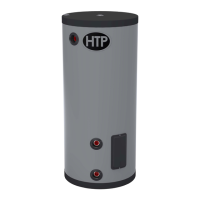
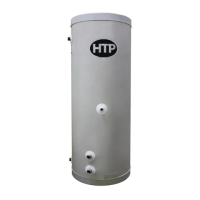
This document describes the Superstor Glass Lined Storage Tanks, designed for both residential and commercial use. These tanks are available in metal-jacketed ASME and non-ASME models. The primary function of these tanks is to store hot water, integrating into a larger water heating system.
The Superstor Glass Lined Storage Tank serves as a crucial component in a water heating system, storing heated potable water for various applications. It is designed to work in conjunction with a boiler or other heat source, receiving heated water and maintaining its temperature until needed. The glass-lined interior provides corrosion resistance, ensuring the longevity of the tank and the quality of the stored water. The tank is equipped with connections for hot water outlet, cold water inlet, temperature and pressure (T&P) relief valve, and circulator lines, facilitating its integration into a plumbing system. Some models also feature an aquastat opening for temperature control and a drain valve for maintenance. The tank's design emphasizes efficient heat retention, minimizing heat loss and contributing to energy savings. It is suitable for indoor installations and is designed to meet various plumbing and safety codes.
The storage tank is intended for indoor use only and should not be installed outdoors. It must be located in an area that can support its full filled weight and where any potential leakage will not cause damage to surrounding areas or lower floors. Minimum service clearances of 24 inches in front and 6 inches on the sides are recommended for maintenance access. The tank should be installed vertically on a level surface. For areas prone to freezing, the tank and associated piping should be placed in a location not susceptible to freezing temperatures and should be insulated.
When filling the storage tank, it is crucial to open a hot water tap to release air from the tank and piping to prevent improper operation and damage. The water heating system should be flushed to clear any soldering residue before operation. The tank's temperature is controlled by a surface-mount thermostatic control, which can be adjusted by removing the lower cover. If the desired water temperature is above 120°F, an ASSE 1017 rated mixing valve must be used to prevent scalding. Households with small children, disabled, or elderly persons may require a lower temperature setting (120°F or less) to prevent severe personal injury or death from scalding.
The water chemistry is a critical factor for the tank's performance and longevity. The water must be potable, free of corrosive chemicals, sand, dirt, and other contaminants. Recommended water pH levels are between 6.5 and 8.5. Hardness levels should be less than 12 grains (200 mg/L) for water temperatures below 140°F, and less than 7 grains (120 mg/L) for temperatures of 140°F and greater. Chloride concentration should be less than 100 ppm (mg/L), and total dissolved solids (TDS) less than 500 ppm (mg/L). Operating the tank with water outside these parameters can lead to lime scale build-up, corrosion, and other damage, which is not covered by the product warranty.
A potable hot water expansion tank may be required, especially if a backflow preventer or no-return valve is present in the system, to offset heated water expansion. A weeping relief valve indicates the need for an expansion tank.
Periodic maintenance is essential to ensure the safe and efficient operation of the storage tank. This should be performed annually by a qualified service technician. Key maintenance activities include:
The manufacturer reserves the right to make product changes or updates without notice. It is important for consumers to keep all instructions for future reference. Failure to adhere to installation and maintenance guidelines can result in property damage, severe personal injury, or death, and may void the product warranty.
 General
| Brand | HTP |
|---|---|
| Model | Superstor GL-50 |
| Category | Water Heater |
| Type | Indirect Water Heater |
| Capacity | 50 gallons |
| Diameter | 22 inches |
| Weight | 150 lbs |
| Max Temperature | 180°F |
| Maximum Working Pressure | 150 psi |
| Test Pressure | 300 psi |
| Warranty | Limited Lifetime |
| Tank Material | Stainless Steel |