Page 12
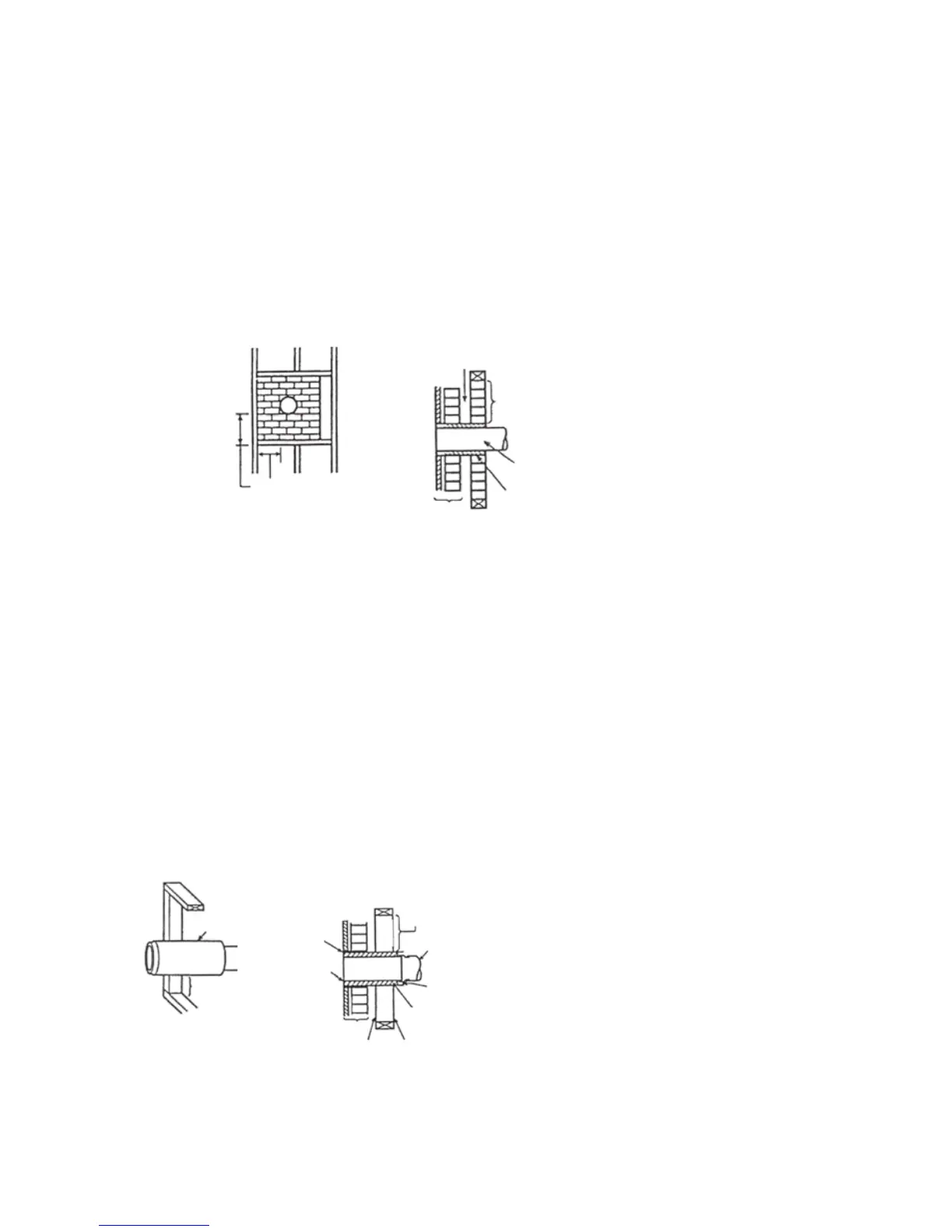
Method B 9" (228.6 mm) Clearance to Combustible Wall Member:
Using a 6" (152.4 mm) inside diameter, listed factory-built Solid-Pak chimney section
with insulation of 1"(25.4 mm) or more, build a wall pass-through with a minimum 9"
(228.6 mm) air space between the outer wall of the chimney length and wall combustibles.
Use sheet metal supports fastened securely to wall surfaces on all sides, to maintain the
9" (228.6 mm) air space. When fastening supports to chimney length, do not penetrate
the chimney liner (the inside wall of the Solid-Pak chimney). The inner end of the Solid-
Pak chimney section shall be flush with the inside of the masonry chimney flue, and
sealed with a non-water soluble refractory cement. Use this cement to also seal to the
brick masonry penetration
Using a minimum thickness 3.5" (89 mm) brick and a 5/8" (15.9 mm) minimum wall
thickness clay liner, construct a wall pass-through. The clay liner must conform to ASTM
C315 (Standard Specification for Clay Fire Linings) or its equivalent. Keep a minimum of
12" (304.8 mm) of brick masonry between the clay liner and wall combustibles. The clay
liner shall run from the brick masonry outer surface to the inner surface of the chimney
flue liner but not past the inner surface. Firmly grout or cement the clay liner in place to
the chimney flue liner.
Combustible Wall Chimney Connector Pass-Throughs
Method A 12” (304.8 mm) Clearance to Combustible Wall Member:
Minimum
12 in. (304,8 mm)
to combustibles
Minimum chimney clearance to brick
and combustibles 2 in. (50.8 mm)
Minimum clearance
12 in. (304.8 mm)
of brick
Chimney connector
Fire clay liner
Chimne
y flue
Masony
chimney
Minimum chimney clearance from masony
to sheet steel supports and combustibles
2 in. (50.8 mm)
Minimum clearance
9 in. (228.6 mm) of bric


 To Next Page
 Loading...