Page 6
NOTE
If you plan to vent your stove into an existing masonry chimney, have the chimney
inspected by a local fire marshal or qualified installer. Remember that the chimney and
its location on the roof heavily influents the stoves performance. An oversized flue may
not provide effective draft and a flue liner may be required. (Observe draft requirements).
Consult your dealer or qualified installer before final selection is made.
We advise you to leave enough room to enable cleaning between the stove and the
wall.
Clearance to combustibles
One of the main necessary precautions you must take, when installing a stove is to
leave sufficient space between the stove (top, sides, back, front, and under stove pipes)
and any other material that can catch fire.
Floor protection
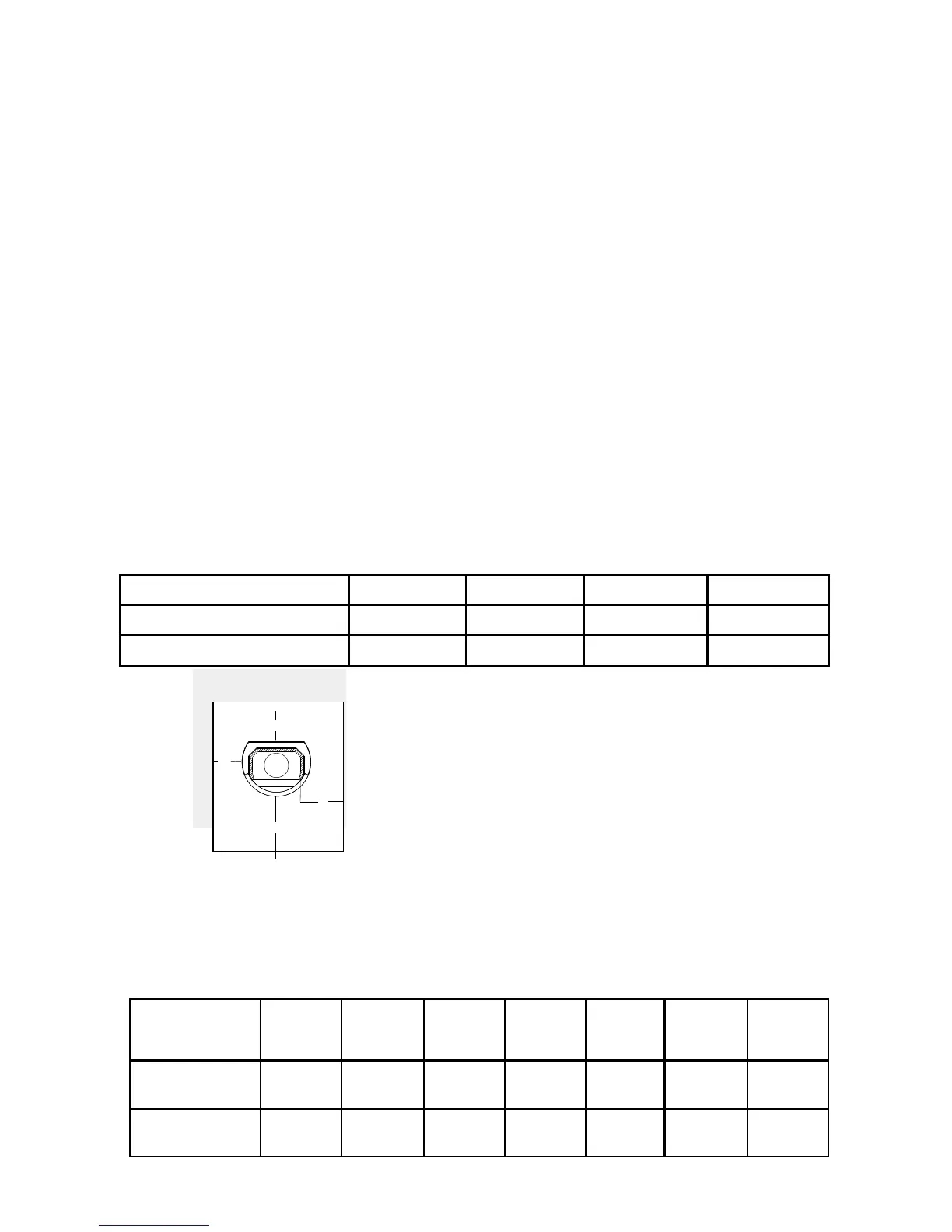
If the stove is to be installed on a combustible floor, the stove must be placed on a
noncombustible hearth pad, which extends 8" ( 200mm measured from the legs) beyond
the stove sides and back, and 18" (455mm) measured from side and back panels to the
front. See Fig. 1.
Ceiling height clearance
Do not install in an alcove or confined space and do not install in a room with a ceiling high
below 7’0” (210 cm).
Combustible Wall Clearance for top vent installation
In placing to stove the following clearances to combustible materials must be kept.
Chimney
connector type
A
B
C
D
E
F
G
Single wall pipe
330 mm
127 mm
152 mm
533 mm
216 mm
356 mm
914 mm
13"
5"
6"
21"
8.5"
14"
36"
Double wall pipe
330 mm
102 mm
51 mm
533 mm
191 mm
356 mm
914 mm
13"
4"
2"
21"
7.5"
14"
36"
Floor protection A B C D
USA
16"
8"
Canada
18"
8" 8"
Fig 1
C
B
A
D
A. Distance from the front of the stove to edge of floor protection
B. Distance from the side of stove to the edge of the floor protection
C. Distance from rear of the stove to the edge of the floor protection
D. Distance from the opening into the burn chamber to the edge of
the floor protection


 To Next Page