Install
WARNING
DO NOT try to remove a fork without a lifting de-
vice. Each hook fork for these lift trucks can
weigh 50 to 98 kg (110 to 216 lb).
NOTE: Forks are to be replace in sets by trained
personnel only. DO NOT replace forks individually.
1.
Move fork and carriage so top hook of fork can
engage upper carriage bar. See Figure 4.
2.
Raise carriage to move bottom hook of fork
through fork removal notch.
3.
Slide fork on carriage so both upper and lower
hooks engage carriage bars. See Figure 3.
4.
Install latch pin in top hook and notch in upper
carriage bar. See Figure 3.
Checks
WARNING
Never repair damaged forks by heating or weld-
ing. Forks are made of tempered steel using spe-
cial procedures. Always replace damaged forks as
a pair.
Inspect forks for cracks and wear. Check alignment
of fork tips. The difference in height of fork tips
must be less than three percent of the length of the
forks. See Table 1 and Figure 5.
Some applications may require closer alignment. If
forks do not meet specification, they both must be
replaced. Check for smooth and proper operation of
the fork lock pins. Repair or replace any damaged
or broken fork lock pins or components and lubri-
cate, as necessary. See Figure 5.
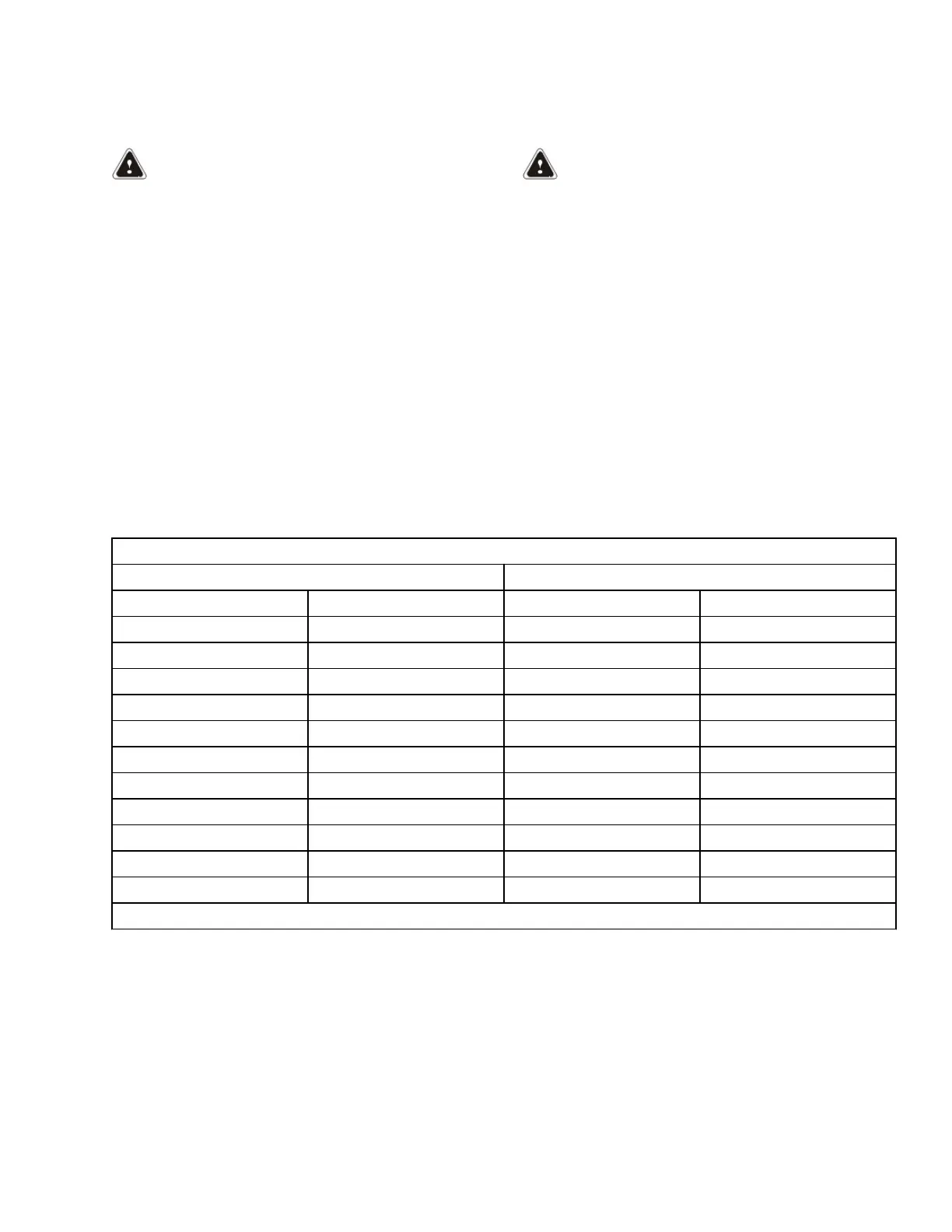
Table 1. Fork Tip Alignment
Fork Tip Alignment Specifications
Standard Fork Lengths Maximum Fork Tip Difference*
mm (in.) mm (in.)
914 (36) 27.4 (1.08)
1000 (39.5) 30 (1.20)
1016 (40) 30.5 (1.20)
1067 (42) 32 (1.25)
1100 (43) 33 (1.30)
1200 (47) 36 (1.40)
1207 (47.5) 36.2 (1.43)
1219 (48) 36.5 (1.43)
1372 (54) 41.1 (1.62)
1524 (60) 45.7 (1.80)
1829 (72) 54.9 (2.20)
*Difference of alignment between fork tips must be no more than 3% of the total fork length.
4000 SRM 1999 Fork Replacement
7



 To Next Page