INOV8 Model F240 – Edited September 2008
0
SECTION 1 – GENERAL GUIDELINES
Congratulations on your purchase of this INOV8 Multi-fueled Furnace. You have
selected the highest quality, precision-engineered piece of equipment available,
designed specifically to allow you to fully benefit from the used oils generated in your
business. INOV8 has not compromised in engineering this product for high efficiency,
safety, longevity, operating economy, and to allow you a maximum of fuel choices; all
while providing the highest standards of environmental considerations. This manual was
written for the novice technician with detailed instructions for the installation, start-up,
routine operation and maintenance of this furnace. If these instructions and pertinent
local regulations are followed closely you will be assured full satisfaction.
CODES & REGULATIONS
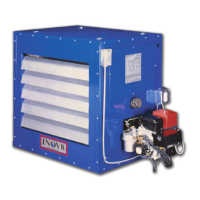
This manual covers installation, maintenance and service of the INOV8 model F240 unit
heater or F240 SC furnace. Both are referred to using the term “furnace” throughout this
manual that covers the installation of the chimney system, fuel storage and piping
connections and electrical work. All work shall be performed by a qualified contractor in
strict accordance with the requirements of state, provincial and local regulating agencies
and codes pertaining to oil-burning equipment installations. After start-up the owner or its
representative should be instructed about the furnace operation and be given this
manual. This equipment must be installed according to these national standards.
For furnace equipment: ANSI/NFPA # 31 – Standard for the Installation of Oil-
Burning Equipment – 2006 Edition, and in Canada to CSA
Standard B139.
For chimney installation: ANSI/NFPA # 211 – Standard for Chimneys, Fireplaces,
Vents, and Solid Fuel Burning Appliance, 2006 Edition
For oil storage installation: NFPA # 31 – Standard for the Installation of Oil-Burning
Equipment – 2006 Edition
For electrical installation: NFPA # 70 – National Electrical Code – 2005
Cleaning and routine maintenance must be carried out at least quarterly during
operation. This shall include an overall check of the heating system. There should be
periodic inspection of the combustion chamber for possible deterioration. Any
discrepancies must be corrected immediately.
NOTE: This manual is for reference only. The manual does NOT purport to address all
design, installation and safety considerations. It is the responsibility of the user of this
manual to determine the applicability and safety of each individual application and ensure
its compliance with local building codes.
U.S. EPA REGULATIONS & USED OIL BURNING
On August 12, 1992 the U.S. Environmental Protection Agency (EPA) announced that it
would not list nor classify as hazardous waste, used oil destined for recycling. They also
affirmed the long-standing regulatory exemption, which allows the operation of used oil-
fired furnaces. Under this exemption, used oil-fired furnaces may operate without a
regulation so long as the owner burns "on-specification used oil". Used oil exceeding
EPA designated levels of contaminants is classified as "off-specification used oil"
which means the owner must comply with three requirements: the heater does not
exceed 500,000 BTU per hour, it is vented to the outside, and burns oil generated on-site
or collected from do-it-yourself oil changers. After years of careful study the EPA
concluded that used oils that are recycled in this manner do not pose a substantial
present or potential hazard to human health or the environment so long as they are
managed properly. To this end, EPA's regulations are designed to provide safe and
environmentally sound used oil management practices.


 To Next Page