Chapter 4: Maintenance
48 M47-17041-EN
Electronics
To access any of the electronics, it is necessary to remove the front cover of the base. Refer to “Remove
and install base covers” on page 46.
Clean the fans
The fan opening of the computer system’s CPU should be cleaned at the frequency stated in the
“Preventative maintenance schedule” on page 43. Use a vacuum to remove dust and dirt from the
grill of the fan and the fan filter.
Fuses
The system is equipped with one or more fuses. These fuses should only need replaced when they are
blown. Refer to Chapter 4 of the System Concepts Manual (supplied separately) for more information on
troubleshooting for a blown fuse.
Inspect the cables
Cables should be inspected at the frequency stated in the “Preventative maintenance schedule” on
page 43. Check the following:
• Inspect all cables for loose connections. This includes power cable and transducer cable
connections at the frame and at the HPS. Tighten any loose connections that you may find.
• Inspect all cables for deterioration. Check for abrasions, cuts, etc. Replace cables as necessary.
If you notice any problems resulting from this inspection, contact your local Instron Services department
as directed on page 17 for immediate assistance.
Frame
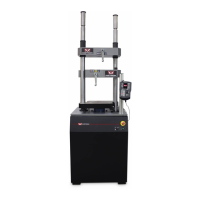
Inspect the hydraulic cylinder
The hydraulic cylinder should be inspected at the frequency stated in the “Preventative maintenance
schedule” on page 43. Perform the following:
• Check movement of the piston in the hydraulic cylinder. Use the jog controls to operate the hydraulic
cylinder through its entire range of motion. Check for binding and abnormal noise. The piston should
move smoothly. If you notice any problems resulting from this inspection, contact your local Instron
Services department as directed on page 17 for immediate assistance.
• Inspect the hydraulic cylinder for signs of oil leakage. It will be necessary to remove the rear cover
from the base in order to visually inspect the hydraulic cylinder (see “Remove and install base
Always wear appropriate personal protective equipment when preparing, operating and
maintaining this equipment. Personal protective equipment should include, but is not
limited to, eye protection and head protection. Other types of personal protective
equipment may also be needed. You must perform your own risk assessment and take
appropriate measures to protect yourself from harm.


 To Next Page