Need help?
Do you have a question about the IXXAT CAN and is the answer not in the manual?
Details the electrical isolation, node increase, signal regeneration, and topology support of the CAN-Repeater.
Explains the automatic detection and shutdown of defective segments, and automatic reconnection after fault resolution.
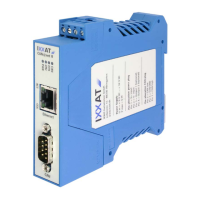
Describes the four LEDs indicating CAN Repeater status and communication line status, including transmit and defect states.
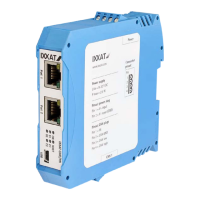
Details the pinning for power supply, second CAN line, and first CAN line screw connectors on the repeater housing.
Explains how to activate or deactivate termination resistors (Rt=120 Ω) using soldering jumpers for CAN segments.
Describes how soldering jumpers set the duration (20 bit times) for permanent dominant levels triggering segment separation.
Explains enlarging repeater off-time via jumpers to handle high capacitance loads, with implications for round trip delay.
Lists specifications including display, CAN interface, baudrate, delay, termination, power, size, temperature, and isolation.
Details options for reduced power consumption, faster bit rates, and CAN 2 as a low-speed interface/level converter.
States compliance with specified standards (DIN EN 55022, DIN EN 61000-6-2) and EC directives for the CAN-Repeater.
Details FCC Part 15 compliance conditions and instructions for Class A digital devices regarding interference.
 General
| Category | Repeater |
|---|---|
| Function | Repeater |
| CAN Bus Isolation | Yes |
| Degree of protection | IP20 |
| Interface | CAN |
| Connector | D-Sub 9 |


 To Next Page