EasyManua.ls Logo

Janome HD3000 - User Manual

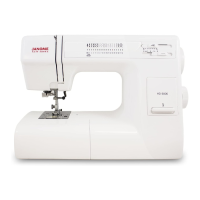
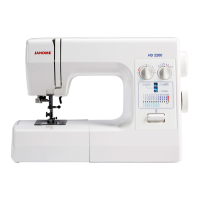
Janome HD3000
48 pages
Print Icon
To Next Page IconTo Next Page
Loading...
INSTRUCTION BOOK

Questions and Answers

  • M
    mooredeborahAug 14, 2025
    Why does the needle thread keep breaking on my Janome HD3000 Sewing Machine?
    • C
      Christopher CrawfordAug 14, 2025
      The needle thread might be breaking on your Janome Sewing Machine due to several reasons: * The needle thread may not be threaded properly. * The needle thread tension could be too tight. * The needle might be bent or blunt. * The needle could be incorrectly inserted. * The fabric may not be drawn to the rear when sewing is finished. * The thread may be too heavy or too fine for the needle.
  • C
    catherinejonesAug 17, 2025
    Why is my Janome HD3000 needle breaking?
    • A
      Amanda WellsAug 17, 2025
      Your Janome Sewing Machine's needle may be breaking due to several reasons: * The needle may be incorrectly inserted. * The needle might be bent or blunt. * The needle clamp screw could be loose. * The tension of the needle thread may be too tight. * The fabric may not be drawn to the rear when sewing is finished. * The needle might be too fine for the fabric being sewn. * The pattern selector dial may have been turned while the needle was in the material.
  • A
    amywalterAug 20, 2025
    Why is my Janome HD3000 skipping stitches?
    • T
      taylor07Aug 20, 2025
      If your Janome Sewing Machine is skipping stitches, it could be due to: * The needle being incorrectly inserted. * The needle being bent or blunt. * The needle and/or threads not being suitable for the work being sewn. * Not using a BLUE TIPPED needle for sewing stretch, very fine fabrics, and synthetics. * The needle thread not being threaded properly. * The presser foot pressure not being strong enough.
  • B
    Barbara CrawfordAug 25, 2025
    Why is my Janome HD3000 noisy and not running smoothly?
    • C
      Cynthia BeckerAug 25, 2025
      Your Janome sewing machine might not be running smoothly or may be noisy because threads have been caught in the hook mechanism or the feed dog is packed with lint.
  • J
    Jonathan RyanAug 27, 2025
    Why is the cloth not feeding smoothly in my Janome HD3000?
    • M
      Martha BowenAug 28, 2025
      If the cloth is not feeding smoothly through your Janome Sewing Machine, consider the following: * The feed dog might be packed with lint. * The presser foot pressure could be too weak. * The stitches might be too fine; in this case, make the stitches coarser. * The feed dog might not be raised after “Drop feed” has been used.
  • V
    Victoria HendersonAug 30, 2025
    Why does the bobbin thread keep breaking on my Janome Sewing Machine?
    • S
      suzanneschultzAug 31, 2025
      The bobbin thread on your Janome Sewing Machine might be breaking because: * The bobbin thread is not threaded properly in the bobbin holder. * Lint has collected in the bobbin holder. * The bobbin is damaged and does not turn smoothly; in this case, exchange the bobbin.
  • J
    John PattersonSep 3, 2025
    What causes seam puckering on my Janome Sewing Machine?
    • K
      krista51Sep 3, 2025
      Seam puckering on your Janome Sewing Machine can occur due to: * The needle thread tension being too tight. * The needle thread not being threaded correctly. * The needle being too heavy for the cloth being sewn. * The stitches being too coarse for the fabric being sewn. * The presser foot pressure not being correctly adjusted.
  • P
    Peter SuttonSep 6, 2025
    Why are stitches forming loops below the work on my Janome HD3000?
    • E
      Eric WilsonSep 6, 2025
      If stitches are forming loops below the work with your Janome Sewing Machine, it could be because the needle thread tension is too loose or the needle is either too heavy or too fine for the thread.
  • D
    Deanna DanielsSep 9, 2025
    Why are the buttonhole stitches not balanced on my Janome HD3000 Sewing Machine?
    • R
      Randall JacksonSep 9, 2025
      If the buttonhole stitches on your Janome Sewing Machine are not balanced, it could be due to: * The stitch length not being suitable for the fabric being sewn. * The work being pulled or held back; avoid forcing the fabric for guiding. * Interfacing not being used with stretch fine fabrics.

Summary

IMPORTANT SAFETY INSTRUCTIONS

DANGER - To reduce the risk of electric shock

Critical safety warning regarding electric shock hazards.

WARNING - To reduce the risk of burns, fire, electric shock, or injury to persons

General safety precautions to prevent hazards like burns, fire, and injury.

Essential Parts

Names of Parts

Identifies and labels all the main components of the sewing machine.

Foot Storage Compartment

Details the storage area for various presser feet and accessories.

Extension Table (Accessory Storage Box)

Describes the extension table and its function as an accessory storage box.

Removable Extension Table

Explains how to remove and attach the extension table for free arm sewing.

Getting Ready to Sew

Connecting the Machine to the Power Supply

Instructions on how to safely connect the sewing machine to an electrical power source.

Foot Control

Explains the function and operation of the foot control pedal for speed adjustment.

Additional Clearance

Instructions on how to raise the presser foot for extra clearance when sewing thick fabrics.

Pressure Dial

Details the function and recommended settings for the pressure dial based on fabric type.

Dropping the Feed Dogs

Explains how to lower the feed dogs for free-motion sewing or darning.

To Snap On and Snap Off the Presser Foot

Step-by-step guide for attaching and detaching the presser foot.

To Detach and Attach the Foot Holder

Instructions on how to remove and install the presser foot holder.

Reverse Stitch Button

Explains the function of the reverse stitch button for securing seams.

Seam Guide Line

Describes the markings on the needle plate used for guiding seams accurately.

Changing Needle

Detailed instructions for safely replacing the sewing machine needle.

Fabric and Needle Chart

Provides guidance on selecting appropriate needles and threads for different fabric types.

Winding the Bobbin

Step-by-step instructions on how to wind thread onto a bobbin.

Removing the Bobbin

Instructions on how to correctly remove the bobbin from the bobbin case.

Threading the Bobbin Winder

Detailed steps for threading the bobbin winder mechanism.

Inserting the Bobbin

Guidance on how to properly insert the bobbin into the bobbin case.

Threading the Machine

Comprehensive instructions for threading the sewing machine with upper thread.

Needle Threader

Instructions on using the automatic needle threader to insert thread into the needle.

Drawing Up Bobbin Thread

Steps to bring the bobbin thread up through the needle plate.

Balancing Needle Thread Tension

How to adjust needle and bobbin thread tension for balanced stitches.

Thread Tension for Zigzag Sewing

Specific advice on adjusting thread tension for optimal zigzag stitching.

Pattern Selector Dial

Explains how to use the dial to select different stitch patterns.

Zigzag Width Control

How to adjust the width of the zigzag stitch.

Stitch Length Control

Guide to setting the stitch length for various sewing needs.

Variable Needle Position

Instructions for changing the needle position for specific stitching tasks.

Basic Sewing

Straight Stitch Sewing

Instructions for performing basic straight stitch sewing.

Changing the Sewing Directions

How to pivot fabric and change sewing direction using the needle as a pivot.

Straight Stitching on Heavy Fabrics

Techniques for sewing straight stitches on thick or heavy materials.

Utility Stitching

Zigzag Stitch

Details on using the zigzag stitch for various applications like overcasting and applique.

Overcasting

How to use a stitch to prevent fabric edges from fraying.

Overedge Stitch

Instructions for an overedge stitch to finish fabric edges and prevent raveling.

Tricot Stitch

Guidance on performing a tricot stitch, often used for stretch fabrics.

Triple Strength Stitch

Instructions for a strong, durable stitch suitable for reinforcing seams.

Outline Stretch Stitch

How to use a stretch stitch to prevent puckering on knits and bias seams.

Sewing Buttons

Step-by-step guide for securely sewing buttons onto fabric.

Automatic Buttonhole

Detailed instructions for creating automatic buttonholes using the dedicated foot.

Manual Buttonhole

Instructions for creating buttonholes manually when automatic function is not used.

Corded Buttonhole

Guide to creating buttonholes with decorative cord for added strength or style.

Zipper Application

Instructions for accurately sewing zippers into garments.

Rolled Hem

How to create a narrow, neat hem on lightweight fabrics.

Blind Stitch Hemming

Instructions for creating invisible or blind hem stitches.

Decorative Stitching

Decorative Satin Stitch Patterns

Guidance on using decorative satin stitch patterns for embellishment.

Stretch Stitch Patterns

Instructions for using pre-set stretch stitch patterns for elastic fabrics.

Adjusting Stretch Stitch Balance

How to adjust stitch balance for stretch patterns for even results.

Smocking

Technique for creating decorative gathers on fabric using specific stitch settings.

Quilting

Using a quilting guide to create straight stitching lines for quilting projects.

Pin Tucking

How to create decorative pin tucks using a sliding guide.

Shell Tuck

Instructions for creating a decorative shell tuck stitch.

Fagoting

How to sew fagoting stitches to join or decorate fabric edges.

Applique

Guidance on stitching decorative applique pieces onto fabric.

Patch Work

How to sew pattern stitches over seam lines for patchwork designs.

Care and Maintenance

Cleaning the Hook Race

Steps for cleaning the hook race area to ensure smooth operation.

Inserting the Bobbin Holder

Correct procedure for inserting the bobbin holder into the machine.

Sewing Light

Instructions on how to remove and replace the sewing machine's light bulb.

Trouble Shooting

Machine Not Running Smoothly;Noisy

Addresses issues causing the machine to run rough or make excessive noise.

Needle Thread Breaks

Solutions for the needle thread repeatedly breaking during sewing.

Bobbin Thread Breaks

Troubleshooting steps when the bobbin thread snaps.

Needle Breaks

Reasons why the sewing needle might be breaking and how to fix it.

Skipped Stitches

Advice on how to resolve skipped stitches for consistent sewing.

Seam Puckering

Explains causes and solutions for puckering in sewn seams.

Stitches Form Loops Below Work

Troubleshooting for loop formation on the underside of the fabric.

Cloth Not Feeding Smoothly

Solutions for problems related to the fabric not feeding correctly.

Machine Does Not Work

Steps to take when the sewing machine fails to operate.

Buttonhole Stitches Not Balanced

How to correct unbalanced buttonhole stitches for a neat finish.

Janome HD3000 Specifications

General IconGeneral
Built-in Stitches18
Buttonhole Style1-step
Maximum Stitch Width6.5mm
Maximum Stitch Length4mm
Needle ThreaderYes
Free ArmYes
Drop FeedYes
Weight18.7 lbs
TypeMechanical
Adjustable Stitch LengthYes
Adjustable Stitch WidthYes
Reverse StitchYes
Body MaterialAluminum
Warranty25-Year Limited
Bobbin TypeTop loading full rotary hook bobbin

Related product manuals