106
Draining The Fresh Water System
Water tanks may be drained through a valve located near the tank. A recreational vehicle
with a demand pressure pump system will have low-point drains attached to the water lines
(normally located near the water tank).
These low-point drains will release water in the supply lines by opening the valves and all
faucets. The water heater has its own drain plug. To drain the permanent fresh water holding
tank and supply lines:
1. Turn the water heater power OFF (turn o the electric & LP GAS
switches).
2. Open all faucets, including the outside shower faucet (if so equipped).
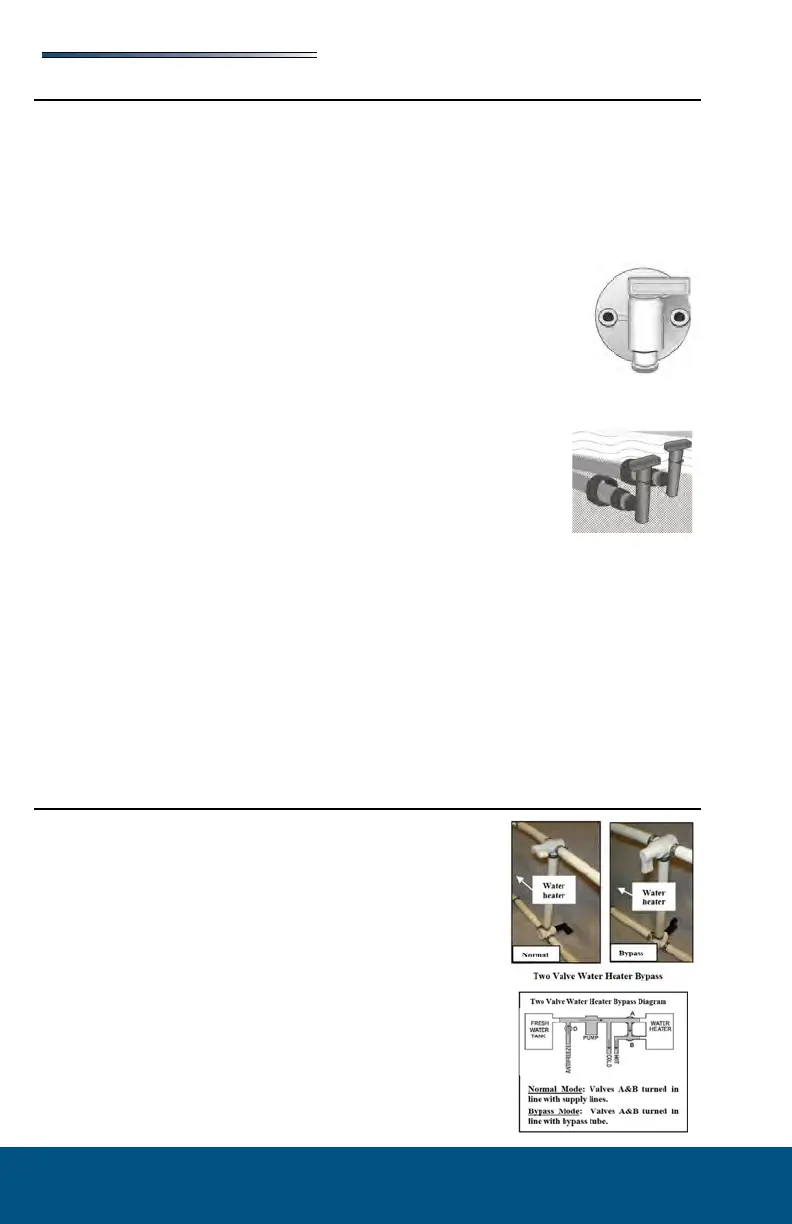
3. Open the “fresh tank drain” valve. All fresh water tanks can be
drained by one of two types of drain valves. A white plastic drain is
attached to the exterior wall or a valve located inside the RV adjacent
to the water tank (turn 45° to open or close).
4. Open the “low point drains” by turning, then pulling the handles
up. They are installed at the lowest point of the water lines. A
label is placed on the outside of the RV to indicate where the
drains are located. The drains will need to be operated from inside
the RV. Once the label is found on the exterior sidewall, the drains
will be found at a corresponding location in the interior.
5. Drain the sink by removing the drain cap.
6. Turn ON the water pump and allow it to run as needed.
7. If the RV water heater has bypass valves: Set them to the BYPASS conguration (refer
to the Water Heater Bypass section).
8. Operate the toilet ush lever until water stops owing.
9. Relieve the water pressure using the P&T valve BEFORE removing the water heater
drain plug. If there is any water pressure present, the water will spray out of the opening
when the drain plug is removed.
When you are nished draining the fresh water system, reverse these steps and dump the
grey and black water holding tanks. It is normal for some liquid to remain in the fresh water
tank after drainage procedure.
Sanitizing/Winterizing The Plumbing System
Most oor plans have a factory installed water heater bypass
that enables you to avoid lling the water heater with RV
antifreeze. Bypass valves are typically located in close
proximity to the water heater. Outside utility centers (if so
equipped) operate dierently than a factory installed bypass
system. Refer to the Outside Utility Center section for details.
Normal Mode operation allows water to ow into the water
heater. Valve handles should be turned so they are pointing in
line with the hot and cold supply lines.
Bypass Mode operation diverts the ow of water around the
water heater keeping water out of the water heater. Valve




 To Next Page