I
INPUTS ----
rOUTPUTS
LT
0
-
--QL
+
MASTER
-_o
C
ADAPTIVE
MATRIX
c
LEVEL
--_o
R
RTO
*
CONTROL
-_o
SURROUNDS
I
0
I
SUBWOOFER
AUDIO
DELAY
i
kHz
-
LOW-PASS
-
FILTER
B~TYPE
NR
DECODER
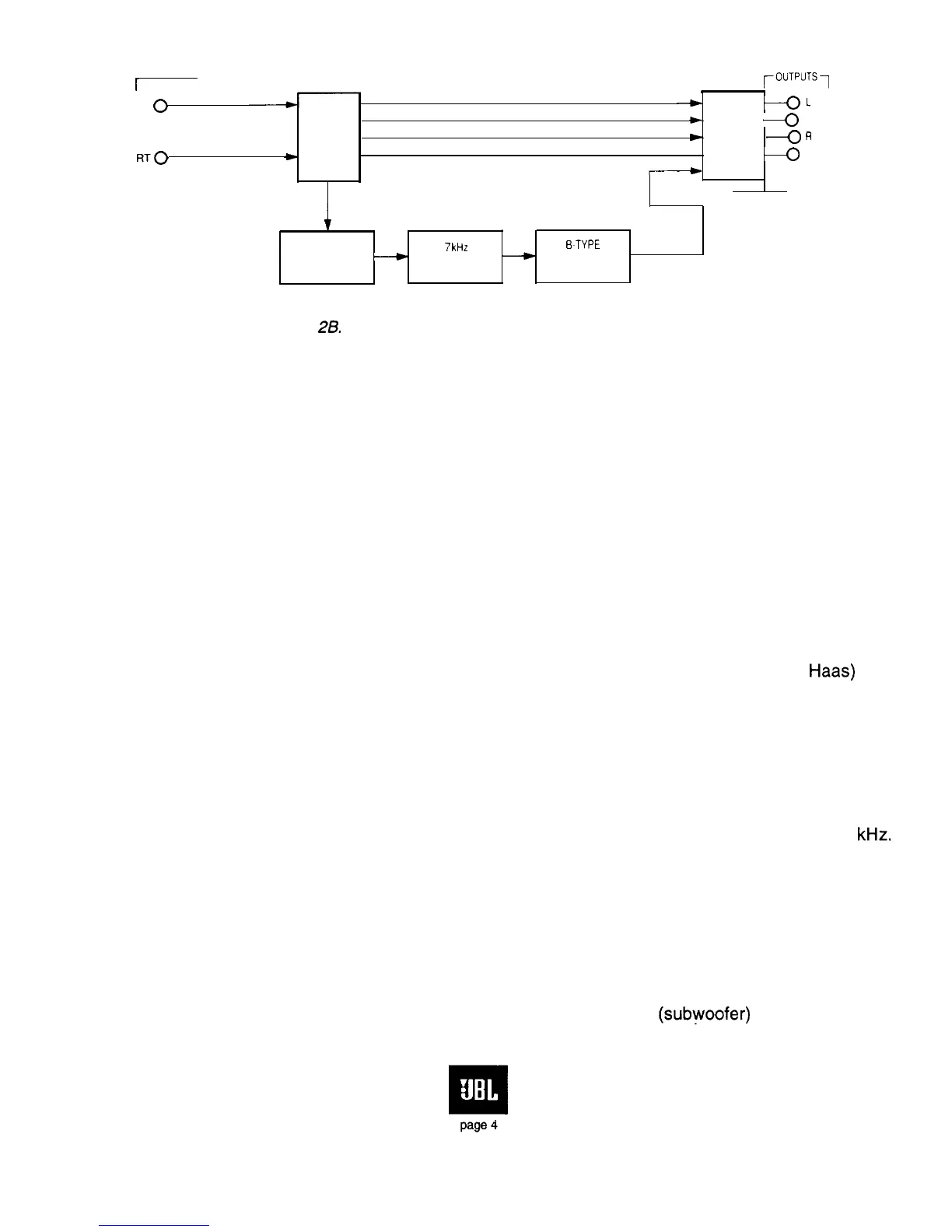
Figure 28. Block diagram of the Dolby Stereo Optical playback matrix
Today, the Dolby Stereo Optical system is virtually a standard format on non-digital 35 mm
film. In this process, the dual bilateral variable area optical sound tracks, which were formerly
modulated with a monophonic signal, are now modulated in stereo, as shown in Figure 2A. Recording
on the two sound tracks is accomplished through a matrix, which accepts inputs for the three screen
channels and the single surround channel. The signals intended primarily for the left and right screen
loudspeakers are fed to the left and right channels. Program material intended for the center screen
loudspeaker, including most on-screen dialog, is fed to both stereo channels in phase. The in-phase
relationship between the stereo channels triggers the playback matrix to steer that information
primarily to the center screen loudspeaker, through a combination of gain control and altering of
separation coefficients within the matrix. In a similar manner, information intended for the surround
channels is fed to both stereo channels so that there is a 180” phase relationship between them. This
phase relationship triggers the playback matrix to steer that information primarily to the surround
loudspeaker array.
Figure 2B shows details of the playback matrix used in Dolby Stereo Optical soundtracks. The
surround channel is delayed relative to the other channels so that, by the precedence (or
Haas)
effect,
the surround channel will not dominate the perceived sound field in the middle and back of the house.
The reason for this is that the matrix output contains certain “leakage” signals that may be disturbing to
a listener if such signals were to be heard from the surround loudspeakers. in practice, the surround
channel is delayed with respect to the screen channels so that the most distant listener in the cinema
will hear that channel delayed by a minimum of 20 milliseconds. Since the ear will “lock in” on earlier
arrival sounds, localization will be maintained in the direction of the screen for all patrons, while effects
intended only for the surround channel will be
clearly heard from the surround loudspeakers. This
problem is further addressed by rolling off the response of the surround channel above about 7
kHz.
B. Digital Film Formats
The Dolby SR-D format, introduced in 1992, is shown in Figure 3A. It has exactly the same
optical sound tracks as shown in Figure 2A with the addition of digital information located in the
otherwise unused space between sprocket holes. This new digital format provides the usual three
screen channels plus a split surround pair and a single low frequency (subwoofer) channel limited to









 To Next Page