
 To Next Page


R
Rachel Bailey DVMJul 25, 2025
What to do if the Juniper QFX5100-48S RE /var partition is full?
- LLauren MartinJul 25, 2025
If the /var partition on your Juniper Switch RE is full, you should clean up the system file storage space on the switch.

What to do if the Juniper QFX5100-48S RE /var partition is full?
If the /var partition on your Juniper Switch RE is full, you should clean up the system file storage space on the switch.
What to do if the Juniper QFX5100-48S fan fails?
If a fan module fails in your Juniper switch, replace the fan module and report the failure to customer support.
How to fix a Juniper QFX5100-48S Switch PEM that is not powered?
If a PEM (power entry module) in your Juniper switch is not powered, check the power cord connection and reconnect it if necessary.
What to do if Management Ethernet 1 Link is down on Juniper Switch?
If the Management Ethernet 1 link is down on your Juniper switch, verify that a cable is properly connected to the management Ethernet interface and ensure that the cable is not defective. Replace the cable if needed.
What to do if FPC Management1 Ethernet Link is down on Juniper QFX5100-48S?
If the FPC Management1 Ethernet link is down, check if a cable is connected to the management Ethernet interface, or if the cable is defective. Replace the cable, if required.
What to do if Fan/Blower is absent in Juniper QFX5100-48S Switch?
If a fan module is absent in your Juniper switch, install fan modules in the empty slots.
Guide on physically installing the QFX5100-48S switch into a four-post rack configuration.
Instructions for connecting the QFX5100-48S switch to AC power using provided cords.
Specifies the required serial console parameter values for initial switch configuration.
Details the steps to connect to the switch console and perform initial CLI configuration.
Provides a summary of safety warnings for installing and servicing the QFX5100-48S switch.
Specific warning regarding the use of the provided power cable for this product only.
Information and URL for obtaining technical support from Juniper Networks.
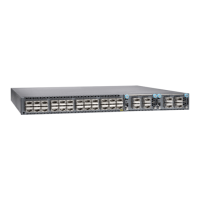
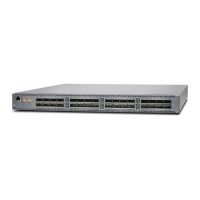
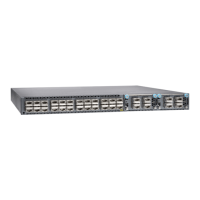
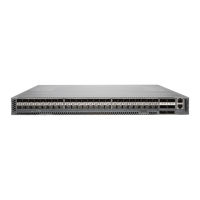
The Juniper Networks QFX5100-48S is a high-performance switch designed for data center and enterprise environments, offering robust functionality for network infrastructure. This Quick Start Guide outlines the essential steps for its installation and initial configuration, ensuring a smooth setup process for network administrators. The device is engineered with an emphasis on simplicity, making it accessible for deployment while maintaining advanced capabilities.
The QFX5100-48S serves as a core component in network architectures, facilitating high-speed data transfer and connectivity. Its primary function is to provide switching capabilities, enabling efficient communication between various network devices. The switch is designed to handle demanding network loads, making it suitable for environments requiring reliable and fast data throughput. It integrates seamlessly into existing network infrastructures, offering a scalable solution for growing data demands. The device supports various network protocols and standards, ensuring compatibility and interoperability within diverse IT ecosystems. Its design allows for flexible deployment, supporting different network topologies and configurations. The QFX5100-48S is equipped with management interfaces that enable comprehensive control and monitoring of network operations, providing administrators with the tools needed to maintain optimal performance.
The QFX5100-48S is designed for ease of use, from physical installation to initial software configuration. The switch can be mounted in a standard 19-inch, four-post rack, providing a secure and organized setup. The installation process is straightforward, requiring the attachment of front mounting-rails and rear mounting-blades to the chassis, followed by securing the assembly to the rack. The guide emphasizes the importance of proper alignment and secure fastening to ensure stability. For safety, it is recommended that two people lift and secure the switch to the rack due to its weight of approximately 21.8 lb (9.8 kg). This collaborative approach minimizes the risk of injury during installation.
Connecting power to the switch is a simple procedure involving inserting the power cord into the AC power supply faceplate and then into the power source outlet. The guide specifies checking the AC and DC LEDs to confirm that they are lit green and steadily, indicating proper power connection. This visual confirmation helps in quickly verifying the power status of the device.
Initial configuration of the switch is performed through the console port, using a laptop or PC. This method allows for direct interaction with the device's command-line interface (CLI). Before connecting, specific parameter values such as Baud Rate (9600), Flow Control (None), Data (8), Parity (None), Stop Bits (1), and DCD State (Disregard) must be set on the console server or PC. These settings ensure proper communication between the console and the switch.
Once connected, users log in as 'root' to access the CLI. The configuration process involves several key steps:
The guide also provides a crucial note regarding the management ports (em0 and em1), indicating their location on the FRU (Field Replaceable Unit) end of the QFX5100 switch, which aids in physical identification during setup.
The QFX5100-48S is designed with maintainability in mind, incorporating features that ensure long-term operational reliability and ease of service. The switch includes field replaceable units (FRUs), which allows for quick and efficient replacement of components without having to replace the entire device. This modular design minimizes downtime and simplifies maintenance procedures. The guide mentions the importance of determining whether the FRU end or the port end should be placed at the front of the rack, indicating flexibility in deployment based on maintenance access requirements.
The device comes with two factory-installed power supplies, providing redundancy and ensuring continuous operation even if one power supply fails. This dual power supply configuration enhances the overall reliability of the switch, which is crucial for critical network infrastructure. The visual indicators, such as the AC and DC LEDs, provide immediate feedback on the power status, allowing administrators to quickly identify and address any power-related issues.
Safety is a paramount consideration in the maintenance of the QFX5100-48S. The guide includes a summary of safety warnings, emphasizing the importance of trained and qualified personnel for installation and component replacement. It strictly advises against performing procedures not described in the quick start guide or the full documentation, directing other services to authorized service personnel. This ensures that all maintenance activities are conducted safely and correctly.
The guide highlights several critical safety practices:
The guide also includes information on contacting Juniper Networks for technical support, providing a URL for requesting support. This ensures that users have access to expert assistance for any issues that may arise during the device's lifecycle. The comprehensive safety guidelines and support resources underscore Juniper Networks' commitment to user safety and product reliability throughout the operational life of the QFX5100-48S.
 General
| Model | QFX5100-48S |
|---|---|
| Form Factor | 1U |
| Switching Capacity | 1.44 Tbps |
| Power Supply | AC or DC |
| Jumbo Frames | Up to 9216 bytes |
| Ports | 48x 10GbE SFP+ and 6x 40GbE QSFP+ |
| Operating Temperature | 0 to 40 °C |
| Operating Relative Humidity | 5% to 90% non-condensing |
| MAC Address Table Size | 288, 000 |
| Input Voltage | 100 to 240 VAC |
| Storage Temperature | -40 to 70 °C |
| Humidity | 5% to 95% non-condensing |