
 Need help?
Do you have a question about the Juniper SRX300 and is the answer not in the manual?
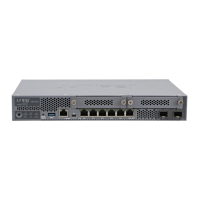
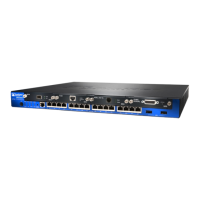
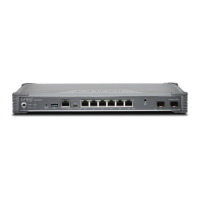
Overview of the Juniper Networks SRX300 Firewall device features and connectivity.
Procedure for installing the SRX300 firewall device into a standard network rack.
Instructions for connecting and powering on the SRX300 firewall after installation.
Guidance on choosing configuration tools like Junos CLI, J-Web, Juniper Sky, or Contrail Service Orchestration.
Step-by-step instructions for performing initial configuration of the SRX300 via the Command Line Interface.
Guidance on further steps after initial SRX300 configuration, including advanced settings and resources.
Access to Juniper Networks documentation, guides, and licensing information for SRX firewalls.
Resources for video tutorials on SRX300 installation, configuration, and Junos OS features.
The Juniper Networks SRX300 Firewall is a compact desktop device designed to provide next-generation security, routing, switching, and WAN connectivity for small branch locations. It offers a comprehensive solution for securing network traffic and managing network services with ease.
The primary function of the SRX300 is to act as a security gateway, protecting your network from various threats while enabling efficient data flow. It integrates several critical network functions into a single device, reducing complexity and cost.
The SRX300 is designed for straightforward deployment and management, offering multiple options to suit different user preferences and network requirements.
The SRX300 is designed with maintenance and ongoing management in mind, providing tools and resources for updates, security enhancements, and troubleshooting.
show configuration operational mode command in the CLI. The initial configuration process often involves removing Zero Touch Provisioning (ZTP) settings if manual configuration is preferred, preventing periodic log messages related to ZTP status.




 To Next Page


 General