35
Bounce ash
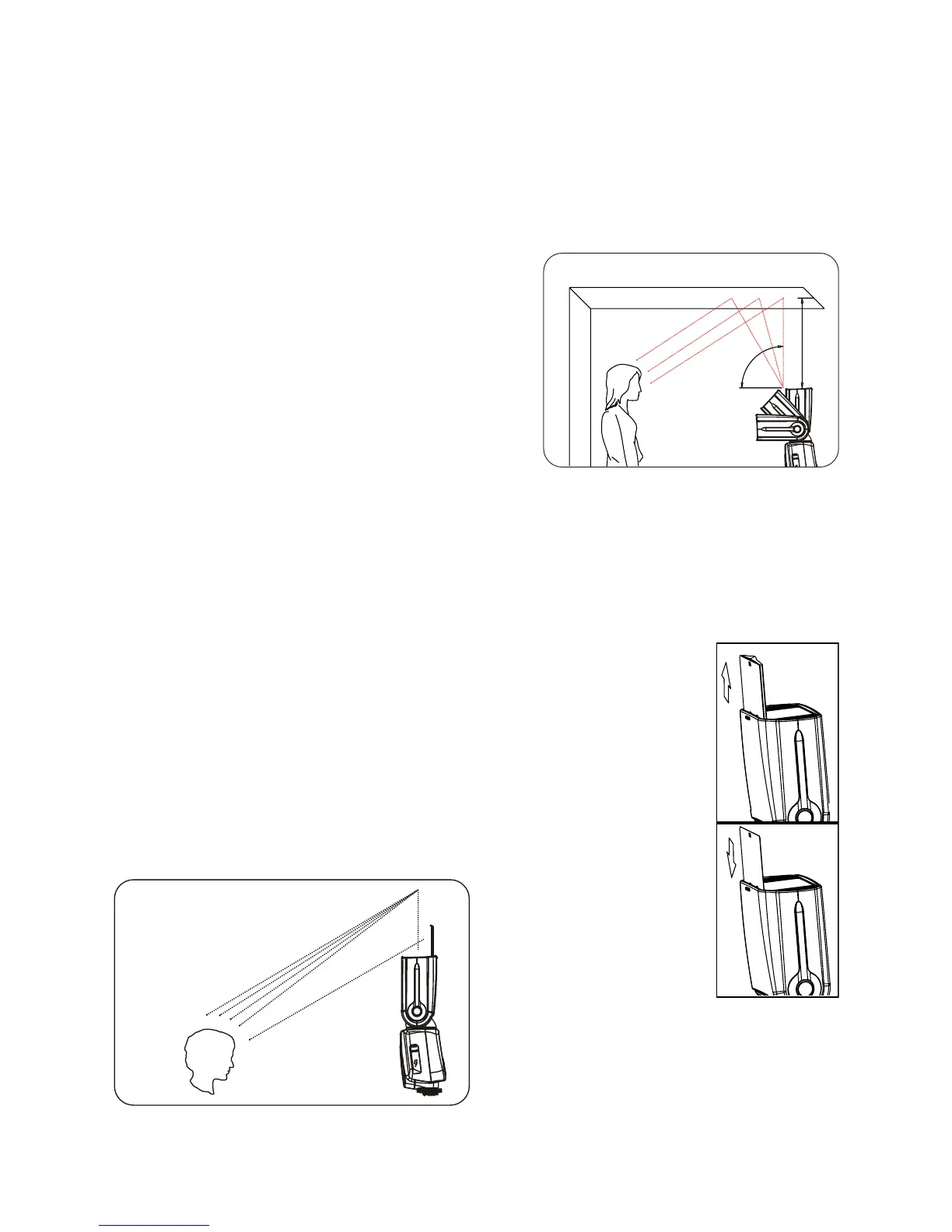
By directing the ash head towards a wall or ceiling, the ash can
be ‘bounced’ or reected back onto the subject in order to reduce
shadow and obtain a more natural effect.
Adjust the ash head tilt, rotation angle and select
the reection plane
Using the ceiling as the reection
surface by tilting the ash head up to
point directly upwards is usually the
simplest and most effective way to
achieve good results. If holding the
camera on its side, you can rotate the
ash head by 90 degrees to obtain the
same effect.
The most effective distance between the ash head and reection
plane is 1-2m, depending on the shooting environment. When
shooting colour photographs, choose a white or reective surface to
avoid the colours appearing unnatural.
Using the built-in reection card
When using a bounced ash technique, using the ash’s
built-in reection card can make the subject appear
more bright and vital. It can also help to avoid lighting
foreground objects.
To pull out the reection card, tilt the ash head up to
90 degrees, then pull out the wide diffusion plate as
well as the reection card. Keeping the reection card
pulled up, push the wide diffusion plate back into place.


 To Next Page