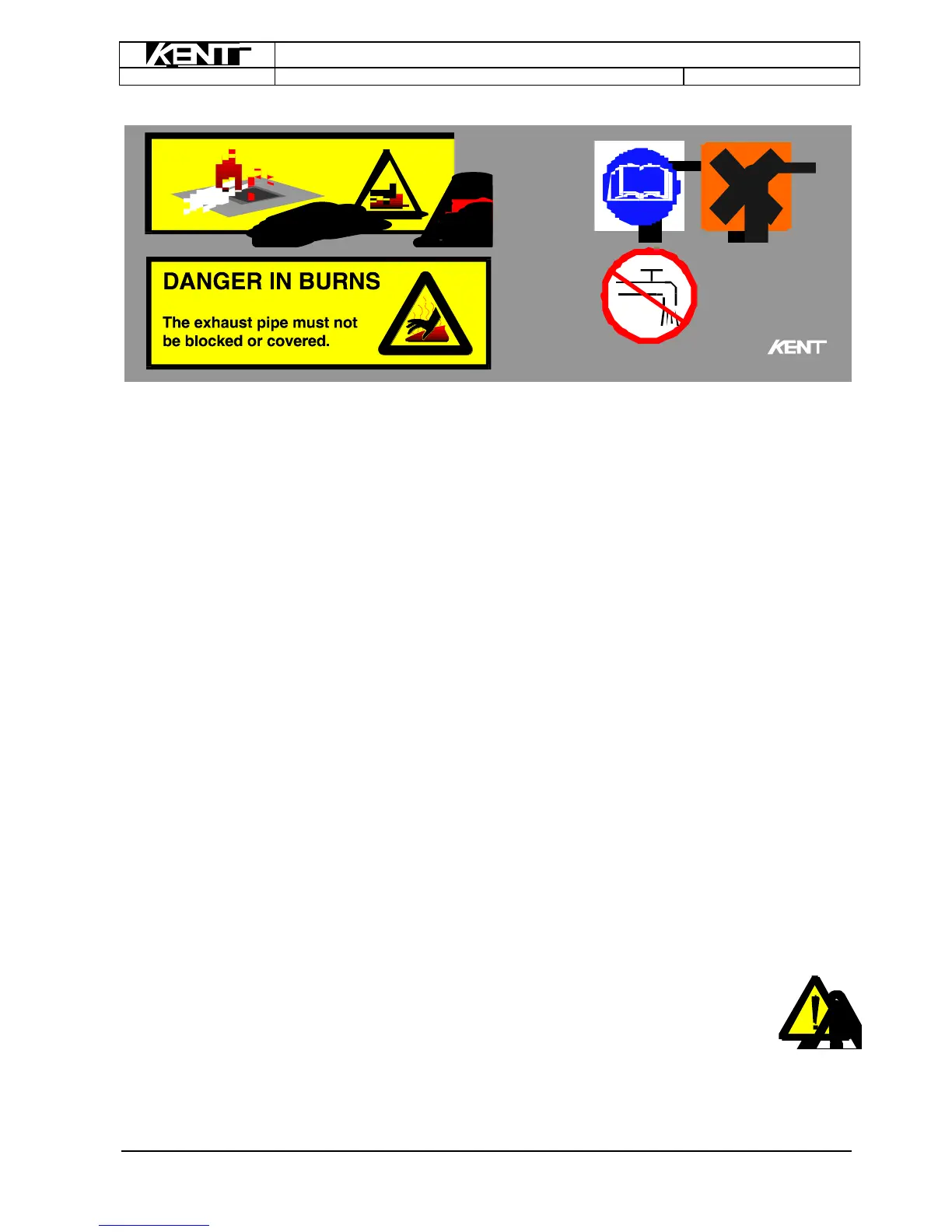
Take steps to ensure that flammable objects do not come near the exhaust pipe.
Indoor high pressure cleaning is only permitted in well-ventilated rooms. If you feel unwell during clean-
ing, you must immediately stop work and go out in the open air. In addition to the inhalation of exhaust
gases from the machine, nausea may also be induced by any cleaning agents that may have been
used during the washing process. Therefore, you should thoroughly investigate whether these mat-
erials have been used correctly from both a safety and an environmental perspective. This information
can usually be found on the packaging that accompanied the cleaning agent. Never try experimenting
with additives that may be hazardous to human or animal health. If liquid gets in your eyes, rinse imme-
diately under running water and then seek medical attention. If possible, provide information about the
cleaning agent, e.g. bring the packaging, so that the doctor can determine the best course of treat-
ment.
Cleaning agents can vary in quality, and so steps should be taken to ensure that any cleaning agent
you use is suitable for use at high temperatures and under high pressure. Consideration should also be
given to the environment, particularly in instances where waste water will flow into untreated drains. If
necessary, obtain a datasheet pertaining to the cleaning agent on which its hazard class and personal
protection requirements are defined on a scale of 1-6, with 6 being the most hazardous! Never use
aggressive substances such as acids, thinners or explosives in this tool. If possible, switch to a less
corrosive cleaning agent.
Even if the hot water cleaner has only been operated using “clean” tap water, never drink water from
the machine as the bacteria content may have increased and be left over from a previous heating.
The heated water from the hot water cleaner must not be used in connection with the production or
preparation of food as machines used in the product of foods are subject to some extremely strict
requirements.
Loss of water or power will not damage the hot water cleaner as both types of situation are mitigated
by the unit’s integrated control system. Once the water and/or power supply has been re-established,
the cleaner will start heating again.
Never leave the hot water cleaner running unsupervised.
Turn the thermostat to 0° C and pull the gun trigger for approx. 1 min to allow the boiler
and spiral tube to cool. Turn off the water supply and open the piston in order to drain
water from the system and depressurise the hose. Turn the switch to the “0” position
and disconnect the plug from the power socket.
Frost protection is done by disconnecting both connecting pieces so that all the water in the unit can
run out or using the antifreeze method described later in this document. The high-pressure washer is to
be protected against frost in accordance with this User Guide.



 To Next Page